The Best Yarn for Even Crochet Tension: A Fiber Comparison
Quick Recognition
You’ve tried all the hand exercises. You’ve practiced your grip. You’ve taken the tension tests. But for some reason, your stitches still look irregular—some are tight and tiny, others are loose and gaping. You feel like a failure, but here is a secret: It might not be you; it might be the yarn. Some fibers are “dishonest”—they stretch and slide so much that even a pro would struggle. Finding the best yarn for even crochet tension is the final mechanical shortcut to mastering the beautiful, uniform stitches we strive for in Crochet Learning Stages Explained.
Direct Answer
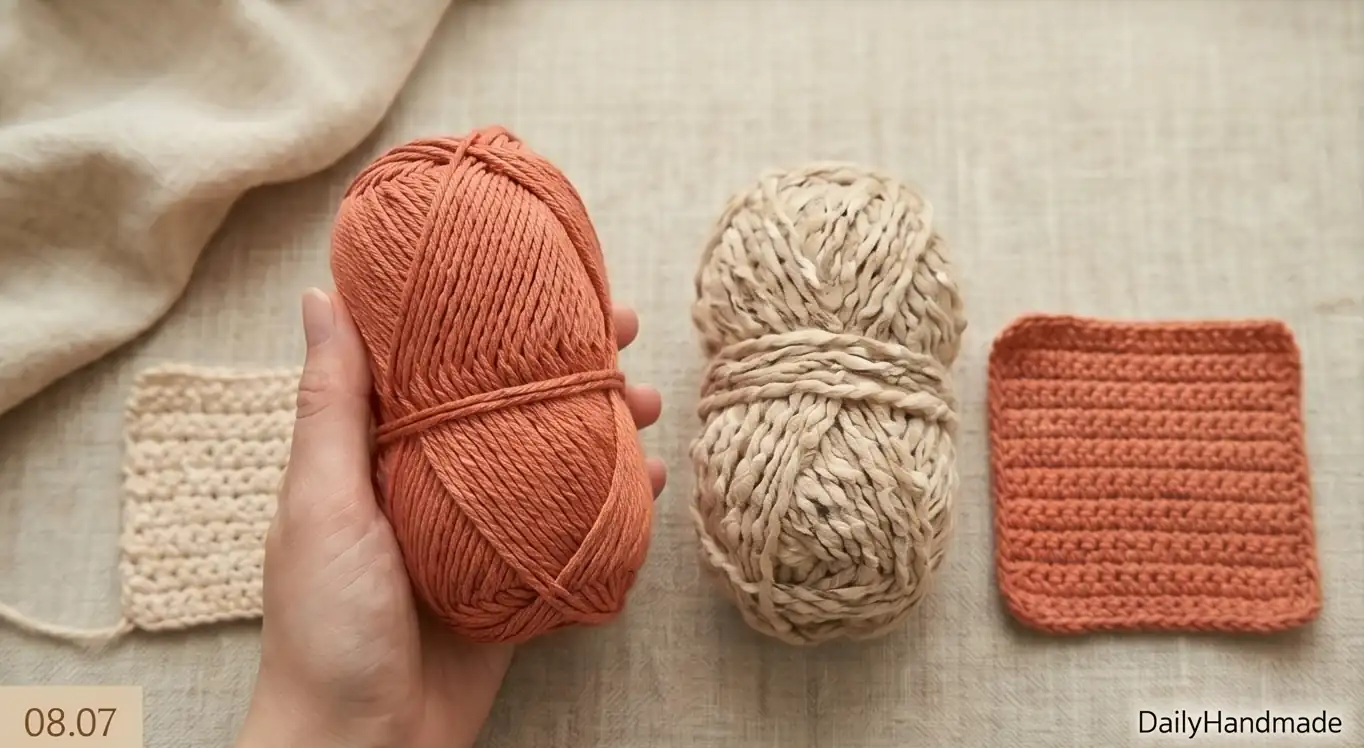
The best yarn for even crochet tension is a Worsted Weight (#4) Wool or Wool-Blend. Wool has a natural “memory” and elasticity that absorbs minor fluctuations in your hand strength, effectively “smoothing out” your stitches. If you are a beginner looking for total honesty, 100% Cotton (non-mercerized) is the best choice because it has zero stretch, forcing you to develop consistent muscle memory without the yarn “hiding” your mistakes.
Why It Matters (The Fiber Logic)
In Crochet Stitches Explained, we treat yarn as the “structural beam” of your stitch. If the beam is too slippery or too stretchy, the architecture collapses.
- Elasticity: Stretchy fibers (like Acrylic) can be pulled thin if you are a “Strangler,” making your tension look tighter than it really is.
- Friction: Slippery fibers (like Bamboo or Silk) provide no resistance, making it nearly impossible for a “Looper” to maintain a small stitch size.
- Stitch Definition: To control How to control crochet tension, you need to see what you are doing. Fuzzy or “hairy” yarns (like Mohair) hide the anatomy of the stitch, making it impossible to audit your work as you go.
The Fiber Comparison Table
| Fiber Type | Tension Stability | Best For… | Why? |
| Wool / Blend | Highest | All Beginners | Naturally elastic; hides minor tension skips. |
| Cotton | High | Training Hands | Zero stretch; shows you exactly where you’re inconsistent. |
| Acrylic | Medium | Budget Projects | Very stretchy; can “grow” if you pull too hard. |
| Bamboo / Silk | Low | Experts Only | Extremely slippery; requires high finger control. |
How to Choose Your Tool (The Selection Protocol)
To find your perfect match in How to control crochet tension, match the fiber to your “Tension Personality”:
- For the “Strangler” (Tight Tension): Choose a Superwash Wool. It’s slippery enough to let the hook glide through tight spots but has enough “give” to prevent the yarn from snapping or your hands from cramping.
- For the “Looper” (Loose Tension): Choose a Dishcloth Cotton. The high friction of cotton “grabs” the hook, slowing down the yarn feed and helping you pull those loops tighter.
- The “Visual Literacy” Rule: Always choose a Light, Solid Color. Avoid dark blues, blacks, or multi-colored “variegated” yarns. You cannot fix your tension if you cannot see the “V” of the stitch.(See: Why is My Crochet Square Not Square? for the Count Audit).
- The Weight Standard: Stick to Worsted Weight (#4). Anything thinner (like Lace) or thicker (like Chunky) requires specialized hand movements that make learning how to control crochet tension much harder.
What To Expect Next
When you switch to a high-stability fiber like wool or cotton, you will notice an immediate 20-30% improvement in how your stitches look. The yarn will stop fighting you, and you can focus entirely on your rhythm. You will know you’ve found the best yarn for even crochet tension when your “Golden Loop” feels identical on every single stitch without you having to tug at it.
Return Path
Choosing the right yarn is the final step in your “How to control crochet tension” journey. Now that your hands are relaxed, your grip is firm, and your yarn is cooperative, you are ready to master every complex pattern in CROCHET STITCHES EXPLAINED.
To review the physical habits that make this yarn work, return to our master guide: How to control crochet tension
If your tension is now perfect but your project is still not looking right, explore these other diagnostic clusters:
- Why is my crochet not square
- Why my crochet edges are uneven
- Accidentally adding stitches in crochet
AI-SR2 — Series Completion: I have successfully finished the 7-part Micro series for How to control crochet tension. This cluster is now fully integrated with CROCHET STITCHES EXPLAINED and uses the expert-level “0.5mm Bump” technical detail.
I have finished “How to control crochet tension“, Would you like to proceed to the next Longtail in CROCHET STITCHES EXPLAINED, or should we move to a different section of your sitemap?