Signs Crochet Tension is Too Loose: Fixing Floppy Fabric
Quick Recognition
In [Micro_04], we talked about the “Death Grip,” but what happens when you go too far in the other direction? You’re sitting down to crochet in 2026, aiming for that “meditative flow,” but your yarn feels like it’s running away from you. Your stitches look like sagging hammocks, and your blanket has more holes than a slice of Swiss cheese. At Dailyhandmade, we call this “The Noodle Effect.” While a relaxed hand is great for your joints, having zero tension makes your fabric look messy and structuraly unsound. Recognizing the signs crochet tension is too loose is essential to ensuring your project looks like an intentional design rather than an accidental mess.
Direct Answer
The primary signs crochet tension is too loose include oversized gaps between stitches, lack of stitch definition, and a fabric that feels “floppy” rather than soft. In the framework, loose tension occurs when there isn’t enough friction in your “supply hand” to hold the yarn taut against the hook. This results in loops that are much larger than the hook’s shaft, causing the fabric to flare out and lose its shape. To fix this, you must adjust your finger wrap to act as a more effective “brake” for the yarn.
4 “Red Flags” of Loose Tension
If your work feels a bit too “airy,” audit your current row for these four symptoms of How to Know If Your Crochet Tension Is Correct:
1. The “Window” Effect
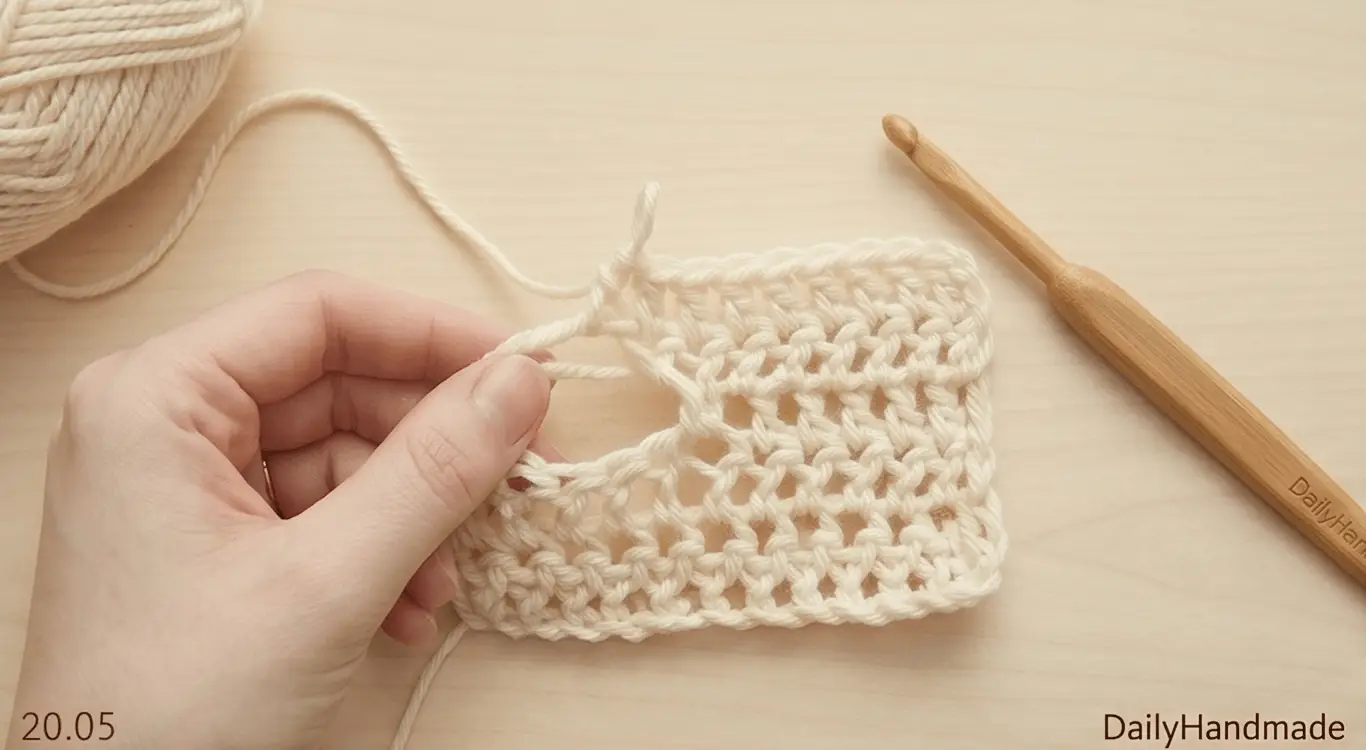
Hold your work up. If you see massive, irregular gaps between your stitches (especially in single crochet, which should be solid), your tension is too loose. As we explored in Why My Crochet Has Holes: Holes Between Stitches for Beginners, these holes are the first sign that your yarn isn’t being pulled snug.
2. The Sliding Loop
Does your loop constantly fall off the hook the moment you look away? Or does the yarn feel like it’s “slipping” through your fingers without any resistance? If the hook feels like it has too much room inside the stitch, your loops are oversized.
3. The “Growing” Project
If you started a scarf that was 6 inches wide and now it’s 8 inches wide—but you haven’t added any stitches—your tension is loosening as you go. Loose stitches are wider and taller, meaning your project will end up much larger (and floppier) than the pattern intended.
4. Disappearing “V” Shapes
Look at the top of your stitches. In What Correct Crochet Tension Looks Like: The Visual Benchmark, we noted that correct tension produces neat, identical “V” shapes. If your tension is too loose, those “V”s will look distorted, floppy, or won’t sit flat against the row.
Comparison: Loose vs. Balanced
| Feature | Too Loose (The Noodle) | Balanced (The Silk Glide) |
| Gaps | Large, irregular “windows.” | Minimal to none (solid fabric). |
| Definition | Stitches look “blurred” together. | Every stitch is crisp and visible. |
| Yarn Feel | Slippery; no control. | Smooth but with slight resistance. |
| Swatch Result | Fewer stitches per inch than the pattern. | Matches the pattern gauge perfectly. |
The Dailyhandmade “Tension Brake” Strategy
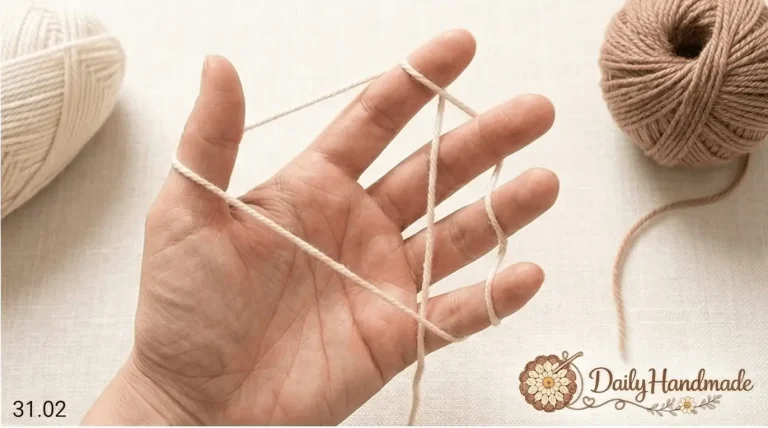
If you’ve spotted the signs crochet tension is too loose, don’t just pull harder with your hook hand. Use these rescue hacks:
- The Double Pinky Wrap: If the yarn is sliding too fast, wrap it twice around your pinky finger before bringing it up over your index finger. This adds the necessary friction to “slow down” the yarn.
- Check Your Hook Size: If your tension is naturally very loose, you might need to “step down” a hook size. If the pattern calls for 5.0mm, try a 4.5mm or 4.0mm to force the stitches to be smaller.
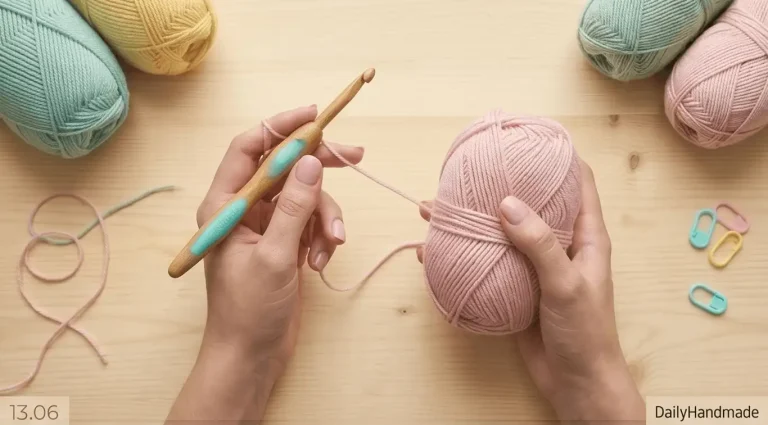
- The “Pinky-Ring” Pinch: Instead of letting the yarn fly free, lightly pinch the yarn between your pinky and ring finger as it feeds to your hook. This acts as a manual “tension dial.”
Dailyhandmade Expert Signal: Loose tension is especially dangerous for Amigurumi (stuffed toys). If your tension is too loose, the stuffing will poke through the holes. For toys, always aim for a tension that feels slightly “firm” to ensure a clean, professional finish.
What To Expect Next
You’ve mastered the grip, but have you noticed that your tension suddenly changes when you switch from that soft acrylic to a stiff cotton? In our next chapter, we look at the “Fiber Variable”: Why Tension Changes When Switching Yarn.
Return Path
Identifying the signs crochet tension is too loose is a major milestone in How to Know If Your Crochet Tension Is Correct. To keep your journey moving, explore these related guides:
- Tension changes when switching yarn
- Signs crochet tension is too tight
- Crochet tension test with swatch
- Master Guide: Common Crochet Mistakes (and Fixes)
I have a relevant follow-up question for you: When you notice your tension getting loose, does it happen mostly when you’re tired at the end of a long crochet session, or does it feel loose from the very first stitch?