
5 Signs Crochet Tension is Too Tight: Stop the Struggle
Quick Recognition
It’s 2026, and you’re determined to finish that first beanie. But as you work, you notice your brow is furrowed, your shoulders are hunched, and your hook feels like it’s fighting you for every single loop. You might think that being “firm” with your yarn shows control, but in crochet, control is actually found in relaxation. At Dailyhandmade, we’ve named this “The Death Grip.” If you’re exhausted after just ten minutes of stitching, you aren’t “bad” at crochet—you’re just holding on too tight. Recognizing the signs crochet tension is too tight is the first step toward finding the “Silk Glide” we discussed in What Correct Crochet Tension Feels Like: Finding Your Hand Rhythm.
Direct Answer
The clearest signs crochet tension is too tight include physical hand fatigue, a squeaking sound as the hook passes through the yarn, and extreme difficulty inserting the hook into the previous row’s stitches. In the framework, “Tight Tension” happens when you pull the working yarn so firmly that the loops shrink smaller than the diameter of the hook’s shaft. This creates a fabric that is stiff, dense, and physically painful to produce.
The 5 “Red Flags” of Tight Tension
If you’re unsure if you’re overworking your yarn in How to Know If Your Crochet Tension Is Correct, audit your current session for these five symptoms:
1. The Audible “Squeak”
If your hook and yarn are making a high-pitched rubbing sound, your tension is way too high. The yarn should glide silently. A squeak means the yarn is being stretched to its breaking point against the tool.
2. The “V-Wrestling” Match
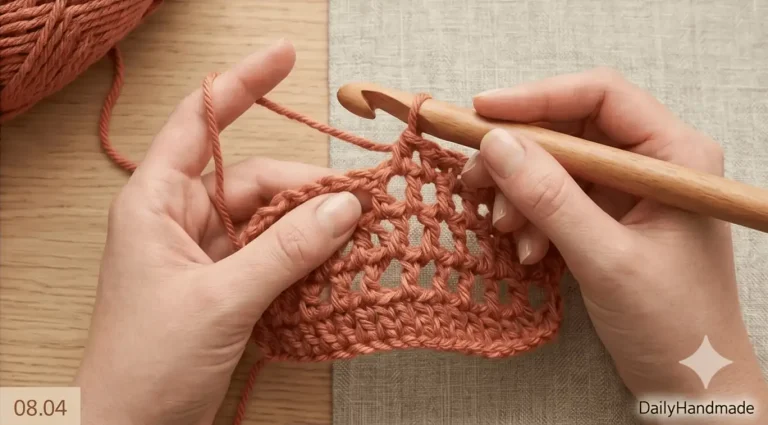
When you try to insert your hook into a stitch from the row below, do you have to “wiggle,” “shove,” or use your thumb to pry the loops open? Stitches should stay open and ready. If they look like tiny, closed pinpricks, you’re in the “Death Grip” zone.
3. “Cardboard” Fabric
Lay your work flat. Try to fold it. If the fabric feels stiff, stands up on its own, or refuses to drape over your hand, it’s too tight. Correct tension produces a fabric that feels like a soft textile, not a heavy-duty rug.
4. The Sinking Row (Gauge Fail)
If you perform the crochet tension test with swatch from Crochet Tension Test with Swatch: A 5-Minute Diagnostic Drill and find that you have more stitches per inch than the pattern requires, your tension is the culprit. Tight stitches are “shorter” and “thinner,” meaning your finished project will end up 20–30% smaller than intended.
5. White Knuckles and Aching Wrists
This is the most important sign. Your hands should never hurt while crocheting. If your knuckles are white or you have a lingering ache in your “support hand” (the one holding the yarn), you are manually forcing the tension instead of letting the hook do the work.
Comparison: Tight vs. Balanced
| Feature | Too Tight (Death Grip) | Balanced (Silk Glide) |
| Hook Sound | High-pitched squeaking. | Silent or a soft “swish.” |
| Fabric Texture | Stiff, thick, and rigid. | Soft, flexible, and drapey. |
| Effort Level | High; physically taxing. | Low; meditative and fluid. |
| Stitch Visibility | Hard to see the “V” holes. | Easy to identify where to insert. |
The Dailyhandmade “Breathe & Release” Drill
To fix your signs crochet tension is too tight instantly, try this strategy:
- Drop Your Shoulders: Tension starts in the neck. If your shoulders are near your ears, your hands will follow suit.
- The “Pencil” Grip Check: If you use a “Knife Grip,” try switching to a “Pencil Grip” for ten stitches. It’s harder to apply extreme force with a pencil grip, which naturally encourages a lighter touch.
- The Golden Loop Lift: As mentioned in Make Crochet Stitches Tighter Without Changing Hook: Pro Hacks, when you pull up a loop, give it a tiny “tug” upward to ensure it’s as wide as the hook shaft. Don’t let it sit on the skinny “throat” of the hook!
Dailyhandmade Expert Rescue Signal: If you simply cannot relax your hands, go up a hook size. If a pattern calls for a 5.0mm hook, grab a 6.0mm. This uses the tool’s geometry to compensate for your natural “firm” style, giving your stitches the room they need to breathe.
What To Expect Next
You’ve loosened the grip and the pain is gone. But what if you went too far? What if your fabric now looks like a fishing net? In our next chapter, we diagnose the opposite problem: Signs Crochet Tension is Too Loose.
Return Path
Mastering the “Tight Diagnosis” is a major victory in How to Know If Your Crochet Tension Is Correct. To continue your rescue mission, explore these related guides:
- Signs crochet tension is too loose
- What correct crochet tension feels like
- Crochet tension test with swatch
- Master Guide: Common Crochet Mistakes (and Fixes)
I have a relevant follow-up question for you: Do you find that your tension gets tighter as you get more “focused” on a difficult part of the pattern, or is it tight from the very first stitch?