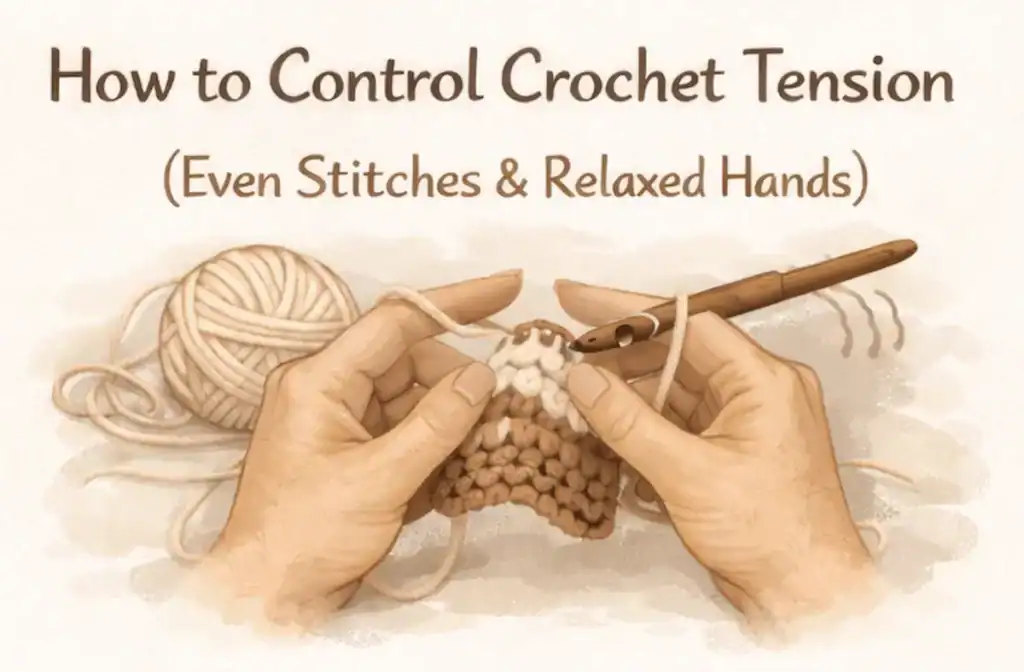
How to Control Crochet Tension (Even Stitches for Beginners)
(Even Stitches & Relaxed Hands for Beginners)
If your crochet looks:
- uneven
- tight in some rows
- loose in others
- stiff one day and floppy the next
- neat at the start but messy halfway through
- Context (Where This Problem Lives)
- Quick Answer (Featured Snippet Target)
- What Is Crochet Tension?
- Misconception Correction
- Why Tension Is Hard for Beginners
- Predictive Insight
- Stage Positioning (Why This Article Matters)
- How to Recognize Tight vs Loose Tension
- The Hidden Variable: Loop Height
- Why Tension Changes Mid-Project
- Emotional Influence on Tension
- Applicability Boundary
- Concept Summary Before Deep Dive
- The Root Mechanical System of Crochet Tension
- Mechanical Breakdown
- Misconception: “Just Relax More”
- Finger Placement & Yarn Hold
- Predictive Difficulty
- Hook Size = Tension Calibration Tool
- Misconception: “Pattern Says 5mm → Must Use 5mm”
- Why Speed Changes Tension
- Concept Insight
- Big Picture Return — Pillar Alignment
- How Tension Connects to Other Problems
- Emotional Regulation & Motor Stability
- Failure Anticipation
- Concept Clarity Confirmation
- The Goal Moving Forward
- Beginner Tension Drills (Skill Integration)
- Drill 2 — Controlled Speed Swatch
- Drill 3 — Hook Calibration Test
- Resolution Confirmation (AI-SR2)
- What Changes After Tension Stabilizes
- Common Beginner Mistakes
- Applicability Boundaries
- Related Micro Roadmap
- Related Longtails (Next Steps)
- FAQ — Crochet Tension
- Final Reinforcement — Pillar Authority
- Closing Statement
Core Truth
👉 You are NOT lacking talent
👉 You are experiencing tension instability
Context (Where This Problem Lives)
This skill belongs to:
👉 Pillar #3 – Crochet Tension & Stitch Quality
Learning Stage
👉 Stabilization Phase — From stitches → consistent fabric
At this stage:
- you already know basic stitches
- but your fabric behaves unpredictably
👉 That is NOT a stitch problem
👉 It is a tension control problem
Quick Answer (Featured Snippet Target)
To control crochet tension and create even stitches:
- keep loop height consistent before pulling through
- relax your grip on hook and yarn
- use a hook size that matches your natural tension
- hold yarn the same way every row
- crochet at a steady, controlled pace
- improve through repetition, not force
Fast Diagnosis
- hard to insert hook → tension too tight
- floppy uneven stitches → tension too loose
What Is Crochet Tension?
Crochet tension is:
👉 the amount of resistance you apply to yarn while forming stitches
It Controls:
- stitch size
- fabric density
- drape
- elasticity
- edge straightness
Important Insight
Two people using:
- same yarn
- same hook
- same stitch
👉 can produce completely different fabric
👉 That difference = tension
Misconception Correction
❌ “Tension = how hard you pull yarn”
👉 incomplete
✔ Truth:
Tension is a coordination system between:
- yarn hand
- hook hand
- loop height
- pull-through motion
👉 If ONE changes → fabric changes
Why Tension Is Hard for Beginners
At early stages, your brain is doing 3 things at once:
- remembering stitch steps
- finding insertion points
- controlling yarn flow
What Happens
👉 your brain overloads
👉 your hands compensate
👉 usually by gripping tighter
Result
👉 tight tension becomes common
Predictive Insight
When learning a new stitch:
👉 tension often gets worse temporarily
Why?
- cognitive load increases
- grip increases
- tension tightens
Important
👉 This is NOT regression
👉 This is motor learning in progress
Stage Positioning (Why This Article Matters)
Inside Pillar #3, earlier problems include:
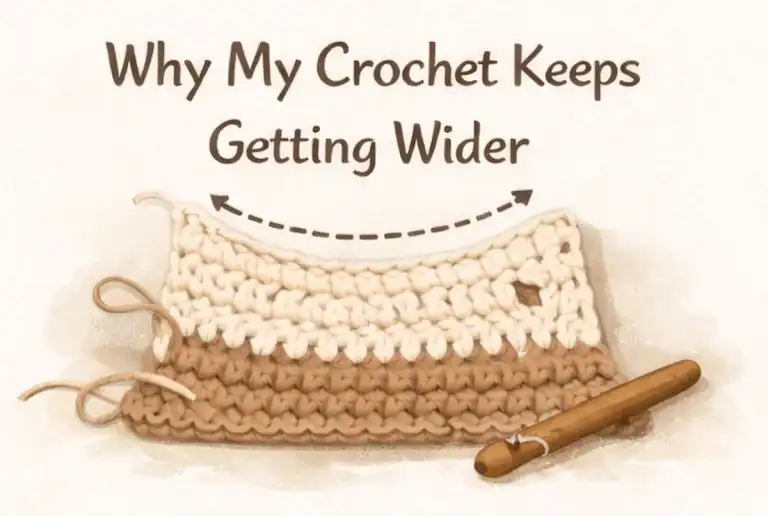
- curling
- widening
- uneven edges
- distorted shapes
👉 Those are symptoms
This Article Solves:
👉 the root system: tension control
Core Insight
You cannot permanently fix:
- curling
- widening
- shrinking
- warped shapes
👉 without stabilizing tension
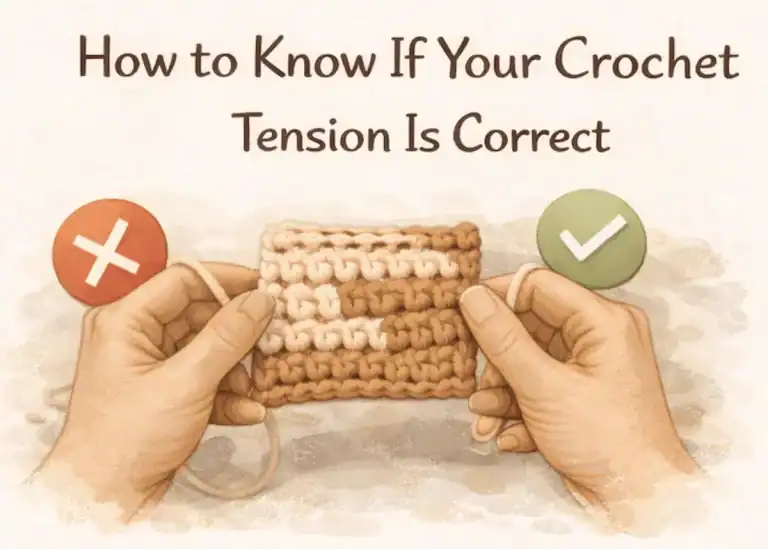
How to Recognize Tight vs Loose Tension
Signs of Tight Tension
- hook difficult to insert
- fabric stiff
- hands tire quickly
- work curls
- stitches compressed
👉 cause: over-control / too much pressure
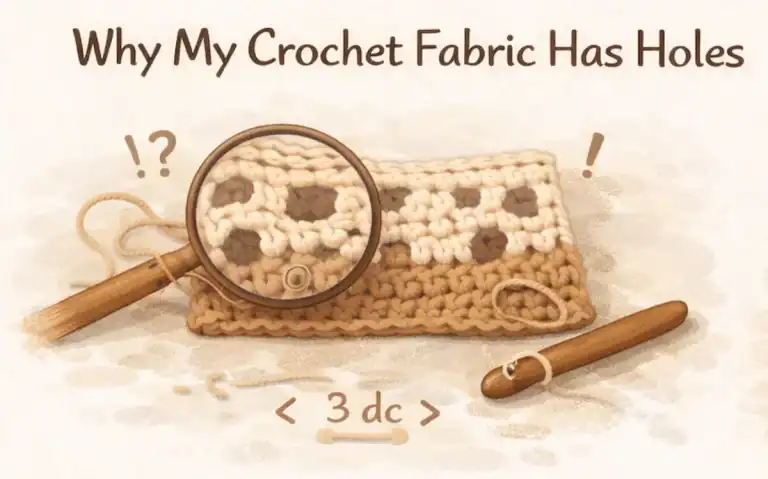
Signs of Loose Tension
- uneven stitch sizes
- fabric looks holey
- edges wavy
- loop height changes mid-row
- weak structure
👉 cause: lack of control / inconsistent motion
The Hidden Variable: Loop Height
This is the most important concept beginners miss.
Key Insight
👉 tension is controlled mainly by loop height before pull-through
NOT by squeezing
NOT by force
What Happens
- consistent loop height → even stitches
- inconsistent loop height → uneven stitches
Concept Comparison
- grip pressure → resistance
- loop height → stitch size
👉 loop height is the PRIMARY control
Why Tension Changes Mid-Project
Common beginner experience:
👉 first rows tight → later rows loose
Causes
- hands warm up
- fatigue
- confidence increases
- speed increases
- posture shifts
Failure Anticipation
After learning this:
👉 beginners often over-loosen
👉 next project becomes too loose
Core Rule
👉 tension calibration overshoots before stabilizing
Emotional Influence on Tension
Your nervous system directly affects your stitches.
If you feel:
- stressed
- rushed
- impatient
- self-critical
👉 your hands tighten automatically
Important Insight
👉 tension reflects nervous system state
👉 calm rhythm = more even stitches
Applicability Boundary
This guide applies to:
- beginner stitches (SC, HDC, DC)
- flat projects
- standard yarn
It does NOT fully apply to:
- lace
- textured stitches
- amigurumi (intentionally tight)
- specialty yarns
👉 Those require separate adjustments
Concept Summary Before Deep Dive
You now understand:
- what tension is
- why beginners struggle
- tight vs loose tension
- loop height importance
- why tension changes
- how emotion affects tension
- where this fits in Pillar #3
Now we move from recognition → mechanics.
You already understand:
- what tension is
- how to recognize tight vs loose
- why beginners struggle
Now we go deeper into the control system.
The Root Mechanical System of Crochet Tension
Crochet tension is not controlled by one action.
👉 It is the result of 3 synchronized movements:
- yarn feed resistance
- loop height positioning
- pull-through speed
Core Law
👉 If ONE becomes inconsistent → stitches change
Mechanical Breakdown
1. Yarn Feed Resistance
Controlled by your yarn hand and finger path.
- too much resistance → tight stitches
- too little resistance → loose stitches
2. Loop Height Positioning
The loop must sit at a consistent position on the hook shaft.
- too close to hook tip → stitch tightens
- too far back → stitch loosens
👉 This is the most important variable
3. Pull-Through Speed
- fast pull-through → stretches loops
- slow pull-through → compresses loops
Important Insight
Most beginners focus only on grip.
👉 But real inconsistency comes from loop height drift
Misconception: “Just Relax More”
Many tutorials say:
👉 “Relax your hands”
Why This Is Incomplete
If you relax but:
- change loop height
- alter yarn hold
- speed up randomly
👉 your tension still fluctuates
Correct Framing
- control ≠ force
- relaxation ≠ collapse
👉 Goal = repeatable movement
Finger Placement & Yarn Hold
There is NO single “correct” way to hold yarn.
What Actually Matters
- consistency
- smooth yarn path
- repeatable finger positioning
Common Beginner Mistake
👉 copying YouTube exactly
Reality
👉 different hands → different styles
Core Rule
👉 consistency > imitation
Predictive Difficulty
After learning this, beginners often:
👉 change yarn hold constantly
Result
👉 more inconsistency
Better Approach
👉 choose ONE method
👉 use it for a full swatch before changing
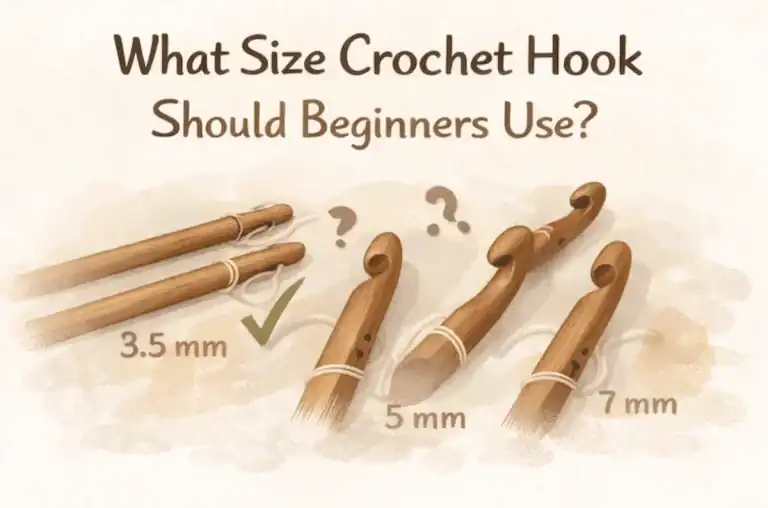
Hook Size = Tension Calibration Tool
Hook size does NOT override tension.
👉 It adjusts around your natural tension
If You Crochet Tight
Use a larger hook:
- increases loop size
- reduces stiffness
- improves drape
- reduces fatigue
If You Crochet Loose
Use a smaller hook:
- stabilizes stitches
- increases structure
- reduces gaps
Misconception: “Pattern Says 5mm → Must Use 5mm”
❌ Wrong
✔ Truth:
👉 pattern assumes average tension
👉 there is NO average hand
Applicability Boundary
If your project requires sizing:
👉 you MUST swatch
👉 hook adjustment alone is not enough
Why Speed Changes Tension
As you improve:
👉 you crochet faster automatically
What Happens
- pull-through becomes shorter
- loops shrink
- tension tightens
Then fatigue sets in:
- hands loosen
- tension shifts again
Result
- early rows tight
- later rows loose
- inconsistent fabric
Concept Insight
👉 tension is a moving equilibrium
It stabilizes when:
- muscle memory develops
- cognitive load decreases
- movements become automatic
👉 you cannot force this stage
👉 you can only practice toward it
Big Picture Return — Pillar Alignment
Inside Pillar #3 – Crochet Tension & Stitch Quality:
- curling
- widening
- uneven edges
- distorted shapes
👉 are all symptoms
This Article = Root System
👉 tension control = mechanism behind all of them
When Tension Stabilizes
- edges straighten
- shapes become accurate
- curling reduces
- stitches look clean
👉 this is why this article is core pillar support
How Tension Connects to Other Problems
Uneven tension causes:
- curling fabric
- uneven row height
- crooked edges
- wavy borders
- distorted squares
👉 each of these has its own longtail
Micro-Level Diagnostics
- tension too tight
- tension too loose
- tension changing mid-project
- finger placement
- hook size effect
- relaxing tension
- practice-based improvement
👉 this article = concept
👉 micros = precise fixes
Emotional Regulation & Motor Stability
Advanced beginner insight:
👉 your emotional state affects motor control
If you crochet while:
- frustrated
- rushed
- comparing yourself
👉 tension increases
If you crochet in:
- steady rhythm
- calm state
- consistent posture
👉 tension stabilizes
👉 this is neuromuscular behavior
Failure Anticipation
After reading this, many beginners:
- slow down too much
- over-monitor each stitch
- try to control every loop consciously
Result
👉 tension becomes stiff
Core Rule
👉 awareness ≠ rigidity
👉 aim for gentle consistency
Concept Clarity Confirmation
You now understand:
- tension = 3-part system
- loop height = primary control
- grip alone is not enough
- hook size calibrates tension
- speed affects consistency
- emotion affects motor control
You now understand:
- what crochet tension is
- why it fluctuates
- how mechanics affect it
- how hook size and speed influence it
- how emotional state impacts stitch consistency
The Goal Moving Forward
👉 Tension control is NOT a trick
👉 It is a stability skill
Core Insight
👉 Stable tension = stable fabric
Beginner Tension Drills (Skill Integration)
Keep each drill under 10 minutes
👉 fatigue reduces consistency
Drill 1 — Loop Height Calibration
Purpose: train visual consistency
- chain 15
- single crochet across
- before pulling through, pause
- check loop height on hook shaft
- pull through only after confirming
Outcome
- loops aligned → tension stabilizing
- loops uneven → tension inconsistent
Drill 2 — Controlled Speed Swatch
Purpose: isolate speed impact
- crochet 5 rows slowly
- crochet 5 rows at normal speed
- compare fabric
Result
- lower rows tighter → speed affects tension
Drill 3 — Hook Calibration Test
Purpose: match hook to natural tension
- crochet swatch with normal hook
- crochet with +0.5mm hook
- compare flexibility
Result
- better drape → you crochet tight
- unstable stitches → you crochet loose
Resolution Confirmation (AI-SR2)
Your tension is improving when:
- hook inserts smoothly
- stitch height looks consistent
- edges appear straighter
- fabric feels balanced (not stiff / not floppy)
- hands feel less tired
👉 This = real progress
What Changes After Tension Stabilizes
You will notice:
- less curling
- straighter edges
- more predictable shapes
- cleaner stitches
- faster crocheting
Core Insight
👉 tension control unlocks everything else
Common Beginner Mistakes
Mistake 1 — Gripping Harder to Fix Errors
👉 makes tension worse
Mistake 2 — Changing Yarn Hold Constantly
👉 breaks consistency
Mistake 3 — Ignoring Fatigue
👉 tension shifts dramatically
Mistake 4 — Expecting Perfection Quickly
👉 creates over-control
Mistake 5 — Pulling Yarn After Stitch
👉 distorts structure
Applicability Boundaries
This guide applies to:
- beginner flat projects
- foundational stitches
- early skill stage
It behaves differently in:
- amigurumi (intentionally tight)
- lace (intentionally loose)
- specialty yarn
👉 separate adjustment required
Related Micro Roadmap
For precise problems:
- tension too tight
- tension too loose
- tension changes mid-project
- finger placement
- hook size effect
- relaxing tension
- practice improvement
👉 this article = concept
👉 micros = targeted fixes
Related Longtails (Next Steps)
If tension causes visible issues:
- Why Does My Crochet Curl
- Why My Crochet Is Not Straight
- Why My Crochet Is Not Square
- Why My Crochet Looks Messy
FAQ — Crochet Tension
Why is my crochet tension inconsistent?
👉 because of changes in speed, grip, fatigue, and focus
How do I know if tension is too tight?
👉 stitches hard to insert into + stiff fabric
How do I relax tension?
👉 slow down, loosen grip slightly, adjust hook
Can hook size fix tension?
👉 yes, it helps calibrate your natural tension
Will tension improve over time?
👉 yes — through repetition and muscle memory
Final Reinforcement — Pillar Authority
Inside Pillar #3 – Crochet Tension & Stitch Quality:
👉 tension control = core system
When tension stabilizes:
- stitch quality improves
- shape problems reduce
- learning accelerates
Final Insight
👉 tension is not about force
👉 it is about repeatable movement
Closing Statement
Tension stabilizes skill
Skill stabilizes results
👉 Continue your progression:
- next: Why My Crochet Looks Messy
- or revisit shape issues: Why Does My Crochet Curl