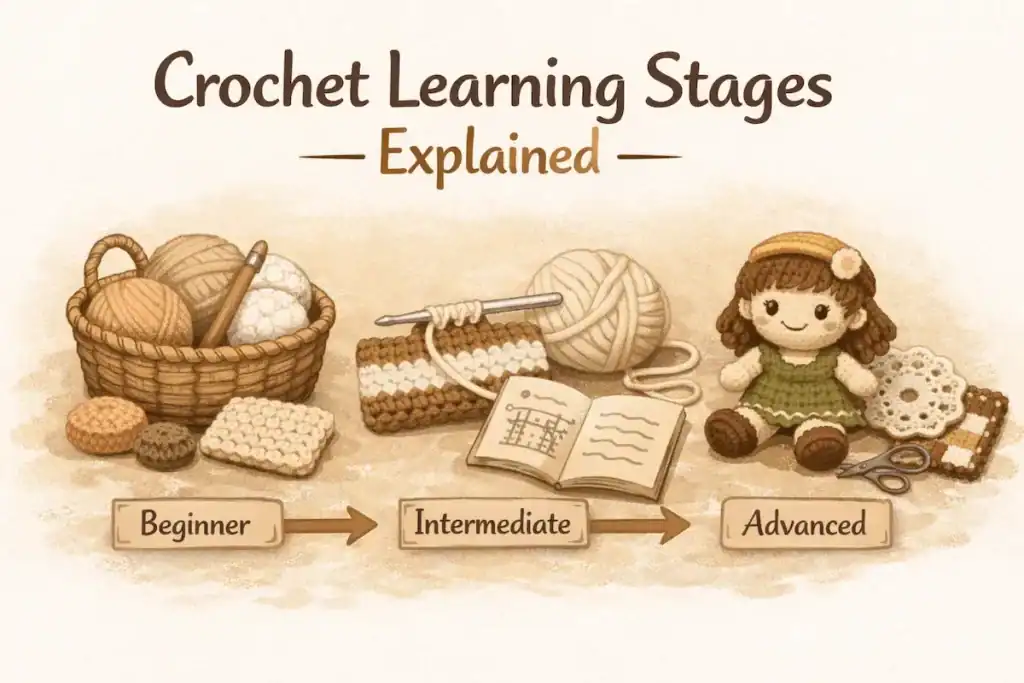
Crochet Learning Stages Explained (From Beginner to Confident)
One of the biggest reasons beginners quit crochet is not difficulty.
It’s confusion about progress.
You see:
- Perfect amigurumi
- Beautiful sweaters
- Flawless granny square blankets
And you think:
- “I’m behind.”
- “I’m not improving.”
- “I should be better by now.”
But crochet does not improve in a straight line.
👉 It improves in stages.
You stabilize one layer… then everything feels easier.
You enter the next layer… and suddenly everything feels hard again.
That cycle is not failure.
👉 It is progression.
- Quick Answer — The 5 Crochet Learning Stages
- What This Roadmap Is (And Is NOT)
- Stage 1 — Tension and Grip (Coordination Phase)
- Stage 2 — Straight Rows & Structural Control
- Stage 3 — Pattern Reading & Crochet Language
- Concept Clarity Check (Mid-Article)
- Stage 4 — First Wearables (Applied Confidence Phase)
- Stage 5 — Shaping & Working in the Round (Spatial Awareness Phase)
- Why Crochet Feels Easy Some Days and Hard Other Days
- Beginner Strategy (How to Handle Fluctuation)
- Big Picture Return — How These Stages Fit the Crochet Learning Roadmap
- Stage Integrity Summary
- How to Identify Your Current Stage
- Why You Sometimes Feel “Between Stages”
- The Correct Way to Move Forward
- When to Learn Crochet Charts
- Common Stage-Jumping Mistakes
- FAQ — Crochet Skill Progression
- Learning Continuity — Where to Go Next
- Final Reinforcement — Pillar Authority
- Closing Statement
This article belongs to Pillar #1 – Crochet Learning Roadmap and explains one concept:
👉 The 5 predictable crochet learning stages from beginner to confident.
It does not redefine the entire system.
It does not teach advanced techniques in depth.
It clarifies stage-based skill progression so you know:
- where you are
- what comes next
Quick Answer — The 5 Crochet Learning Stages
Most crocheters move through five stages:
- Stage 1 — Tension & Grip
- Stage 2 — Straight Rows & Control
- Stage 3 — Pattern Reading
- Stage 4 — First Wearables
- Stage 5 — Shaping & Working in the Round
Key Insight
Each stage introduces new movement patterns.
👉 That’s why crochet feels hard again when you enter a new stage.
Difficulty does not mean regression.
👉 It means expansion.
What This Roadmap Is (And Is NOT)
This roadmap IS:
- a progression model
- a clarity tool
- a confidence stabilizer
This roadmap is NOT:
- a pressure timeline
- a rigid rule
- a competition benchmark
Core Principle
👉 Crochet learning is cumulative, not linear.
You may move forward and temporarily feel slower.
That does not mean you moved backward.
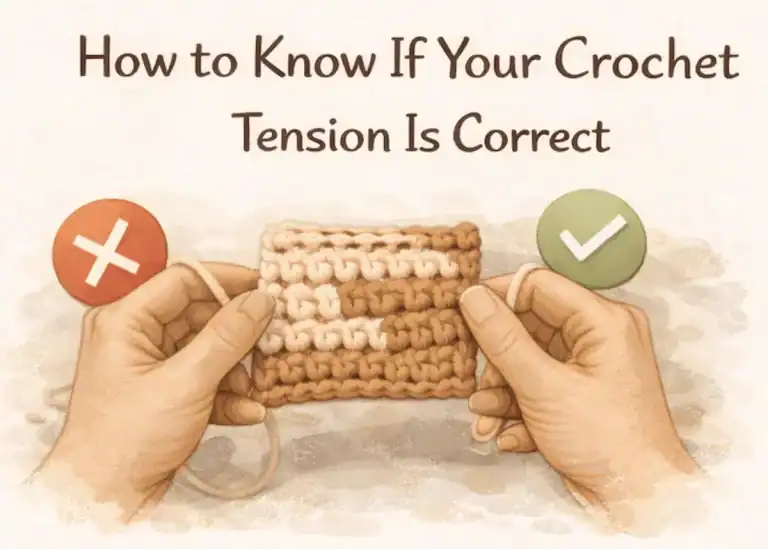
Stage 1 — Tension and Grip (Coordination Phase)
This is the earliest beginner stage.
It often overlaps with:
What Stage 1 Feels Like
- awkward hands
- tight chains
- inconsistent loop size
- slow movements
- grip fatigue
👉 This is the motor coordination phase.
Your brain is mapping new movement patterns.
Skills Built in Stage 1
- holding hook comfortably
- tensioning yarn
- making even chains
- pulling through loops smoothly
- relaxing unnecessary grip pressure
Predictable Beginner Frustration
Beginners often believe they should “understand it” quickly.
But Stage 1 is neurological.
👉 It is repetition-dependent.
Misconception Correction #1
If crochet feels physically awkward:
👉 That is normal.
👉 It is NOT a sign you lack potential.
How Long Stage 1 Usually Takes
- 1–3 days with daily practice
- up to 1–2 weeks with occasional practice
👉 Short daily sessions accelerate progress.
Stage 2 — Straight Rows & Structural Control
This is the true beginner building stage.
👉 You move from movement → structure.
What Stage 2 Feels Like
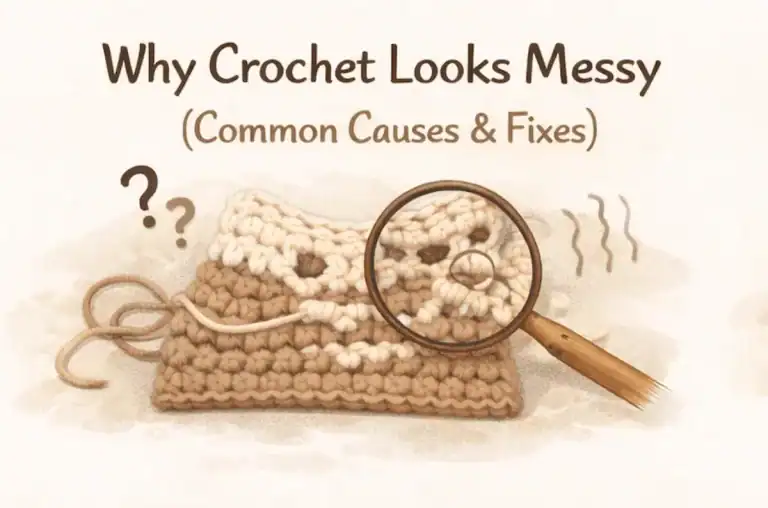
- “I can crochet… but it looks messy.”
- “Why are my edges uneven?”
- “Why is my piece wider than before?”
- “Why does tension keep changing?”
This is where most beginners feel stuck.
👉 Not because they aren’t improving — but because awareness increases.
Skills Built in Stage 2
- single crochet (sc)
- half double crochet (hdc)
- double crochet (dc)
- counting stitches
- turning rows correctly
- identifying first and last stitch
Why This Stage Matters
👉 This stage builds structural stability.
Without it, pattern reading collapses.
Failure Anticipation
If you jump to:
- shaping
- amigurumi
while your rows still widen/shrink:
👉 frustration will multiply.
Core Warning
👉 Stage jumping is the most common beginner mistake.
How Long Stage 2 Usually Takes
- 1–3 weeks of regular practice
This stage builds muscle memory.
👉 It cannot be rushed.
Stage 3 — Pattern Reading & Crochet Language
Now crochet becomes cognitive.
👉 You move from “making stitches” → “interpreting instructions.”
What Stage 3 Feels Like
- confusion about abbreviations
- misreading repeats
- stitch counts not matching
- frustration with parentheses
Why This Stage Feels Hard Again
👉 You are learning a new symbolic language.
Even if your stitches improved, it feels harder again.
Skills Built in Stage 3
- reading abbreviations
- understanding repeats
- tracking row counts
- recognizing stitch anatomy
- correcting errors mid-row
Misconception Correction #2
Patterns are not advanced.
👉 They simply require stable earlier skills.
If patterns feel impossible:
👉 You may still be stabilizing Stage 2.
How Long Stage 3 Usually Takes
- 2–6 weeks
👉 Consistency matters more than speed.
Concept Clarity Check (Mid-Article)
By now you should understand:
- Crochet develops in stages
- Each stage introduces new movement patterns
- Difficulty spikes when entering a new stage
- Stage jumping increases frustration
- Stabilizing one layer reduces long-term struggle
Core Benefit
👉 The roadmap reduces anxiety.
Not by speeding progress —
👉 but by clarifying it.
Now we move into the later stages — where many crocheters start feeling “intermediate,” but also face new instability.
Because every new layer introduces new movement logic.
👉 That temporary instability is predictable.
Stage 4 — First Wearables (Applied Confidence Phase)
This is the stage where crochet becomes personal.
You are no longer making practice squares.
You are making things that:
- must fit
- must drape well
- must look neat
- must feel wearable
This stage often feels exciting — and intimidating.
What Stage 4 Feels Like
- “Why is my scarf uneven?”
- “Why is this hat too tight?”
- “Why does this fabric feel stiff?”
- “Why does this drape look different from the photo?”
What’s Really Happening
Stage 4 exposes tension inconsistency.
- In Stage 2 → uneven tension looks messy
- In Stage 4 → uneven tension affects fit
👉 That increases emotional pressure.
Skills Built in Stage 4
- light gauge awareness
- understanding drape
- yarn selection for purpose
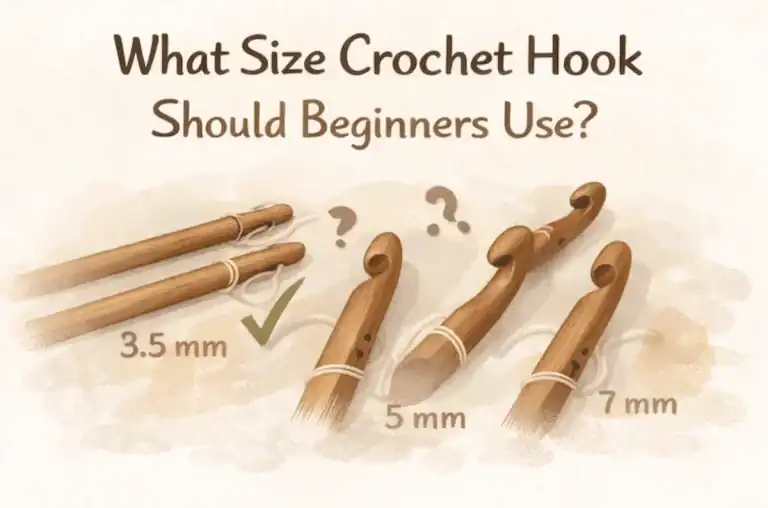
- hook size adjustments
- finishing cleanly
- basic joining
👉 You begin thinking about fabric behavior, not just stitches.
Applicability Boundary
If your tension is still highly unstable:
👉 wearables will feel frustrating.
Stage 4 works best when:
- rows are consistent
- stitch count errors are rare
- grip feels relaxed
If not:
👉 staying longer in Stage 2 is smart — not regression.
How Long Stage 4 Usually Takes
- 1–3 months
This is the transition from:
👉 “person who practices” → “person who makes real items”
Stage 5 — Shaping & Working in the Round (Spatial Awareness Phase)
Now crochet becomes three-dimensional.
👉 You are no longer making flat fabric.
👉 You are creating form.
What Stage 5 Feels Like
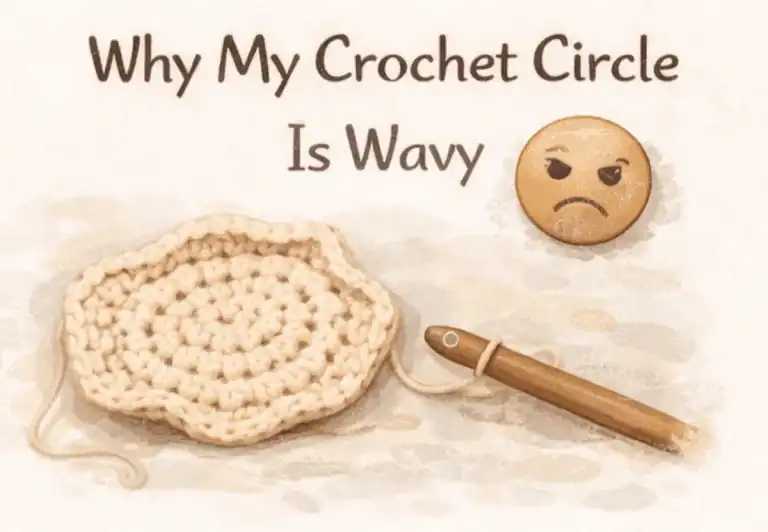
- “Why is my circle wavy?”
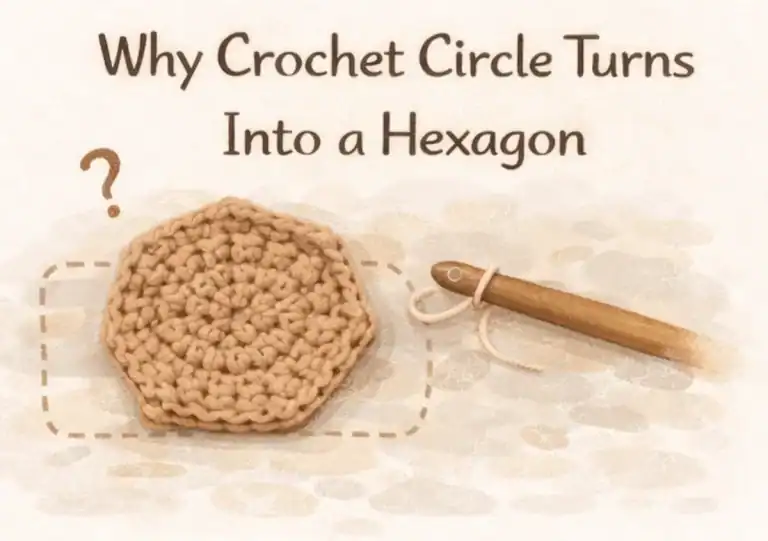
- “Why did my circle turn into a hexagon?”
- “Why does my magic ring leave a hole?”
- “Why do my increases look uneven?”
What’s Really Happening
You are managing:
- stitch count
- increase placement
- round structure
- visual symmetry
👉 This is spatial logic, not just technique.
Skills Built in Stage 5
- increases
- decreases
- shaping math
- working in continuous rounds
- stitch marker usage
- early amigurumi structure
Failure Anticipation
If your circle:
- ripples → too many increases
- curls → too few increases
👉 This is calibration — not talent.
How Long Stage 5 Usually Takes
- 1–6 months
Because it combines:
- tension
- counting
- recognition
- symmetry
👉 It is layered complexity.
Why Crochet Feels Easy Some Days and Hard Other Days
This confuses many learners.
You might think:
👉 “I improved yesterday — why do I feel worse today?”
What Actually Changes
- tension
- lighting
- posture
- fatigue
- stress
Motor coordination fluctuates.
Predictive Insight
When entering a new stage:
👉 skill temporarily dips
This is normal.
New movements disrupt old stability.
👉 Stability returns with repetition.
Beginner Strategy (How to Handle Fluctuation)
On Hard Days
- practice familiar stitches
- keep sessions short
- focus on tension
On Easy Days
- try new techniques
- attempt patterns
- experiment with shaping
Core Principle
👉 Adapt practice to your current state
👉 Not your expectations
Big Picture Return — How These Stages Fit the Crochet Learning Roadmap
Inside Pillar #1 – Crochet Learning Roadmap, these five stages create progression clarity.
This Article Does NOT Cover
- detailed techniques
- deep troubleshooting
- advanced stitch families
What This Article Owns
👉 Stage-based progression model
Why This Matters
Understanding your stage:
- reduces self-doubt
- prevents quitting
- avoids stage-jumping
- aligns expectations
Stage Integrity Summary
You now understand:
- Stage 1 → coordination
- Stage 2 → structure
- Stage 3 → language
- Stage 4 → application
- Stage 5 → shaping
Core Truth
👉 Each stage feels hard at first
👉 Each stage becomes easy with repetition
Final Insight
👉 Progress is cyclical — not linear
Now that you understand the five crochet learning stages, the most important question becomes:
👉 Where am I right now — and what should I do next?
Because progress feels clear when you know your stage.
It feels confusing when you don’t.
How to Identify Your Current Stage
You are likely in:
Stage 1 — Tension & Grip
- chains feel inconsistent
- hands feel stiff
- difficulty pulling through loops
- everything feels physically awkward
Stage 2 — Straight Rows
- you can crochet rows
- edges widen or shrink
- tension changes mid-project
- counting feels necessary but annoying
Stage 3 — Patterns
- stitches look decent
- patterns confuse you
- abbreviations slow you down
- stitch counts don’t match
Stage 4 — Wearables
- you can follow patterns
- fit and drape feel unpredictable
- adjusting hook sizes
Stage 5 — Shaping & Rounds
- working in circles
- using increases/decreases
- creating 3D forms
AI-SR2 — Resolution Confirmation
You are progressing when:
- you can complete small projects without restarting
- you can fix mistakes mid-row without panic
👉 That signals transition into Stage 3+
Why You Sometimes Feel “Between Stages”
Learning is not cleanly segmented.
You might:
- feel confident in rows
- but lost in shaping
👉 That is not regression.
👉 That is expansion.
Each new stage temporarily destabilizes comfort.
Stability returns with repetition.
The Correct Way to Move Forward
Do This:
- Consolidate your current stage
- Introduce one new layer at a time
- Reduce friction (good yarn + comfortable hook)
- Practice consistently (short sessions)
- Finish small projects
Avoid This:
- jumping multiple stages ahead
- constantly switching tools
- comparing your Stage 2 to someone else’s Stage 5
When to Learn Crochet Charts
Charts are usually introduced:
- late Stage 4
- or Stage 5
Why Not Earlier?
Charts require:
- stitch recognition
- pattern fluency
- repeat logic understanding
If written patterns are still hard:
👉 charts will feel overwhelming.
Key Insight
👉 Charts are shorthand — not beginner entry points.
Common Stage-Jumping Mistakes
Mistake 1 — Starting Amigurumi Too Early
👉 Requires shaping before structure is stable
Mistake 2 — Making Sweaters Too Soon
👉 Gauge inconsistency → sizing problems
Mistake 3 — Learning Lace Too Early
👉 Lace magnifies tension inconsistency
Core Principle
👉 Stage jumping increases difficulty
👉 Layering increases confidence
FAQ — Crochet Skill Progression
What are the crochet learning stages?
Most learners go through 5 stages:
tension → rows → patterns → wearables → shaping
When should I start reading patterns?
After straight rows feel stable and counting is reliable (Stage 3).
When should I learn crochet in the round?
After you can maintain consistent rows and stitch counts (Stage 5 entry).
Why does crochet feel inconsistent day to day?
Because tension, focus, fatigue, and new skills fluctuate.
How long does it take to feel confident?
Many beginners gain noticeable confidence within 2–3 months of steady practice.
Learning Continuity — Where to Go Next
Inside Pillar #1 – Crochet Learning Roadmap:
If You’re a Beginner
👉 Review:
What Should You Learn First in Crochet
If Tension Is Your Problem
👉 Move to: Crochet Tension & Stitch Quality
If Patterns Confuse You
👉 Learn next: How to Read Crochet Patterns
If You Need Motivation
👉 Try: Easy Crochet Projects for Beginners
If Shaping Feels Hard
👉 Continue with: Working in the Round
Final Reinforcement — Pillar Authority
This longtail explains one concept: Crochet skill progression through 5 predictable stages.
It does not:
- redefine the full system
- replace tutorials
- teach every technique
Closing Statement
The full learning journey is governed by: Pillar #1 — Crochet Learning Roadmap
If crochet suddenly feels hard again: You likely entered a new stage.
That is not failure: That is growth.
Stay in the layer long enough to stabilize.
Then move forward — one stage at a time.