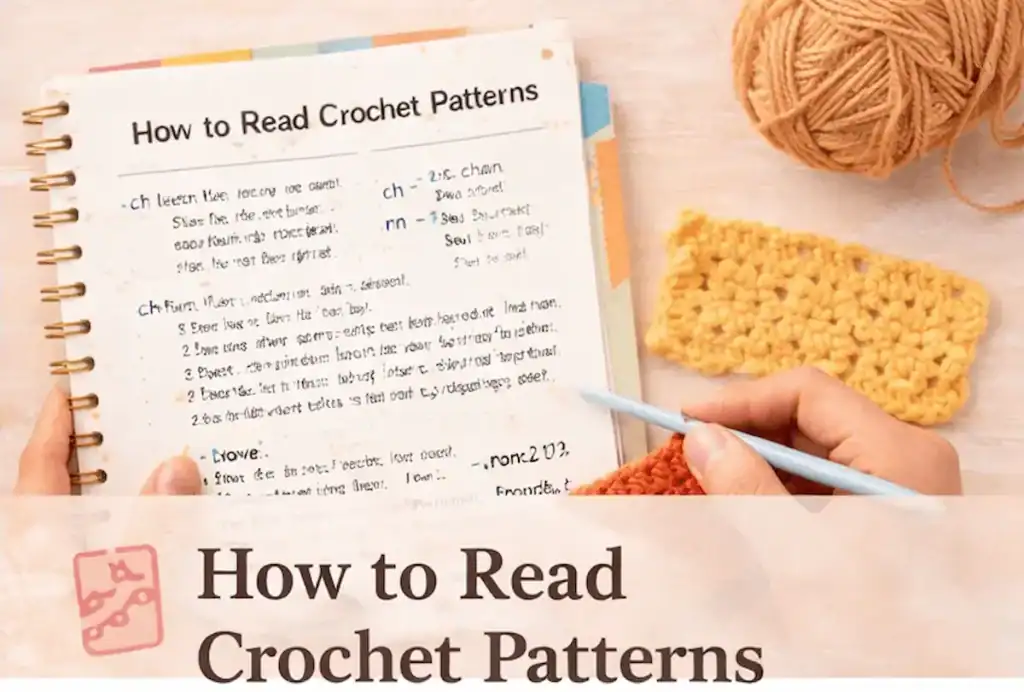
How to Read Crochet Patterns — The Skill That Unlocks Every Crochet Project
Quick Answer: Why Do Crochet Patterns Feel So Confusing at First?
Crochet patterns feel confusing because beginners are learning two skills at the same time:
- A Physical Skill (Making Stitches)
- A Symbolic Language (Reading Instructions)
Patterns are not complicated instructions.
They are compressed communication systems designed to describe crochet efficiently.
Once learners understand how this language works, patterns stop feeling like code and begin functioning as predictable maps.
This pillar explains how crochet patterns operate inside the DailyHandmade learning system — not just how to decode abbreviations, but how to think like a pattern reader.
- Quick Answer: Why Do Crochet Patterns Feel So Confusing at First?
- Pattern Reading Is the Real Transition From Beginner to Independent Crocheter
- Why Pattern Reading Belongs at Pillar Level
- The Role of Pattern Reading in the Crochet Learning System
- Crochet Patterns as Instruction Systems — Not Recipes
- The Beginner Pattern Problem This Pillar Solves
- The Core Insight: Patterns Describe Structure, Not Actions
- Written Patterns vs Symbol Charts — Two Languages, Same Meaning
- Why Beginners Feel Overwhelmed (And Why That’s Normal)
- How This Pillar Fits Inside the DH248 Knowledge Structure
- The Central Learning Shift of This Guide
- What You Will Learn in This Pillar
- Why Crochet Patterns Feel Harder Than Making Stitches
- The Pattern Overload Effect
- Why Abbreviations Feel Like a Foreign Language
- The Repeat Problem: Why Asterisks Cause Confusion
- Why Stitch Counts Feel Stressful
- Losing Place While Reading Patterns
- Why Written Instructions and Charts Seem Different
- The Direction Confusion Problem
- Cognitive Load During Early Pattern Reading
- Why Video Tutorials Feel Easier Than Patterns
- Emotional Patterns in Learning to Read Crochet Patterns
- Pattern Problems as Learning Signals
- Connecting Pattern Reading to Earlier Pillars
- The Correct Learning Order for Reading Crochet Patterns
- Stage 1 — Recognition: Becoming Familiar With Pattern Language
- Stage 2 — Structure: Seeing Pattern Blocks
- Stage 3 — Sequencing: Following Rows Predictably
- Stage 4 — Verification: Using Stitch Counts as Feedback
- Stage 5 — Interpretation: Reading Patterns Like Maps
- Understanding Pattern Sections Before Starting
- Written Patterns vs Charts — A Unified Approach
- Why Beginners Should Start With Repetitive Patterns
- Common Beginner Reading Strategies That Slow Learning
- Pattern Reading as Mental Rhythm
- Recognizing Readiness for More Complex Patterns
- Pattern Literacy as Skill Integration
- How Beginners Know Their Pattern Reading Is Improving
- The Pattern Literacy Progress Framework
- Why Patterns Eventually Feel Shorter
- Predictable Challenges After Pattern Literacy Improves
- The Relationship Between Pattern Reading and Troubleshooting
- Applicability Boundaries: Why Patterns Differ Between Designers
- Why Pattern Reading Accelerates Creativity
- From Following Patterns to Understanding Design
- Why Pattern Literacy Builds Long-Term Confidence
- Authority Insight: Patterns Are Conversations Between Designers and Makers
- How to Use This Pattern Reading Guide Throughout Your Crochet Journey
- Navigation Pathways Inside the Crochet Pattern System
- Pillar Guides — Understanding Systems
- Longtail Guides — Deep Concept Understanding
- Micro Guides — Immediate Decoding Help
- Recommended Beginner Learning Flow
- Beginner Pattern Reading Checklist
- Signs You Are Moving Beyond Beginner Pattern Reading
- How This Pillar Connects to the Complete Crochet Learning System
- Why Pattern Literacy Builds Creative Freedom
- Continue Learning — Recommended Next Reads
- System Identity — The DailyHandmade Learning Approach
Pattern Reading Is the Real Transition From Beginner to Independent Crocheter
Many beginners can crochet stitches successfully but remain dependent on video tutorials.
This creates a common plateau:
- Stitches Are Understood
- Hand Movement Improves
- But Written Patterns Still Feel Overwhelming
The limitation is not technical ability.
It is language literacy.
Pattern reading represents the moment crochet shifts from imitation to independence.
When learners understand patterns, they gain access to:
- Thousands Of Global Designs
- Books And PDF Patterns
- Symbol Charts
- International Crochet Communities
- Creative Flexibility
Pattern literacy expands crochet possibility more than learning any single stitch.
Why Pattern Reading Belongs at Pillar Level
Pattern reading cannot be solved through isolated tips because multiple systems operate simultaneously:
- Abbreviations
- Repetition Logic
- Row Sequencing
- Stitch Counting
- Formatting Conventions
- Visual Charts And Diagrams
Each element makes sense individually, but beginners struggle because they encounter all of them at once.
A pillar-level explanation organizes these components into a coherent mental model.
Instead of memorizing rules, learners understand structure.
The Role of Pattern Reading in the Crochet Learning System
Pattern literacy integrates all previous beginner pillars:
- Pillar #1 — Learning Progression
Determines readiness to follow structured instructions. - Pillar #2 — Hand Mechanics
Allows stitches to be executed consistently. - Pillar #3 — Fabric Behavior
Helps interpret results when patterns seem incorrect. - Pillar #4 — Yarn Selection
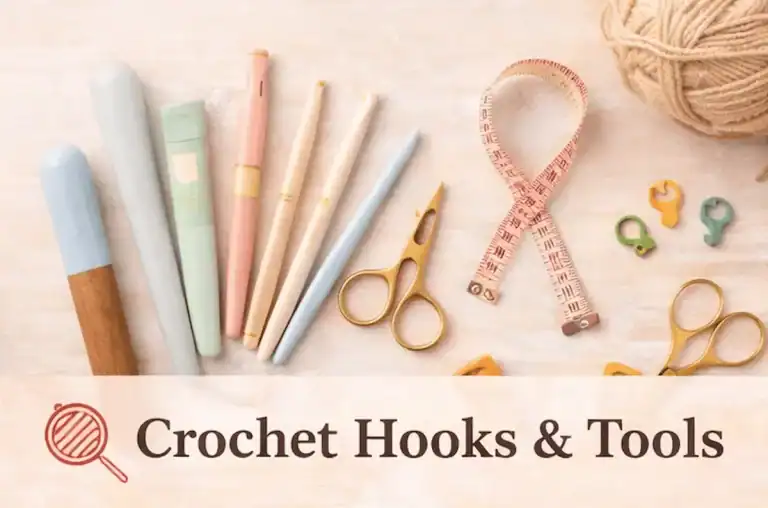
Ensures stitches remain visible while learning patterns. - Pillar #5 — Hooks & Tools
Supports comfort during longer instruction-following sessions.
Pillar #6 — Pattern Reading (This Guide) connects knowledge to execution.
Patterns translate ideas into repeatable structure.
This pillar teaches how to interpret that translation.
Crochet Patterns as Instruction Systems — Not Recipes
Beginners often expect patterns to function like step-by-step tutorials.
Instead, patterns operate more like shorthand engineering notes.
They assume:
- Knowledge Of Stitch Names
- Familiarity With Repetition
- Understanding Of Counting
- Awareness Of Formatting Conventions
Patterns prioritize efficiency over explanation.
This design allows experienced crocheters to read quickly but creates an initial barrier for beginners.
Understanding this intention removes a major source of frustration.
Patterns are not unclear — they are compressed.
The Beginner Pattern Problem This Pillar Solves
Common beginner experiences include:
- Instructions Feeling Overwhelming
- Stitch Counts Not Matching
- Confusion About Parentheses Or Brackets
- Losing Place After Several Rows
- Charts Appearing Unreadable
- Written Instructions Differing From Diagrams
These issues arise because beginners interpret patterns linearly instead of structurally.
This pillar introduces structural reading — recognizing how parts relate before crocheting begins.
The Core Insight: Patterns Describe Structure, Not Actions
A beginner reads:
“Row 3: sc, ch 1, skip 1 repeat across”
and tries to follow word by word.
An experienced crocheter sees:
Repeating Structural Unit.
Patterns describe repeating geometry rather than individual motions.
Once learners recognize repeat units, patterns become dramatically easier to follow.
This shift reduces cognitive load and increases confidence immediately.
Written Patterns vs Symbol Charts — Two Languages, Same Meaning
Crochet uses two parallel instruction systems:
Written Patterns
Text-based instructions using abbreviations and counts.
Common in:
- US And Online Patterns
- Beginner Tutorials
- Downloadable PDFs
Symbol Charts
Visual diagrams representing stitches with symbols.
Common in:
- Japanese And European Patterns
- Motifs And Lace
- International Publications
Both systems communicate identical structure using different formats.
This pillar teaches how to understand both languages within one unified framework.
Why Beginners Feel Overwhelmed (And Why That’s Normal)
Pattern reading combines several cognitive tasks simultaneously:
- Language Decoding
- Sequencing
- Mathematical Counting
- Spatial Visualization
- Motor Coordination
The brain alternates between reading and crocheting rapidly.
This dual processing creates temporary overload during early learning.
Overwhelm therefore signals adaptation, not inability.
With repetition, decoding becomes automatic and cognitive effort decreases sharply.
How This Pillar Fits Inside the DH248 Knowledge Structure
Within the crochet hub hierarchy:
- Pillars Explain Systems
- Longtails Teach Deep Concepts
- Micros Solve Precise Confusion Points
This pillar governs three major longtail clusters:
Written Pattern Literacy
Symbol Understanding
Chart & Diagram Reading
Micro guides address specific decoding problems such as abbreviations, repeats, stitch counts, and chart direction.
This pillar connects them into one learning pathway.
The Central Learning Shift of This Guide
Crochet becomes easier when learners stop asking:
“What does this line tell me to do next?”
and begin asking:
“What structure is this pattern describing?”
This shift transforms patterns from instructions into maps.
Maps do not control movement — they guide navigation.
Once learners see patterns as navigation tools, confusion decreases dramatically.
What You Will Learn in This Pillar
By completing this guide, beginners will understand:
- How Written Patterns Are Structured
- How Abbreviations Function Logically
- How Repeats Simplify Instructions
- Why Stitch Counts Matter
- How To Follow Rows Without Losing Place
- How Crochet Charts Represent Structure Visually
- And How To Practice Pattern Reading Without Stress
More importantly, learners will develop pattern literacy — the skill that enables independent crochet learning.
The next section explores the beginner pattern-reading problem landscape — explaining why abbreviations, repeats, and charts feel difficult initially and how these challenges reflect normal learning progression.
Why Crochet Patterns Feel Harder Than Making Stitches
Many beginners reach a moment where they can crochet basic stitches comfortably but still struggle to follow written patterns.
This creates confusion:
- “I Know How To Crochet — Why Can’t I Read Patterns?”
- “Why Do Patterns Look Complicated Even For Simple Projects?”
The difficulty arises because pattern reading is not a physical skill. It is a translation skill.
Beginners must translate symbolic instructions into physical movement while simultaneously monitoring fabric results.
This dual process creates temporary friction even when stitch knowledge is sufficient.
The Pattern Overload Effect
When beginners first open a pattern, they encounter multiple unfamiliar elements at once:
- Abbreviations
- Numbers
- Parentheses
- Brackets
- Asterisks
- Notes
- Sizing Information
- Row Counts
All appear before any crocheting begins.
The brain attempts to interpret everything simultaneously, producing overwhelm.
Experienced crocheters do not read patterns this way. They filter information automatically, focusing only on structure relevant to the current row.
Learning this filtering process is a key developmental step.
Why Abbreviations Feel Like a Foreign Language
Crochet abbreviations compress repeated words into symbols:
- Sc = Single Crochet
- Dc = Double Crochet
- Ch = Chain
- Rep = Repeat
Beginners often attempt to memorize abbreviations individually, which feels like vocabulary learning.
In reality, abbreviations function more like shorthand grammar.
They reduce visual clutter so structural patterns become visible.
Once learners recognize common abbreviations repeatedly, recognition replaces memorization.
Misconception Correction
Pattern fluency does not require memorizing every abbreviation first. Familiarity develops naturally through repetition.
The Repeat Problem: Why Asterisks Cause Confusion
Repeat instructions are one of the most intimidating parts of patterns.
Example:
Sc, Ch 1, Skip 1 Repeat Across
Beginners often interpret this as multiple separate instructions instead of a repeating unit.
The asterisk marks a pattern block, not a complicated rule.
Patterns use repetition because crochet fabric itself repeats structure.
Recognizing repeat units dramatically reduces reading complexity.
Instead of reading ten instructions, learners follow one repeated structure.
Why Stitch Counts Feel Stressful
Many beginners experience anxiety when stitch counts do not match expectations.
Common reactions include:
- Restarting Rows Repeatedly
- Doubting Stitch Execution
- Assuming Misunderstanding
Stitch counts function as verification tools, not tests.
They confirm whether structural repetition remained consistent.
Mismatch usually results from:
- Missed Stitches
- Extra Stitches At Edges
- Misunderstanding Turning Chains
- Losing Place Mid-Row
Counts provide feedback rather than judgment.
Losing Place While Reading Patterns
A frequent beginner frustration is losing track of where they are in a row.
This occurs because crochet alternates attention between:
- Reading Instructions
- Performing Movement
- Observing Fabric
Switching attention interrupts memory tracking.
Experienced crocheters externalize tracking using simple aids:
- Stitch Markers
- Highlighting Completed Rows
- Placing Fingers Under Active Instructions
- Reading Ahead Before Crocheting
Pattern reading becomes easier when memory burden shifts from brain to environment.
Why Written Instructions and Charts Seem Different
Beginners often assume charts and written patterns describe different methods.
In reality, they represent identical structure using different languages.
Written patterns describe sequence verbally.
Charts describe structure spatially.
Charts feel confusing initially because learners expect them to be read like text. Instead, charts are read like maps — following direction of stitches visually.
Understanding this removes much of the intimidation surrounding symbol diagrams.
The Direction Confusion Problem
Patterns introduce directional concepts unfamiliar to beginners:
- Right Side Vs Wrong Side
- Turning Chains
- Row Direction Changes
- Chart Reading Direction
Confusion occurs because beginners focus on individual stitches rather than overall orientation.
Once learners understand that crochet grows row by row with alternating direction, pattern flow becomes predictable.
Orientation awareness reduces many early mistakes.
Cognitive Load During Early Pattern Reading
Pattern reading temporarily increases mental workload because learners must manage:
- Decoding Symbols
- Counting Stitches
- Maintaining Rhythm
- Visualizing Structure
- Executing Movement
This explains why beginners feel mentally tired after following patterns even when projects are simple.
As recognition improves:
- Abbreviations Become Automatic
- Repeat Structures Become Familiar
- Counts Require Less Attention
Cognitive load decreases sharply after initial adaptation.
Why Video Tutorials Feel Easier Than Patterns
Videos remove translation responsibility.
They show movement directly, allowing imitation without interpretation.
Patterns require independent interpretation, which feels harder initially but builds transferable understanding.
Videos teach execution.
Patterns teach autonomy.
This pillar helps learners bridge that gap.
Emotional Patterns in Learning to Read Crochet Patterns
Beginners commonly experience a predictable emotional progression:
- Curiosity — Opening First Written Pattern
- Confusion — Unfamiliar Symbols Appear
- Self-Doubt — Assuming Patterns Are Advanced
- Gradual Recognition — Repeated Elements Become Familiar
- Confidence — Patterns Begin Feeling Logical
Understanding this progression helps learners persist through early discomfort.
Confusion is a transitional phase, not evidence of inability.
Pattern Problems as Learning Signals
Each difficulty provides information about learning stage:
- Abbreviation Confusion → Language Familiarity Developing
- Repeat Confusion → Structural Thinking Emerging
- Count Mismatch → Attention Shifting Between Reading And Stitching
- Chart Difficulty → Spatial Interpretation Forming
Recognizing these signals reframes frustration as progress.
Connecting Pattern Reading to Earlier Pillars
Pattern literacy relies on all earlier foundations:
- Hand Mechanics Allow Focus Beyond Basic Movement
- Fabric Behavior Helps Diagnose Pattern Results
- Yarn Clarity Improves Stitch Visibility While Reading
- Tool Comfort Supports Longer Concentration Periods
Pattern reading becomes easier when physical friction decreases.
This pillar integrates all previous learning into structured understanding.
The next section introduces the pattern-reading progression system — explaining how beginners should learn pattern literacy step by step instead of attempting full comprehension immediately.
The Correct Learning Order for Reading Crochet Patterns
Beginners often attempt to understand crochet patterns by reading entire instructions from start to finish before beginning.
This approach creates overload because pattern literacy develops progressively, not all at once.
Within the DailyHandmade learning system, pattern reading follows a structured progression:
Recognition → Structure → Sequencing → Verification → Interpretation
Each stage builds the cognitive skill required for the next. Trying to master later stages too early makes patterns feel unnecessarily complex.
Understanding this progression transforms pattern reading from decoding into navigation.
Stage 1 — Recognition: Becoming Familiar With Pattern Language
The first goal is not understanding everything.
It is recognizing common elements without hesitation.
At this stage, learners focus on identifying:
- Basic Abbreviations (Ch, Sc, Dc)
- Row Numbers
- Stitch Counts
- Simple Repeats
Recognition reduces cognitive effort because familiar symbols no longer require conscious translation.
Practice Strategy
Read short pattern sections without crocheting — simply identify elements visually.
Progress Signal
Abbreviations begin feeling familiar rather than intimidating.
Stage 2 — Structure: Seeing Pattern Blocks
Once recognition stabilizes, learners begin identifying structural units.
Example:
Sc, Ch 1, Skip 1 Repeat Across
Instead of reading individual stitches, learners recognize one repeating block.
Patterns become shorter mentally because repetition replaces memorization.
Key Insight
Patterns describe repeating geometry rather than isolated actions.
Progress Signal
You anticipate upcoming stitches before reading each word.
Stage 3 — Sequencing: Following Rows Predictably
At this stage, learners understand how rows connect logically.
They begin noticing:
- Turning Chains Prepare The Next Row
- Stitch Counts Remain Consistent Intentionally
- Repeats Align Vertically
- Fabric Growth Follows Predictable Direction
Sequencing transforms patterns from lists into flowing processes.
Misconception Correction
Confusion often occurs when beginners attempt to understand entire patterns at once. Focus only on the current row plus brief preview of the next.
Progress Signal
You rarely lose place within a row.
Stage 4 — Verification: Using Stitch Counts as Feedback
Beginners often treat stitch counts as stressful checkpoints.
At this stage, counts become diagnostic tools.
Learners use counts to confirm structure:
- Correct Repetition Completed
- Edges Aligned Properly
- No Stitches Added Or Missed
Verification builds confidence because problems are detected early rather than after several rows.
Applicability Boundary
Counts verify structure but do not judge speed or skill.
Progress Signal
You check counts naturally without anxiety.
Stage 5 — Interpretation: Reading Patterns Like Maps
The final beginner stage shifts thinking completely.
Learners stop translating word-by-word and begin visualizing fabric outcome.
Reading a row becomes similar to viewing a map:
- Repeats Form Patterns
- Increases Shape Fabric
- Spacing Creates Texture
- Structure Predicts Appearance
Interpretation allows learners to adapt patterns and troubleshoot independently.
Predictive Insight
At this stage, patterns feel shorter because understanding replaces decoding.
Understanding Pattern Sections Before Starting
Experienced crocheters scan patterns before beginning.
Beginners benefit from learning a simplified version of this habit.
Before crocheting, identify:
- Materials Required
- Stitch Abbreviations Used
- Repeat Sections
- Total Rows
- Final Stitch Count
This overview builds orientation and reduces mid-project confusion.
Written Patterns vs Charts — A Unified Approach
Rather than learning written patterns and charts separately, beginners should view both as representations of the same structure.
Written Patterns
Explain sequence over time.
Charts
Show spatial relationships instantly.
A helpful strategy:
- Read Written Instructions
- Glance At Chart To Confirm Structure Visually
Using both together accelerates comprehension.
Why Beginners Should Start With Repetitive Patterns
Patterns with consistent repeats support faster literacy development because repetition reinforces recognition.
Examples include:
- Scarves
- Dishcloths
- Simple Blankets
- Granny Squares
Highly shaped garments introduce too many variables early.
Progression matters more than project complexity.
Common Beginner Reading Strategies That Slow Learning
Certain habits unintentionally increase difficulty:
- Reading Every Abbreviation Repeatedly
- Crocheting Without Previewing Instructions
- Switching Between Many Patterns Simultaneously
- Restarting After Minor Confusion
These behaviors prevent pattern familiarity from developing.
Consistency with one pattern builds recognition faster than variety.
Pattern Reading as Mental Rhythm
As literacy improves, reading and crocheting synchronize.
The learner develops a rhythm:
Read → Stitch → Glance → Continue
instead of stopping after every instruction.
Rhythm reduces cognitive load and increases enjoyment.
Pattern following becomes fluid rather than analytical.
Recognizing Readiness for More Complex Patterns
Learners are ready to advance when:
- Abbreviations Require Little Thought
- Repeat Sections Feel Predictable
- Stitch Counts Rarely Surprise You
- Charts Feel Interpretable Even If Slow
- Mistakes Are Identified Early
Complex patterns then feel challenging but understandable.
Pattern Literacy as Skill Integration
Pattern reading integrates knowledge from every earlier pillar:
- Hand Mechanics Enable Smooth Execution
- Yarn Clarity Improves Stitch Visibility
- Tools Support Endurance
- Troubleshooting Skills Interpret Outcomes
This integration explains why pattern reading often feels like a major breakthrough in crochet learning.
It represents not a new skill alone, but coordination of many existing ones.
The next section expands into authority-level understanding — helping learners recognize pattern-reading progress, anticipate advanced challenges, and understand how literacy leads to creative independence.
How Beginners Know Their Pattern Reading Is Improving
Pattern literacy rarely improves in dramatic moments. Instead, learners notice gradual shifts in how patterns feel during use.
At first, every instruction requires deliberate decoding. Later, reading becomes faster, calmer, and more intuitive.
Progress appears through changes in perception rather than project complexity.
Instead of asking:
“Can I understand this pattern?”
learners begin asking:
“What structure is this pattern creating?”
This change signals growing independence.
The Pattern Literacy Progress Framework
Across beginner experiences, pattern-reading development follows consistent indicators.
1. Reduced Dependence on Tutorials
Early learners frequently compare written patterns with video demonstrations.
Progress Signal
You can continue crocheting confidently using only written instructions.
Videos become optional references rather than necessary guides.
2. Faster Abbreviation Recognition
Abbreviations initially require conscious translation.
Progress Signal
Common abbreviations are recognized instantly without mental decoding.
Reading speed increases naturally.
3. Predictable Repeats
Repeat sections begin feeling familiar rather than confusing.
Progress Signal
You anticipate stitch sequences before finishing the instruction line.
Recognition replaces memorization.
4. Early Error Detection
Beginners often notice mistakes several rows later.
Progress Signal
You recognize inconsistencies within the same row.
Fabric behavior learned in Pillar #3 combines with pattern literacy to create faster diagnosis.
5. Confidence Starting New Patterns
New instructions feel interpretable even if unfamiliar.
Learners trust their ability to understand structure gradually rather than expecting immediate clarity.
Confidence grows from understanding systems rather than memorizing instructions.
Why Patterns Eventually Feel Shorter
A surprising experience for many learners is that patterns appear shorter over time.
This happens because experienced readers process information in chunks.
Beginner View
Sc, Sc, Ch 1, Skip 1, Sc, Sc, Ch 1…
Experienced View
Repeating Texture Unit
Chunking reduces cognitive load dramatically.
The brain stores structural patterns instead of individual steps.
Predictable Challenges After Pattern Literacy Improves
As learners progress, new pattern-related challenges appear:
- Multi-Size Instructions
- Shaping Techniques
- Colorwork Directions
- Chart-Only Patterns
- Unfamiliar Terminology
Temporary confusion may return.
This is normal because each complexity layer introduces new symbolic systems.
Failure Anticipation Insight
Feeling confused by advanced formatting indicates expansion of literacy, not regression.
The Relationship Between Pattern Reading and Troubleshooting
Pattern literacy strengthens troubleshooting ability.
Learners begin distinguishing between:
- Pattern Misunderstanding
- Execution Error
- Tension Variation
- Intentional Design Shaping
Instead of assuming patterns are wrong, learners analyze structure logically.
This reduces unnecessary restarting and builds confidence.
Applicability Boundaries: Why Patterns Differ Between Designers
Crochet patterns vary because designers prioritize different goals:
- Efficiency
- Clarity
- Stylistic Formatting
- Regional Terminology (US Vs UK Terms)
- Chart Emphasis Vs Written Instructions
Understanding variability prevents learners from expecting identical formatting across patterns.
Adaptability becomes part of literacy.
Why Pattern Reading Accelerates Creativity
When learners understand patterns structurally, they begin noticing possibilities:
- Adjusting Stitch Counts
- Modifying Size
- Substituting Yarns
- Combining Textures
- Designing Variations
Patterns shift from rules to resources.
Creative experimentation becomes safer because learners understand underlying logic.
From Following Patterns to Understanding Design
A major milestone occurs when learners read a pattern and think:
“I understand why this step exists.”
At this point, pattern reading evolves into design awareness.
Learners recognize:
- Increases Shaping Fabric
- Spacing Creating Texture
- Repeats Forming Motifs
- Counts Maintaining Symmetry
Understanding intention enables adaptation.
Why Pattern Literacy Builds Long-Term Confidence
Confidence emerges when learners trust their ability to interpret instructions independently.
Pattern literacy provides:
- Access To Unlimited Projects
- Freedom From Tutorial Dependency
- Ability To Troubleshoot Logically
- Readiness For Complex Designs
Learning becomes self-directed rather than instruction-driven.
Authority Insight: Patterns Are Conversations Between Designers and Makers
Patterns communicate design decisions using symbolic language.
When learners understand this language, they participate actively in the creative process rather than passively following steps.
Reading patterns becomes collaboration:
Designer Intention + Maker Interpretation = Finished Project
This perspective transforms crochet from replication into understanding.
The final section connects this pillar to the broader crochet ecosystem, navigation pathways, and next learning steps within the DailyHandmade system.
How to Use This Pattern Reading Guide Throughout Your Crochet Journey
This pillar is not meant to be completed once and forgotten.
Pattern literacy develops in layers. As projects become more complex, learners naturally return to foundational concepts — repeats, counts, charts, and structure interpretation — with deeper understanding each time.
Whenever a pattern begins to feel confusing, return to this guide and reassess using three questions:
- What Structure Is Repeating Here?
- What Is This Row Trying To Build?
- What Verification Signal (Count Or Alignment) Confirms Success?
These questions reconnect reading to structure instead of word-by-word decoding.
Revisiting fundamentals strengthens independence rather than indicating regression.
Navigation Pathways Inside the Crochet Pattern System
The DailyHandmade crochet hub organizes learning so each content level supports a different type of need.
Understanding navigation prevents random searching and maintains progression clarity.
Pillar Guides — Understanding Systems
Pillar articles explain how crochet works as a learning system.
They provide:
- Mental Models
- Progression Logic
- Conceptual Clarity
- Learning Orientation
This article governs Pattern Literacy, explaining how instructions translate into crochet structure.
Pillars answer:
“How should I understand this skill within the larger learning journey?”
Longtail Guides — Deep Concept Understanding
Longtail articles expand major pattern-reading concepts introduced here.
How To Read Crochet Patterns For Beginners
Focuses on:
- Written Instruction Structure
- Abbreviations
- Repeats
- Stitch Counts
Crochet Pattern Symbols Explained
Focuses on:
- Symbol Meanings
- Chart Interpretation Basics
- International Pattern Conventions
How To Read Crochet Charts
Focuses on:
- Chart Direction
- Row Flow
- Spatial Visualization
Longtails provide detailed understanding without overwhelming pillar-level structure.
Micro Guides — Immediate Decoding Help
Micro articles resolve specific moments of confusion during real projects.
Pattern Basics
- What Do Parentheses Mean In Crochet Patterns
- What Does “Repeat Across” Mean
- How To Keep Track Of Rows
- Why Stitch Count Doesn’t Match Pattern
- US Vs UK Crochet Terms Explained
Symbols & Charts
- Most Common Crochet Symbols Chart
- How To Read Chart Direction
- How Turning Chains Appear In Charts
- Why Charts Start In Different Corners
Micro guides allow learners to solve problems quickly and return to crocheting without losing flow.
Authority learning flow remains:
Micro → Longtail → Pillar
which reinforces system understanding.
Recommended Beginner Learning Flow
Pattern literacy works best when integrated with earlier pillars:
- Follow Crochet Learning Roadmap (Pillar #1)
- Stabilize Hand Mechanics (Pillar #2)
- Understand Fabric Behavior (Pillar #3)
- Choose Learning-Friendly Yarn (Pillar #4)
- Optimize Tools And Comfort (Pillar #5)
- Develop Pattern Literacy Using This Pillar
- Deepen Understanding Through Longtails
- Use Micro Guides During Active Projects
This sequence transforms crochet learning from imitation into independent navigation.
Beginner Pattern Reading Checklist
Before starting a new pattern:
Orientation
- Read Materials And Notes First
- Identify Abbreviations Used
Structure
- Locate Repeat Sections
- Identify Total Rows Or Rounds
Verification
- Note Stitch Counts At Row Ends
- Recognize Shaping Rows
Execution
- Read One Row Ahead Before Crocheting
This checklist reduces overwhelm and prevents early mistakes.
Signs You Are Moving Beyond Beginner Pattern Reading
Learners often notice progression through subtle changes:
- Patterns Feel Readable At First Glance
- Repeats Become Easy To Follow
- Charts Feel Logical Rather Than Intimidating
- Fewer Pauses Occur During Stitching
- Confidence Starting Unfamiliar Patterns Increases
At this stage, patterns function as guides rather than obstacles.
How This Pillar Connects to the Complete Crochet Learning System
Each beginner pillar supports one dimension of crochet mastery:
- Pillar #1 — Learning Roadmap: Direction
- Pillar #2 — Hand Mechanics: Execution Control
- Pillar #3 — Fabric Behavior: Interpretation
- Pillar #4 — Yarn Selection: Learning Clarity
- Pillar #5 — Hooks & Tools: Physical Comfort
- Pillar #6 — Pattern Reading (This Guide): Instructional Literacy
Together they form a complete beginner framework:
Understand → Control → Interpret → Optimize → Read → Create
Pattern literacy represents the gateway from guided learning to independent crocheting.
Why Pattern Literacy Builds Creative Freedom
When learners understand patterns structurally:
- Projects Become Accessible Globally
- Customization Becomes Possible
- Mistakes Become Manageable
- Experimentation Feels Safe
Patterns stop limiting creativity and begin enabling it.
Understanding replaces dependence.
Continue Learning — Recommended Next Reads
Longtail Guides
- How To Read Crochet Patterns For Beginners (LT14)
- Crochet Pattern Symbols Explained (LT15)
- How To Read Crochet Charts (LT32)
Supporting Foundations
- Crochet Learning Roadmap (Pillar #1)
- Hand Mechanics & Comfort (Pillar #2)
- Fabric Behavior & Troubleshooting (Pillar #3)
- Beginner Yarn Guide (Pillar #4)
- Crochet Hooks & Tools Guide (Pillar #5)
Helpful Practice Resources
- Beginner Crochet Starter Kit
- Best Yarn For Crochet Beginners
- Best Crochet Hooks For Beginners
System Identity — The DailyHandmade Learning Approach
This article belongs to the DailyHandmade learning system, a structured framework designed to transform crochet learning from scattered tutorials into guided progression.
The system teaches learners to understand relationships:
- Between Symbols And Structure
- Between Instructions And Fabric
- Between Reading And Making
When patterns become understandable, crochet becomes independent.
And when learning becomes independent, creativity becomes sustainable.