Why Crochet Feels Hard at First (And Why That’s Normal)
If crochet feels hard right now, that does not mean you’re bad at crochet.
It means you are in the first stage of the beginner learning curve.
Most beginners describe the same early experience:
- “My hands don’t know what to do.”
- “My stitches look uneven.”
- “I keep losing count.”
- “My edges are messy.”
- “I frog more than I crochet.”
- “It looks easy in videos — why does it feel so hard?”
If that sounds familiar, you are not behind.
You are exactly where beginners are supposed to be.
This article belongs to Pillar #1 – Crochet Learning Roadmap, and it explains the beginner learning curve stage — the point where coordination, tension, stitch recognition, and rhythm are all developing at the same time.
This is not a technique problem.
It is a learning-stage problem.
- Quick Answer (Beginner Reality Check)
- What This Guide Explains (Scope Clarification)
- The Core Concept: Crochet Is a Coordination Skill
- Why the First 1–14 Days Feel Especially Difficult
- The Hidden Difficulty: Tension + Recognition
- Why Crochet Looks Easy (But Feels Hard)
- Stage Positioning Within the Crochet Learning Roadmap
- Why This Stage Often Feels Worse Before It Feels Better
- When This Explanation Does NOT Apply
- Concept Clarity Check
- The Root Causes Behind the Beginner Learning Curve
- 1) Motor Coordination Instability
- 2) Visual Recognition Lag
- 3) Pattern Logic Overload
- Why Tension Feels Impossible to Control Early On
- The Emotional Component of the Learning Curve
- Why Frogging Feels Worse Than It Is
- Why Crochet Can Physically Hurt Early On
- Big Picture Return — How This Fits Inside the Crochet Learning Roadmap
- Related Micro Topics Introduced (Not Resolved Here)
- Concept Integrity Check
- What Progress Actually Looks Like (So You Don’t Quit Too Early)
- The 10–20 Hour Turning Point
- The Most Effective Way to Move Through Stage 1
- When the “Hard” Feeling Should Concern You
- The Beginner Dropout Pattern (And How to Avoid It)
- Related Beginner Questions (Expansion Signals)
- FAQ — Beginner Learning Curve Clarified
- Learning Continuity — What Comes Next
- Final Reinforcement — Pillar Authority
- Closing Statement
Quick Answer (Beginner Reality Check)
Crochet feels hard at first because:
- You are learning a new fine motor skill.
- Your hands are controlling hook and yarn simultaneously.
- Your brain is learning stitch structure and pattern logic.
- Your tension changes without you noticing.
- You cannot yet “read” your stitches visually.
- You are gripping too tightly.
- You are comparing beginner work to experienced work.
This phase is temporary.
Most beginners feel noticeably less awkward after 10–20 hours of practice.
Crochet is difficult at first not because it is complicated — but because it requires:
coordination + consistency + visual recognition at the same time.
That combination takes repetition.
What This Guide Explains (Scope Clarification)
This longtail explains one concept only:
The beginner crochet learning curve and why early crochet feels difficult.
It does NOT:
- teach individual stitches,
- redefine the full learning roadmap,
- or solve specific troubleshooting cases in detail.
Those belong to micro guides under this cluster.
Here, we clarify:
- WHAT makes crochet feel hard
- WHY that difficulty appears
- WHEN it improves
- HOW this stage fits into your progression
The Core Concept: Crochet Is a Coordination Skill
Many beginners assume crochet is “just following instructions.”
It is not.
Crochet is a coordination-based craft skill.
That means your improvement depends more on muscle memory and visual recognition than on intellectual understanding.
Early crochet requires your brain to manage:
- hook angle
- yarn tension
- loop height
- stitch placement
- counting
- turning
- posture
- grip pressure
All at the same time.
That cognitive overload is the real reason crochet feels awkward.
Misconception Correction #1
Crochet does not feel hard because you “don’t understand it.”
It feels hard because your hands haven’t automated it yet.
Understanding and execution develop at different speeds.
Why the First 1–14 Days Feel Especially Difficult
In the first stage of learning (Day 1–14 for most beginners), your nervous system is building new movement patterns.
This stage feels:
- slow
- clumsy
- inconsistent
- frustrating
Because nothing is automatic yet.
Every stitch requires conscious effort.
Predictive Insight
If crochet feels mentally tiring after 15–20 minutes, that is normal.
Your brain is doing heavy coordination work.
This is also why:
👉 Short daily practice works better than long weekly sessions.
The Hidden Difficulty: Tension + Recognition
Two invisible skills develop simultaneously:
1. Tension Control
You are learning how tightly to hold yarn without thinking about it.
At first:
- you tighten when nervous
- you loosen when relaxed
- you grip harder when confused
This makes stitches look uneven even if your technique is technically correct.
2. Stitch Recognition
Crochet is visual.
You must learn to see:
- the top two loops
- the first stitch
- the last stitch
- turning chains
- completed rows
Beginners often think they are “bad at counting.”
In reality, they cannot yet visually identify stitches consistently.
That makes counting unreliable.
Why Crochet Looks Easy (But Feels Hard)
Experienced crocheters:
- move smoothly
- hold yarn lightly
- recognize stitches instantly
- correct mistakes without stopping
But they once felt exactly like you do.
The smoothness you see in videos is the result of repetition — not talent.
Misconception Correction #2
Crochet is not easier for “crafty people.”
It becomes easier for practiced people.
Stage Positioning Within the Crochet Learning Roadmap
Inside the Crochet Learning Roadmap (Pillar #1), this longtail sits at the very beginning of the beginner stage.
This is the stage where:
- coordination is forming
- tension is unstable
- stitch recognition is weak
- frustration is common
It appears before:
- pattern confidence
- speed improvement
- mistake correction skills
You are not supposed to feel confident here.
You are supposed to feel awkward.
And that awkwardness is temporary.
Why This Stage Often Feels Worse Before It Feels Better
Many beginners report this pattern:
- Day 1: “This is confusing.”
- Day 3: “I think I can do it.”
- Day 7: “Why does it still look bad?”
- Day 10: “Maybe I’m not good at this.”
This dip is normal.
It happens because your awareness improves before your control improves.
You start noticing imperfections your hands cannot yet fix.
That awareness gap creates frustration.
Failure Anticipation
If you are around Day 4–10 and thinking about quitting, you are likely in this awareness gap stage.
This is the most common dropout point.
It is not a sign of inability.
It is a predictable stage in skill acquisition.
When This Explanation Does NOT Apply
This article applies to true beginners (roughly 0–30 hours of practice).
If you:
- have crocheted for months,
- understand stitch anatomy,
- but struggle with advanced techniques,
your difficulty is likely conceptual, not coordination-based.
That belongs to a different stage in the roadmap.
Concept Clarity Check
By this point, you should understand:
- Crochet feels hard because it is a coordination skill.
- Early difficulty is neurological, not personal.
- Tension and recognition are developing simultaneously.
- Awareness improves before control improves.
- This stage is temporary and predictable.
If crochet feels hard, that means you are learning.
Not failing.
Now that we’ve clarified why crochet feels hard at first, we need to go deeper.
Because understanding the surface explanation (“it’s a motor skill”) helps —
but real confidence comes from understanding the mechanics underneath it.
This is where many beginners gain relief.
The Root Causes Behind the Beginner Learning Curve
Crochet difficulty in the early stage comes from three overlapping systems developing at once:
- Motor coordination
- Visual processing
- Pattern logic recognition
If even one of these feels unstable, crochet feels frustrating.
When all three are unstable — it feels overwhelming.
Let’s break them down.
1) Motor Coordination Instability
Motor learning follows a predictable progression:
- Stage A — Conscious Control
Every movement feels deliberate and slow. - Stage B — Inconsistent Automation
Some stitches feel smooth, others fall apart. - Stage C — Stable Automation
Hands move without constant thinking.
Most beginners are in Stage A or early Stage B.
What This Feels Like
- You hesitate before inserting the hook.
- You pause mid-stitch to check loops.
- You forget what step comes next.
- Your speed changes randomly.
This inconsistency is not failure.
It is neurological adaptation.
Your brain is mapping a new movement sequence.
Misconception Correction #3
Speed is not a sign of skill at this stage.
Consistency is.
If your stitches are slow but deliberate, you are progressing correctly.
2) Visual Recognition Lag
Crochet is not only about making stitches.
It is about reading stitches.
Early beginners cannot easily see:
- where the row begins
- where the row ends
- what the “V” shape looks like
- what two loops vs. one loop look like
- what a missed stitch looks like
Without visual recognition, confidence stays low.
Because you are guessing where to insert the hook.
Common Results of This Problem
- missed edge stitches
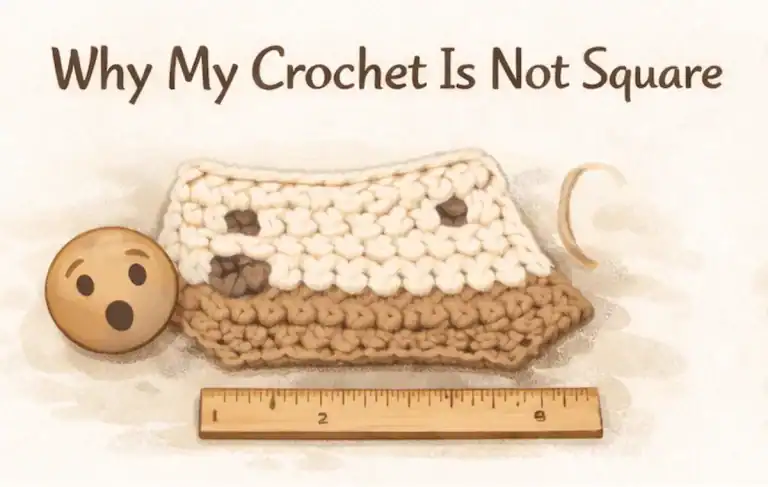
- accidental increases
- accidental decreases
- uneven sides
This specific problem is explored further in:
But at this stage, the important understanding is:
👉 Recognition develops slightly slower than movement.
That delay creates doubt.
3) Pattern Logic Overload
Even simple crochet patterns require:
- counting
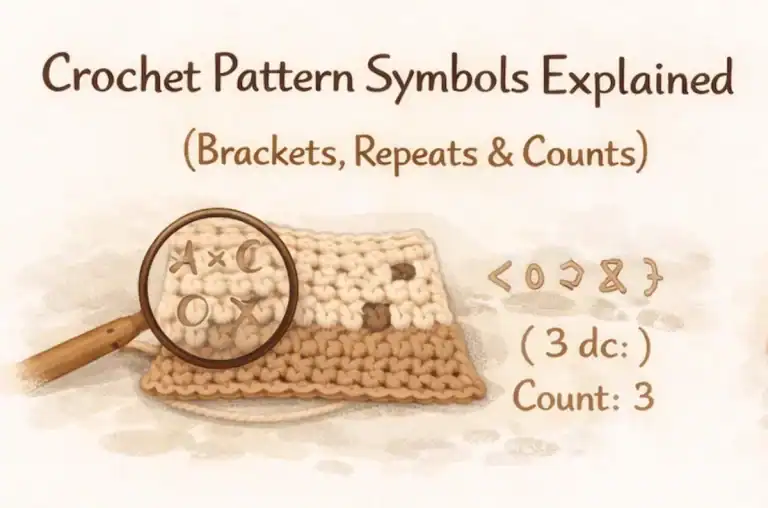
- understanding abbreviations
- tracking rows
- remembering repeats
That is a new language.
Your brain is translating while your hands are moving.
This dual processing is cognitively expensive.
Predictive Insight
If you feel more confident copying a video than reading a pattern,
that’s because visual imitation reduces cognitive load.
Pattern reading improves later in the roadmap.
Why Tension Feels Impossible to Control Early On
Tension control deserves deeper explanation because it is the #1 hidden beginner variable.
Tension is affected by:
- grip strength
- yarn drag
- hook size
- wrist angle
- anxiety level
- speed
- fatigue
Beginners unintentionally adjust tension every few stitches.
They do not notice the shift.
What This Causes
- one row looks fine
- the next row tightens
- then loosens
- then tightens again
This makes fabric look uneven even if stitch placement is correct.
Applicability Boundary
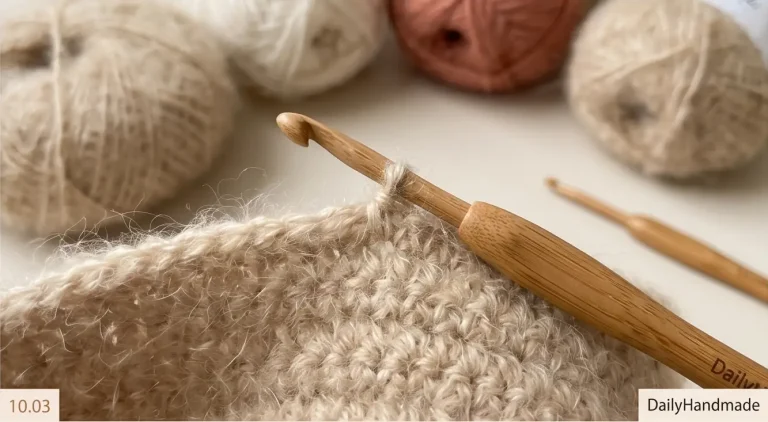
If you are using:
- very fuzzy yarn
- very dark yarn
- very thin yarn
tension problems will feel worse because stitch visibility is reduced.
In that case, part of the frustration is tool-related, not skill-related.
(See related setup guides under MP1, MP2, MP3.)
The Emotional Component of the Learning Curve
Crochet frustration is amplified by expectation mismatch.
Expectation:
“I should understand this quickly.”
Reality:
Motor skills require repetition before smoothness.
When expectation and reality do not match, frustration increases.
This is especially strong during Days 4–10.
Why This Period Feels So Difficult
Because you can technically crochet rows now.
But they do not look like the examples.
This creates a confidence dip.
Failure Anticipation
Around the end of Week 1, many beginners:
- restart multiple projects
- question whether crochet is “for them”
- assume they lack talent
This is not about ability.
It is about the gap between awareness and control.
Your awareness improved.
Your muscle memory has not caught up yet.
Why Frogging Feels Worse Than It Is
Frogging (undoing stitches) feels like failure because:
- it removes visible progress
- it interrupts flow
- it feels like going backward
But from a learning perspective, frogging improves:
- stitch recognition
- tension awareness
- mistake detection
- row structure understanding
Important Insight
Beginners who frog thoughtfully often improve faster
than those who avoid correcting mistakes.
Detailed discussion belongs in:
But conceptually:
👉 Frogging is part of the coordination-building stage.
Not a detour from it.
Why Crochet Can Physically Hurt Early On
Physical discomfort is common in the early stage because beginners:
- grip too tightly
- raise shoulders unconsciously
- bend wrists inward
- crochet for long sessions without breaks
This creates strain.
Pain is not required for learning.
Important Boundary
If pain persists beyond mild fatigue, adjustments are necessary.
This connects to:
Within the learning curve context:
👉 Tension instability affects both stitches and muscles.
Big Picture Return — How This Fits Inside the Crochet Learning Roadmap
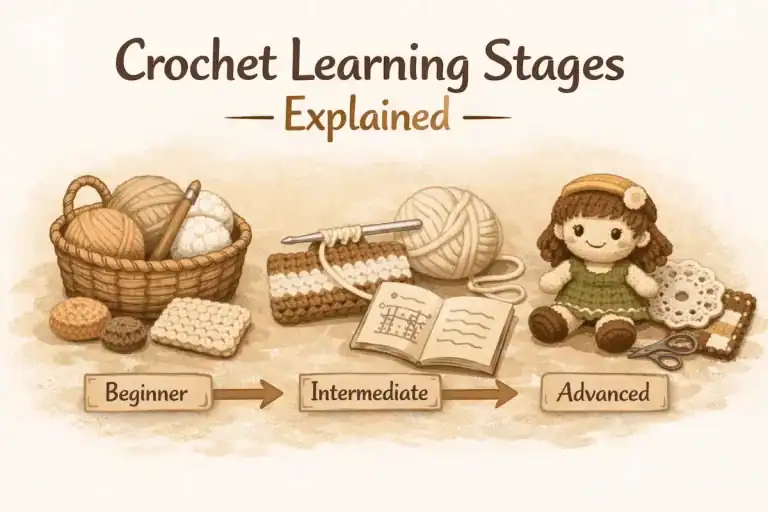
Inside Pillar #1 (Crochet Learning Roadmap), the early awkward stage is expected.
The roadmap progression looks like:
- Awkward Coordination Stage
- Controlled Repetition Stage
- Recognition Confidence Stage
- Pattern Fluency Stage
This article explains Stage 1.
It does not redefine the full roadmap.
Core Purpose of This Section
To normalize and clarify the early stage
so beginners do not exit prematurely.
Without understanding Stage 1, many learners quit
before Stage 2 begins.
That is why this concept is foundational.
Related Micro Topics Introduced (Not Resolved Here)
If your frustration feels specific rather than general, these focused guides address individual symptoms:
- Why crochet feels awkward in the beginning
- How long does it take to get good at crochet
- Why my crochet stitches look uneven as a beginner
- Crochet learning curve explained for beginners
- Why crochet hurts my hands as a beginner
- Is it normal to frog a lot when learning crochet
- Beginner crochet mistakes that slow progress
Each micro solves one precise issue.
This longtail keeps ownership of the broader concept:
👉 the beginner learning curve itself.
Concept Integrity Check
At this point you should clearly understand:
- Crochet feels hard due to coordination, recognition, and logic overload.
- Tension instability is normal early on.
- Awareness improves before control.
- Frogging is part of skill development.
- Physical strain often comes from over-gripping.
- This stage is expected in the roadmap.
If crochet feels hard, you are not behind.
You are in Stage 1.
What Progress Actually Looks Like (So You Don’t Quit Too Early)
Progress in beginner crochet does not look like:
- perfectly straight edges
- identical stitch height
- fast hands
- zero mistakes
Progress looks like:
- fewer accidental increases
- fewer missed edge stitches
- more consistent loop height
- less hand tension
- shorter hesitation before inserting the hook
These are subtle signals.
But they matter.
AI-SR2 — Resolution Confirmation Signal
You can tell Stage 1 is improving when:
- your stitches begin looking similar within a row
- you can identify the first and last stitch without guessing
- you feel less mentally exhausted after 15–20 minutes
That is the shift toward Stage 2.
The 10–20 Hour Turning Point
Many beginners report a noticeable shift after roughly 10–20 hours of total crochet time.
Not days.
Not calendar weeks.
Actual hands-on hours.
This is when:
- tension stabilizes slightly
- stitch recognition improves
- grip pressure reduces
- movements become smoother
Misconception Correction #4
Improvement is measured in hours of repetition, not in the number of projects started.
👉 Finishing small projects accelerates this shift.
👉 Endless restarting delays it.
The Most Effective Way to Move Through Stage 1
If your goal is to make crochet feel easier within the next 7–14 days, focus on stability, not variety.
1) Practice Frequently, Not Intensely
15–30 minutes daily is better than 2 hours once a week.
Motor learning benefits from repetition intervals.
2) Use Beginner-Friendly Materials
Smooth, light-colored worsted yarn and a comfortable hook reduce:
- visual strain
- grip strain
If your setup is fighting you, coordination improves slower.
3) Count Every Row
Even if it feels annoying.
Counting prevents:
- widening
- shrinking
- uneven edges
(If edges are your main frustration, see sibling longtail: Why Are My Crochet Edges Uneven)
4) Finish Something Small
Completion builds confidence faster than perfect tension ever will.
This connects to:
When the “Hard” Feeling Should Concern You
The early awkward stage is normal.
However, the following are not normal and should be adjusted:
- sharp wrist pain
- numbness
- consistent severe hand fatigue
- inability to insert hook after multiple rows due to extreme tightness
If this is happening, your issue is likely grip-related rather than skill-related.
Refer to:
The Beginner Dropout Pattern (And How to Avoid It)
The most common dropout timeline:
- Week 1: “I can make stitches.”
- Week 2: “They still look bad.”
- Week 3: “Maybe I’m not good at this.”
What Actually Happened
- Awareness increased
- Expectations increased
- Patience decreased
What Did NOT Happen
- Motor repetition did not reach automation yet
That gap creates doubt.
👉 The solution is not more tutorials.
👉 The solution is controlled repetition.
Related Beginner Questions (Expansion Signals)
If your difficulty feels more specific than general frustration, you may be asking:
- Why does crochet feel awkward in my hands?
- How long does it realistically take to get good?
- Why do my stitches look uneven?
- Is it normal to frog this much?
- Why do my hands hurt?
- What beginner mistakes slow progress the most?
Each of those has a focused micro guide inside this cluster.
This longtail keeps ownership of the broader concept:
👉 the beginner learning curve itself.
FAQ — Beginner Learning Curve Clarified
Why crochet feels hard at first?
Because you are learning coordination, visual recognition, and tension control simultaneously.
How long until crochet feels easier?
Most beginners feel less awkward after 10–20 hours of practice.
Why do my stitches look messy?
Early tension inconsistency and loop height variation are normal in Stage 1.
Is frogging a sign I’m bad at crochet?
No. It is part of skill development.
Does everyone struggle at the beginning?
Yes. Even experienced crocheters began with uneven stitches and tight grip.
Learning Continuity — What Comes Next
Inside the Crochet Learning Roadmap (Pillar #1), once Stage 1 stabilizes, you naturally move into:
- Controlled Repetition Stage
- Recognition Confidence Stage
To continue in order, read:
If Your Issue Is Setup-Related
If Motivation Is the Issue
Final Reinforcement — Pillar Authority
This article explains only one concept:
👉 Why crochet feels hard at first and how the beginner learning curve works.
It does not teach advanced techniques.
It does not redefine the learning system.
The full progression — from awkward beginner to confident crocheter — is governed by: Crochet Learning Roadmap
Closing Statement
If crochet feels hard right now, that means you are in Stage 1.
And Stage 1 is temporary.
Keep practicing.
Consistency builds control.