Blocking Crochet After Washing Guide: The Professional Finish
Quick Recognition
It is a bright afternoon in 2026. Your project has survived the Machine Risk Audit, you’ve used the Best Gentle Detergent, and it’s now sitting damp on a towel. But something is wrong. The beautiful lace looks “shriveled,” the edges of your sweater are curling, and the overall shape looks a bit… sad. You think, “Did the water ruin my tension?” At Dailyhandmade, we want to reassure you: the water didn’t ruin it; it simply “reset” the fibers. Following a blocking crochet after washing guide is how you tell those fibers exactly where to stay as they dry. Without this step, even the best crochet can look like an amateur accident.
Direct Answer
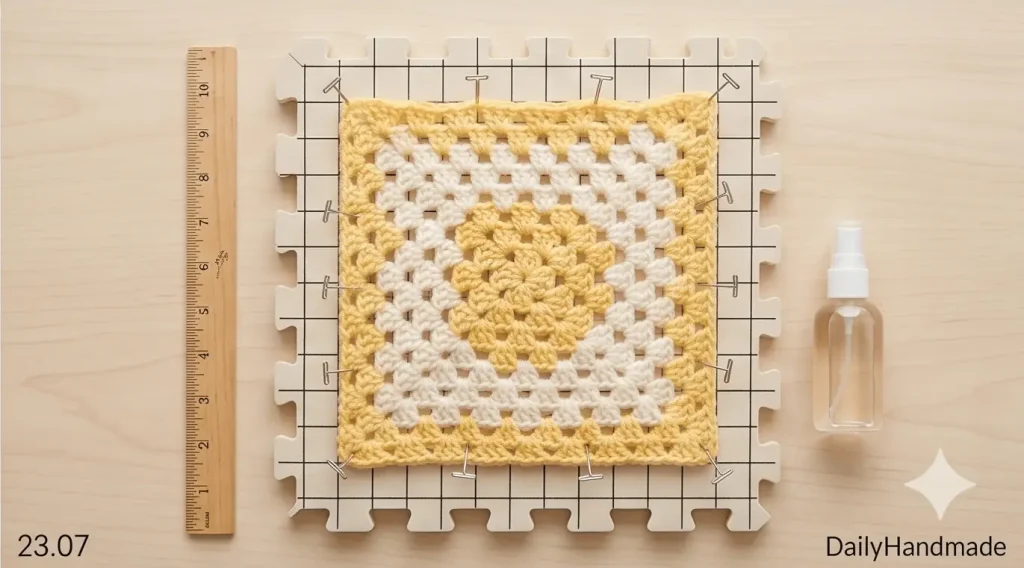
In this blocking crochet after washing guide, we define “Wash-Blocking” as the process of pinning and shaping your damp crochet item back to its intended dimensions before it fully dries. Washing relaxes the yarn’s “memory.” By blocking it immediately after, you can fix curled edges, open up intricate lace patterns, and ensure garments return to their correct size. In the framework, blocking is the “Final Cure” that transforms raw stitches into a polished fabric with a professional drape.
The Wash-Blocking Audit: Method vs. Fiber
In the technical world of How to Wash Crochet Projects Safely, the way you block depends on how you washed. Use this table to choose your finishing move:
| Fiber Type | Post-Wash State | Best Blocking Method | Why? |
| Natural Wool/Silk | Very damp/heavy. | Wet Block (Full Pinning) | Best for opening up lace and setting size. |
| Cotton/Linen | Stiff/Compressed. | Steam Block (Light) | Relaxes plant fibers for better drape. |
| Acrylic/Synthetics | Floppy/Bouncy. | Finger Blocking (Manual) | Acrylic has “plastic memory”; usually needs less pinning. |
| Mixed Blends | Variable. | Spray/Mist Block | Allows for gradual moisture control. |
3 “Professional Finish” Strategies for Post-Wash Blocking
If you are using this blocking crochet after washing guide in CROCHET CARE AND MAINTENANCE GUIDE, follow these three strategy drills to restore your work:
1. The “Measurement Reset”
As we discussed in How to wash crochet blanket without stretching, wet items grow or shrink.
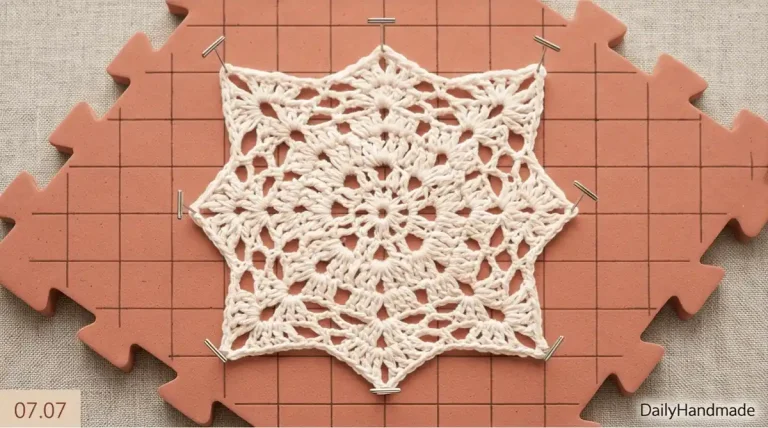
- The Drill: Have your original pattern measurements ready. Lay the damp item on blocking mats and use a tape measure to gently “nudge” the fabric back to those exact numbers. Pin the corners first, then the midpoints, to ensure an even stretch.
2. The “Lace Opening” Technique
Washing causes lace to “bloom” and lose its crisp holes.
- The Drill: While the item is damp from its hand wash, use rust-proof T-pins to pull the “peaks” of the lace outward. This tension “sets” the lace in its most open, beautiful position. Once dry, the lace will “remember” this shape until its next bath.
3. The “Anti-Curl” Perimeter
If your edges are rolling inward after the wash, it’s usually due to the yarn’s natural twist.
- The Drill: Pin the edges of your garment every 2 inches along a straight line. If you are working with a sweater, focus on the hem and the cuffs. This prevents the “purl-side” of the stitch from winning the tug-of-war as the water evaporates.
Dailyhandmade Expert Rescue Signal: The “Pinch” Test
The Dryness Check: Never unpin your project while it is even 1% damp. In How to Wash Crochet Projects Safely, we use the “Pinch Test.” Pinch a thick area of the crochet (like a seam or a cluster stitch). If it feels cooler than the surrounding air, it’s still holding moisture. If you unpin too early, the fabric will “bounce back” or shrivel, and you’ll have to start the whole blocking crochet after washing guide process over again!
Series Completion
Congratulations! You have completed How to Wash Crochet Projects Safely. You’ve learned to audit machine risks, master the “Burrito” towel roll, protect your cottons and acrylics, and finally, finish with a professional block here. Your projects are now protected for years to come under the care system.
Return Path
Mastering the blocking crochet after washing guide is the ultimate finishing skill in Crochet Care & Maintenance.
Review the full preservation cycle:
- Is it safe to machine wash crochet?
- How to hand wash crochet safely
- Best gentle detergent for crochet items
- Master Guide: Crochet Care & Maintenance
Series Complete! Your hard work is now clean, crisp, and ready to show off.
I have a final relevant follow-up question for you: Do you find that you enjoy the “blocking” phase as a meditative final step, or is it the part of the process you’re most likely to skip because you’re too excited to wear the finished item?