
Irregular Crochet Stitches Tension: Solving the “Wobbly” Look
Quick Recognition
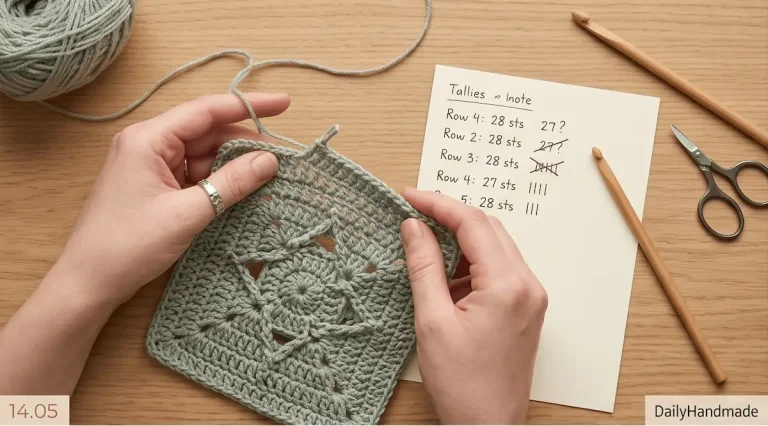
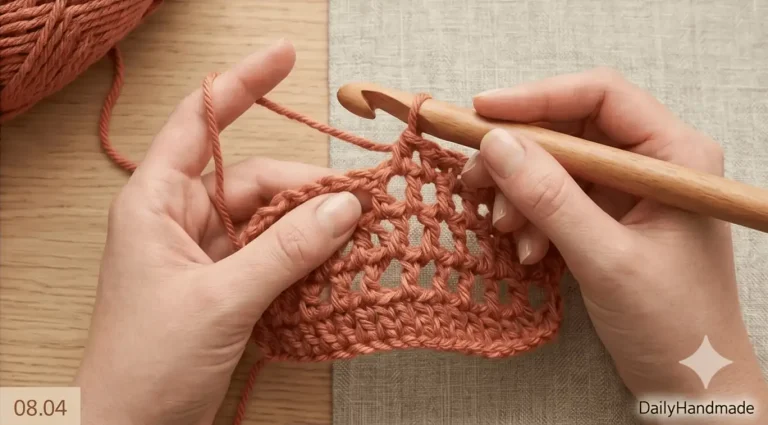
You’ve counted your stitches, and you’re using the right hook. But as you look across a single row, the texture is… chaotic. Some stitches look “fat” and plump, while the one right next to it is “skinny” and strangled. When you rub your thumb across the fabric, it feels like a mountain range instead of a smooth plain. This “Visual Noise” is caused by irregular crochet stitches tension. Even if your overall gauge is correct, these micro-fluctuations in your hand grip create a “wobbly” look that screams “beginner.”
Direct Answer
Irregular crochet stitches tension occurs when the size of the individual loops within a single stitch varies from one moment to the next. In Crochet Learning Stages Explained: Crochet Stitches Explained, we define a stitch as a series of interlocking loops. If your “Golden Loop” (the first loop pulled up) is inconsistent, the entire structure of the stitch collapses or expands. To fix this, you must standardize the “lift” of your hook and the “brake” of your fingers to ensure every loop is a mathematical clone of the one before it.
Why This Happens (The Structural Pillar #03 Logic)
Understanding why does my crochet look messy often comes down to the physics of your “Yarn Feed.”
- The “Hitch” in the Feed: If your yarn gets caught on the skein or tangles for a second, your hand naturally pulls tighter to compensate. That single stitch becomes a “strangled” stitch.
- The “Golden Loop” Variance: In Crochet Learning Stages Explained, the height of a stitch is determined by how high you pull up the first loop. If you pull high on stitch one and low on stitch two, your row height will fluctuate, creating a wavy top edge.
- Grip Fatigue: As you work across a long row, your hand muscles tire. You might start a row with “tight” tension and end it with “loose” tension, making the fabric look asymmetrical.
How to Fix It (The Calibration Protocol)
To eliminate the “wobbly” look and achieve that high-definition stitch definition, use these Why Crochet Looks Messy (Common Causes & Fixes) expert adjustments:
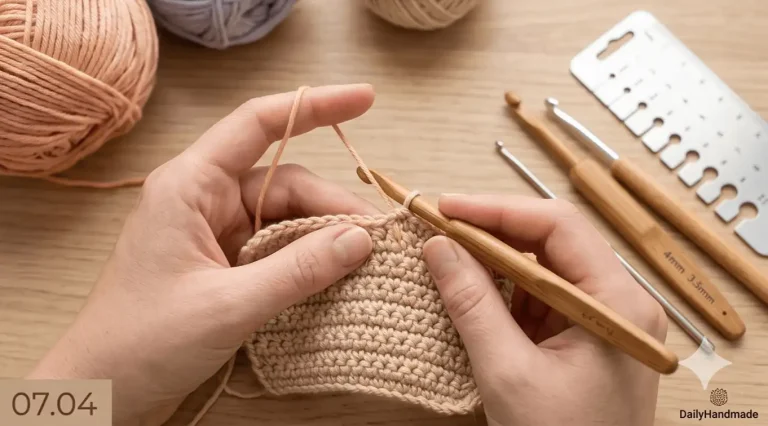
- The “Hook-Shaft” Anchor (Expert Signal): Always pull your loops up onto the thickest part of the hook’s shaft. Beginners often form loops on the narrow “throat” or “neck” of the hook. Because the neck is tapered, your loops will naturally be irregular sizes. Using the shaft as a spacer ensures every loop has the same diameter.
- The “Pinky-Brake” Standard: Use a consistent yarn-holding style. If you switch from a “single wrap” to a “double wrap” mid-row, your tension will change instantly. See: How to hold yarn for consistent tension.
- The 5-Stitch Tension Audit: Every five stitches, stop and look at your work. If you see a “fat” stitch, frog it immediately. Training your eye to catch irregular crochet stitches tension in real-time is the fastest way to build muscle memory.
- Manage Your Skein: Never pull yarn directly from a tight ball while crocheting. Pull out 2-3 meters of “slack” yarn so your hand doesn’t have to fight the weight of the ball. Zero resistance equals zero tension spikes.
- The “Twitch” Test: Before completing a stitch, give the working yarn a tiny “twitch” with your tension hand. This “sets” the loop against the hook shaft, ensuring it isn’t too loose before you close the stitch.
What To Expect Next
When you standardize your loop height, the “Visual Noise” will vanish. Your fabric will look like it was made by a machine—every “V” will be the same width, and every post will be the same height. You will know you’ve conquered irregular crochet stitches tension when you can close your eyes while crocheting and still produce a row that is perfectly level.
Return Path
Solving irregular tension is a major step in moving from Why Crochet Looks Messy to professional-level craft. To see how this interacts with your choice of hook or yarn, return to our master diagnostic map: Why Crochet Looks Messy
Or, continue your aesthetic cleanup with these related guides: