
10-Minute Crochet Practice Routine for Beginners (Daily Plan)
If you’re new to crochet and you feel stuck, overwhelmed, or frustrated, the fastest way to improve is not buying more patterns.
It’s not watching 50 tutorials.
It’s doing a simple daily routine that builds the skills your hands need.
This 10-minute crochet practice routine is designed for beginners who want:
- smoother stitches
- better tension
- less hand pain
- more confidence
- faster progress
And the best part is: you don’t need an hour. You need consistency.
If crochet feels hard overall, start here first: Crochet Feels Hard at First
- Why 10 Minutes a Day Works Better Than 1 Hour Once a Week
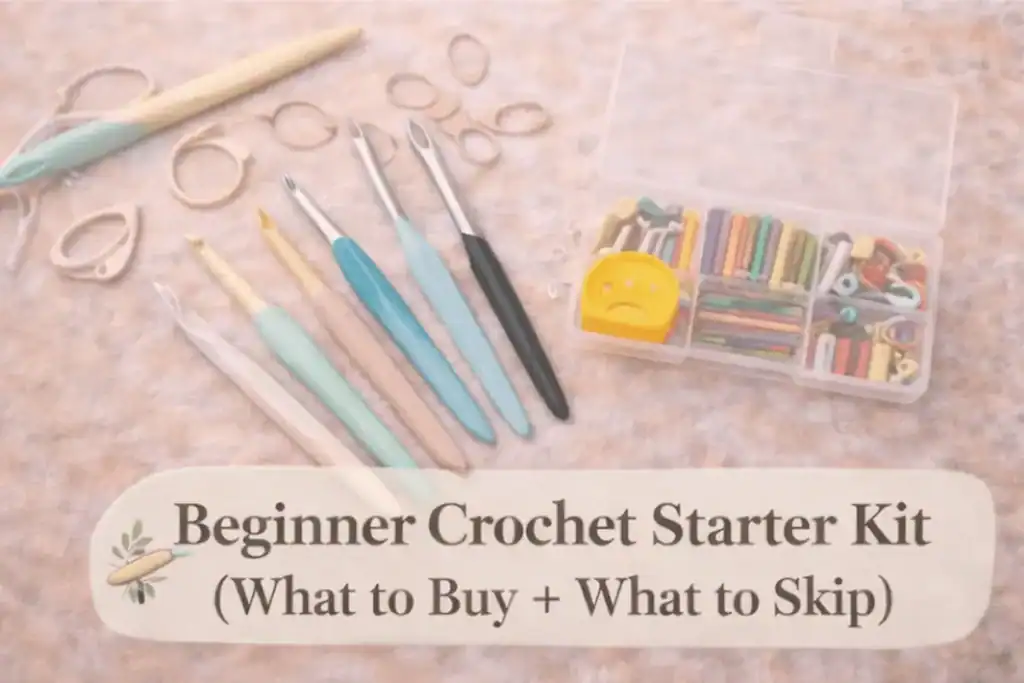
- What You Need for This Routine
- The Beginner Rule: Practice One Skill at a Time
- The 10-Minute Crochet Practice Routine (Daily)
- The Weekly Plan (7 Days)
- How This Routine Fixes the Most Common Beginner Problems
- Beginner Mistakes That Ruin Practice
- FAQ
- Next Step
- Tools that make practice easier:
Why 10 Minutes a Day Works Better Than 1 Hour Once a Week
Crochet is muscle memory.
Your hands learn best when:
- practice is short
- repetition is consistent
- stress stays low
A 10-minute routine:
- prevents hand pain
- prevents burnout
- builds confidence faster
- improves tension naturally
If you practice too long as a beginner, you usually:
- get tense
- start pulling yarn tight
- make more mistakes
- feel discouraged
What You Need for This Routine
Keep it simple:
If your yarn is fuzzy or dark, this routine will feel harder than it should.
The Beginner Rule: Practice One Skill at a Time
Many beginners try to practice by starting a project.
That’s fun, but it’s not the fastest way to improve.
Projects require:
- stitch consistency
- edge control
- counting
- turning
- patience
A practice routine removes pressure and lets you focus on one skill.
The 10-Minute Crochet Practice Routine (Daily)
Minute 1: Warm-up chains
Chain slowly for one minute.
Focus on:
- relaxed grip
- consistent chain size
- smooth motion
Chains are the foundation of everything.
If your chains feel tight and hard to work into, tension is the issue.
Minutes 2–5: Single crochet rows
Crochet single crochet back and forth.
Focus on:
- inserting hook smoothly
- pulling loops gently
- not tightening after each stitch
Single crochet is perfect for tension training because it’s repetitive and clear.
Minutes 6–8: Double crochet rows
Switch to double crochet.
Focus on:
- yarn overs staying consistent
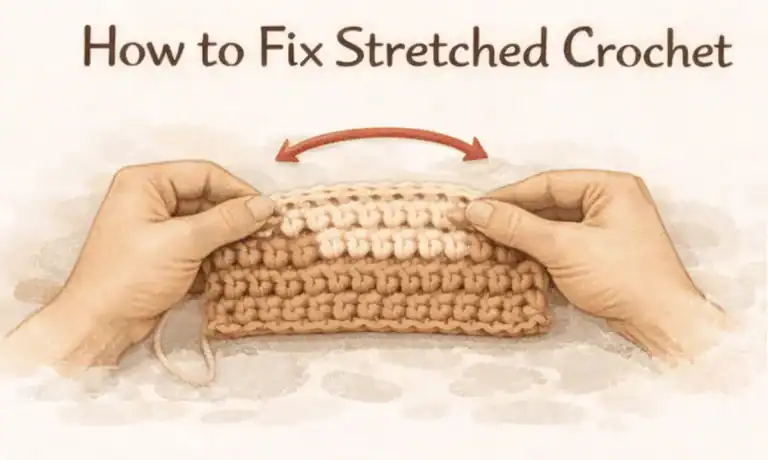
- stitches not stretching too large
- keeping the same rhythm
Double crochet teaches flow and speed control.
Minutes 9–10: Edge check + stitch count
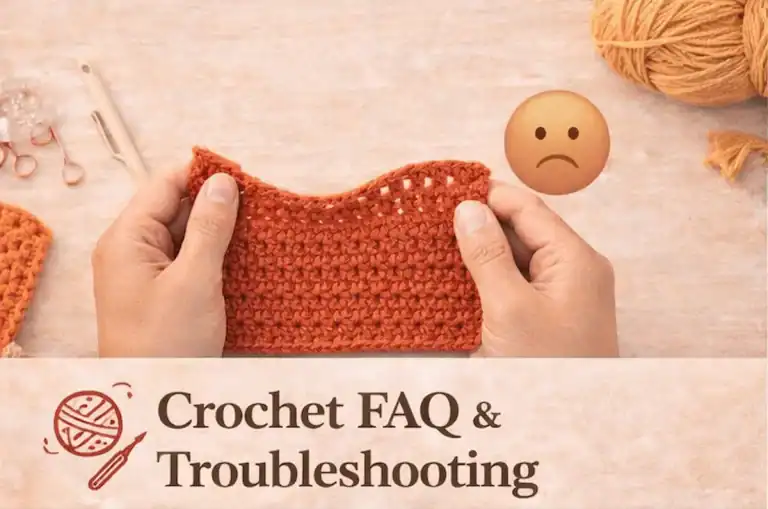
Stop crocheting and check your work.
Look at:
- are stitches similar size?
- are edges straight?
- did you lose stitches?
Even if you don’t fully understand yet, training your eye is part of learning.
The Weekly Plan (7 Days)
This is optional, but very helpful.
Day 1–2: Chains + single crochet only
Don’t rush.
Your goal is:
- relaxed motion
- consistent stitches
Day 3–4: Add double crochet
Now you build rhythm.
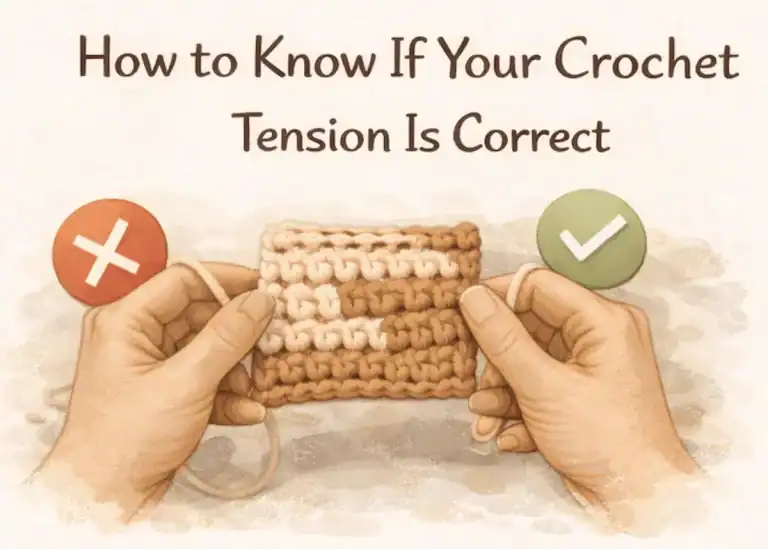
Day 5: Practice tension adjustments
Try:
- looser grip
- hook size up 0.5mm
- hook size down 0.5mm
This teaches your hands what tension feels like.
Day 6: Practice starting and turning
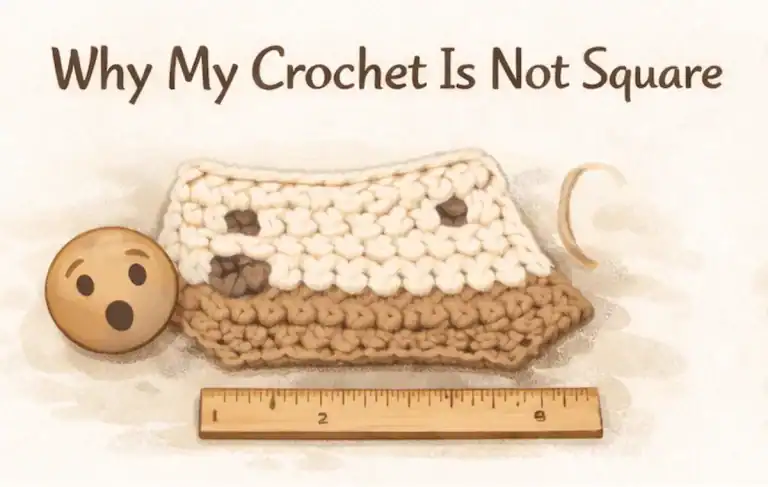
Turning is where beginners lose stitches.
Day 7: Make a simple swatch “project”
Make a small square and keep it as your “before” sample.
This helps motivation because you can compare progress later.
How This Routine Fixes the Most Common Beginner Problems
It fixes messy stitches
Because repetition builds consistency.
It fixes tight tension
Because short practice prevents panic gripping.
It reduces hand pain
Because you stop before strain builds.
It makes crochet feel easier
Because you stop overthinking.
Beginner Mistakes That Ruin Practice
Mistake #1: Switching yarn and hook constantly
Keep the same yarn/hook for a week.
Mistake #2: Practicing with fuzzy yarn
It hides stitches and makes you feel worse.
Mistake #3: Practicing while stressed
Stress shows up in your tension immediately.
Mistake #4: Practicing too long
Stop at 10 minutes. Consistency beats intensity.
FAQ
Is 10 minutes enough to learn crochet?
Yes, if you do it daily. Crochet is muscle memory, not theory.
What should I practice first?
Chains, single crochet, and tension control.
When should I start patterns?
Usually after 7–14 days of consistent practice.
Next Step
If you want crochet to feel easier, read these next:
Tools that make practice easier:
Practice doesn’t need to be long to work.
Ten minutes a day builds the muscle memory that makes crochet feel easy.