
Beginner Crochet Mistakes That Slow Progress (And How to Fix Them)
Quick Recognition
You have been practicing for days or even weeks, yet you feel like you are “stuck.” Your stitches still look messy, your projects are taking twice as long as the tutorial suggests, and you keep making the same errors row after row. Even after multiple sessions, the “click” moment where everything feels smooth hasn’t happened yet. This leads many beginners to wonder if they are simply not “handy” enough for crochet, when in reality, a few hidden habits are likely acting as “brakes” on their learning.
Direct Answer
Beginner crochet progress often slows down because of inefficient mechanical habits, such as maintaining a “death grip” on the hook, attempting to crochet too fast before mastering coordination, or neglecting to count stitches. These habits prevent your brain from establishing a consistent movement pattern. By shifting your focus from “finishing the project” to “refining the motion,” you remove these obstacles and allow your muscle memory to develop much faster.
Why This Happens
Slow progress is rarely about a lack of talent; it is usually about inconsistent input to your muscle memory. Your brain learns through predictable repetition. When you make these common mistakes, you give your brain “noisy” data:
- The Speed Trap: Trying to move fast before your hands are coordinated leads to split yarn and dropped stitches. This forces you to stop and fix errors, which breaks your learning rhythm.
- Variable Tension: If you grip the hook tightly one minute and loosely the next, your hands never learn a “standard” movement. This lack of a baseline makes every stitch feel like a new struggle.
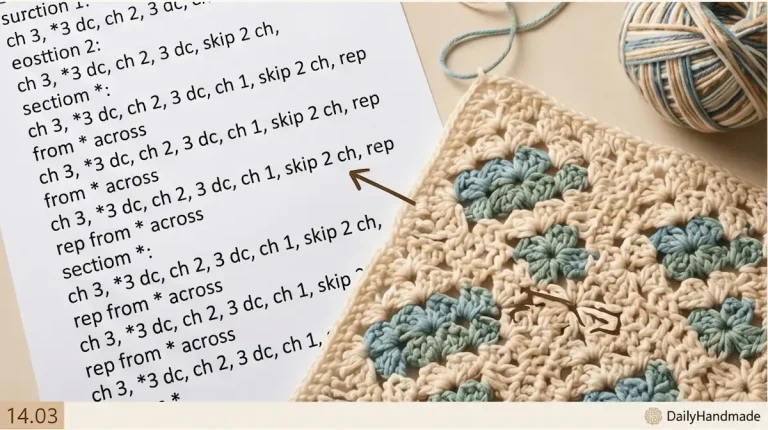
- Ignoring the Count: When you don’t count, you accidentally add or lose stitches at the edges. This leads to “triangle-shaped” projects that must be completely undone, wasting hours of practice time.
In crochet, “slow is smooth, and smooth is fast.” If your movements are erratic, your progress will inevitably feel stalled.
How to Fix Your Progress
To stop “running in place” and start seeing real improvement, adjust these specific habits:
- Audit Your Grip Tension: Every time you start a new row, check your knuckles. If they are white, you are holding the hook too tightly. Relax your hand until the hook can rotate easily within your fingers.
- Implement a “No-Speed” Zone: For your next 100 stitches, move as slowly as possible. Focus on the exact path the hook takes. This “high-quality data” helps your brain lock in the skill permanently.
- The “End-of-Row” Protocol: Never turn your work without counting your stitches first. Catching a mistake after 10 stitches is a minor adjustment; catching it after 10 rows is a progress-killer.
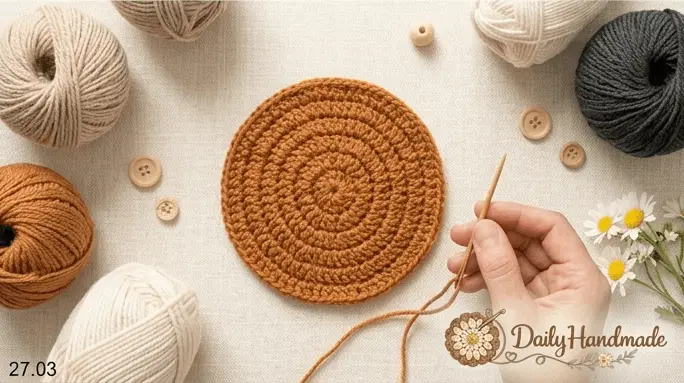
- Simplify Your Setup: If a project feels too slow, switch back to a simple “swatch” using a 5.0mm hook and light-colored cotton yarn. Removing the complexity of a pattern allows you to focus purely on your mechanical habits.
What to Expect Next
Once you fix these mechanical “brakes,” your progress will suddenly feel like it’s on a downhill slope. You will notice:
- The hook begins to “glide” through loops without catching.
- You spend 90% of your time moving forward and only 10% fixing mistakes.
- Your fabric begins to look uniform and professional without extra effort.
This feeling of “stalled” progress is often connected to other common beginner frustrations:
- If your progress feels slow because you are constantly undoing work, see: Is it normal to frog a lot when learning crochet? .
- If your slow progress is resulting in messy-looking fabric, see: Why my crochet stitches look uneven as a beginner .
- If your tension habits are causing hand fatigue, see: Why crochet hurts my hands as a beginner
Return Path
Slow progress is usually a sign that your habits are working against your goals. To understand how these challenges fit into the overall roadmap of a new crafter, see our main guide: Why Crochet Feels Hard at First
This guide explains the full transition from a struggling beginner to a confident maker and what to focus on at every stage.