Why My Crochet Tension Changes Mid Project (The Mood Factor)
Quick Recognition
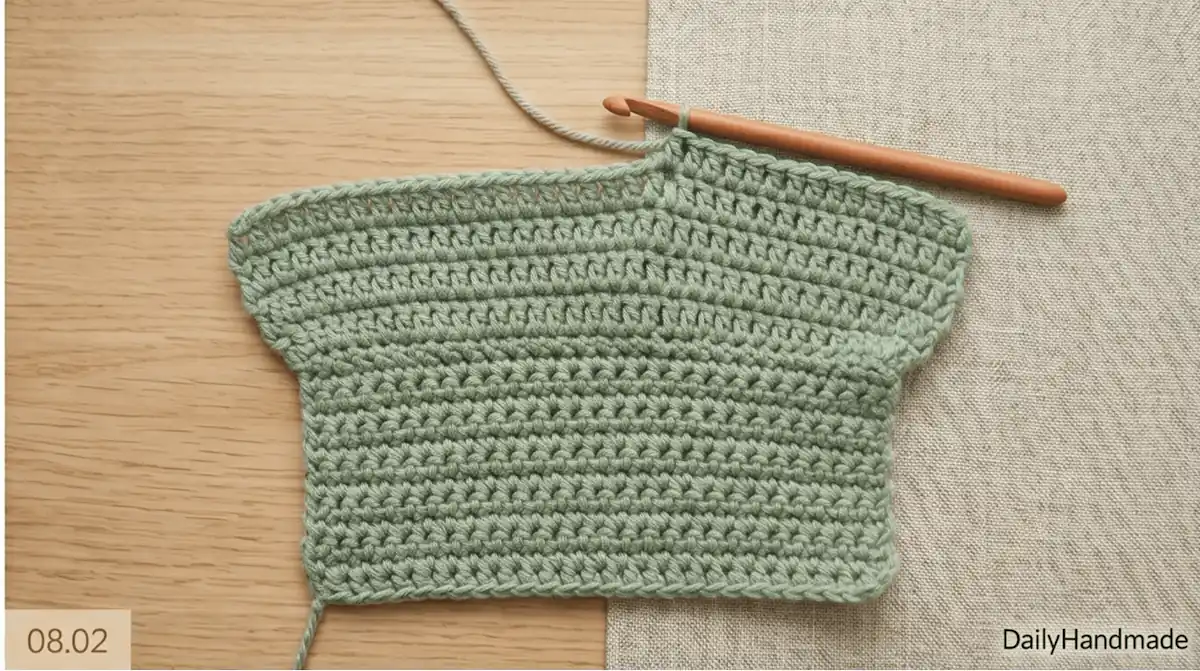
You started your blanket on Monday morning with a cup of coffee and a calm mind. By Friday night, you’re finishing a row while watching an intense action movie or after a long day at work. When you lay the project flat, you notice something alarming: the bottom rows are soft and drapey, while the top rows are stiff, tight, and nearly an inch narrower. Even though you used the same hook and the same yarn, your crochet tension changes mid project. If your fabric looks like a “tension timeline” of your week, you are experiencing Physiological Tension Drift.
Direct Answer
Crochet tension changes mid project because tension is a physical manifestation of your emotional and physical state. Factors such as fatigue, caffeine intake, stress, and even your sitting posture directly affect how much force your fingers apply to the yarn. As you gain confidence (or lose focus) throughout a project, your “muscle memory” fluctuates, causing the loops to naturally tighten or loosen, which alters the structure of the stitches we study in Pillar #03.
Why This Happens (The Mood Factor)
In Pillar #03: Crochet Stitches Explained, we learn that the size of a stitch is a mathematical result of hook diameter + yarn weight + tension. Since the hook and yarn stay the same, tension is the only variable.
- The “Angry Crochet” Syndrome: When you are stressed, your body produces cortisol, which physically tightens your muscles. This leads to “strangled” stitches that are difficult to work into.
- The “Comfort Loosening”: As you get deeper into a project, you stop “thinking” about every stitch. This relaxation usually causes your grip to loosen, resulting in larger, loopier stitches compared to your careful, tight first rows.
- Fatigue: Tired hands lack the strength to maintain a firm “brake” on the yarn, leading to a sudden shift in the fabric’s density.
How to Fix It (The Stability Protocol)
To ensure your project looks consistent from start to finish, implement these stability checkpoints:
- The “Start-of-Session” Swatch (Expert Signal): Before you work on your main project, crochet a 2-inch “practice strip” using a scrap of the same yarn. Compare it to your project. If the practice strip looks tighter or looser, adjust your hand grip before touching your “real” work.
- The Tape Measure Audit: Every 5 rows, measure the width of your project. If Row 10 was 12 inches and Row 15 is 12.5 inches, your crochet tension changes mid project are happening in real-time. Stop and recalibrate your grip.
- Environment Standardization: Try to crochet in the same spot with the same lighting. If you move from a supportive desk chair to a soft sofa, your arm angle changes, which subtly pulls the yarn at a different tension.
- The “Mood Check” Reset: If you’ve had a stressful day, don’t jump into a high-stakes project immediately. Work on something “mindless” first to burn off the physical hand tension.
- Use a Stitch Marker “Anchor”: Mark a row that you know has “Perfect Tension.” Periodically hold your current row up against that marked row. If they don’t match, you know you’ve drifted. See: Using markers for straight edges.
What To Expect Next
Consistency is a skill that develops in Stage 2 of the crochet roadmap. At first, you will see a lot of variation. But as you apply the “How to Control Crochet Tension” protocols, you will find your “Baseline Tension.” You will know you’ve mastered this when you can pick up a project after a month-long break and your new stitches are indistinguishable from the old ones.
Return Path
Stabilizing your hand tension is a core requirement for mastering the complex stitch structures in CROCHET STITCHES EXPLAINED. To see how your hand position specifically influences this drift, return to our master guide: How to control crochet tension.
If you’ve identified that your tension is drifting, find the specific mechanical fix here: