
Why Does My Crochet Look Messy? (5 Common Reasons)
Quick Recognition
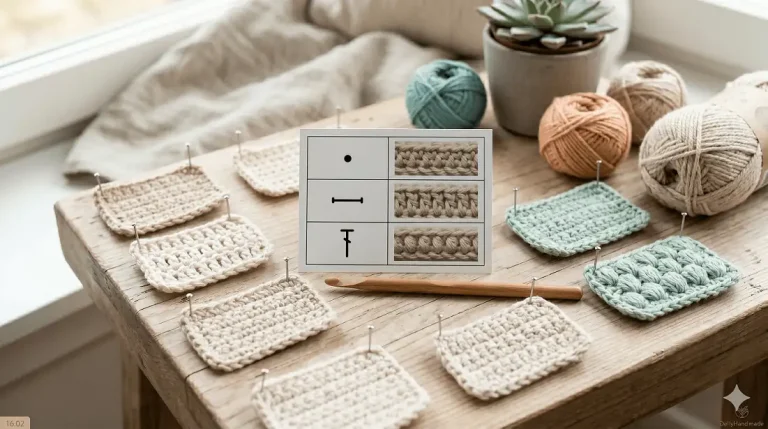
You’ve followed the pattern. You’ve put in the hours. But when you hold your work up to the light, it just doesn’t look like the photos on Pinterest. The stitches look “fuzzy,” the edges are a bit “hairy,” and the overall texture feels more like a tangled web than a crisp fabric. You’re proud of your work, but you’re also a little embarrassed by how “amateur” it feels. If your project looks slightly chaotic despite your best efforts, you are struggling with Visual Noise. Understanding why does my crochet look messy is the only way to achieve the high-definition stitch work we master in Crochet Learning Stages Explained.
Direct Answer
A “messy” crochet look is usually the result of poor Stitch Definition. This occurs when the individual “V” shapes of your stitches are obscured by inconsistent tension, split yarn fibers, or an incorrect hook-to-yarn ratio. In CROCHET FAQ AND TROUBLESHOOTING, we categorize “messiness” into five specific mechanical failures. By identifying which one is haunting your current project, you can apply a “0.5mm fix” to sharpen your work instantly.
The 5 Common Reasons for “The Messy Look”
1. Inconsistent Tension (The “Wobbly” Surface)
This is the most common reason why does my crochet look messy. If one stitch is tight and the next is loose, the light hits the fabric unevenly, creating shadows that look like “dirt” or “clutter.” Professional crochet relies on a rhythmic, identical tension for every loop.
(See: How to Control Crochet Tension for the full guide on tension control).
2. Yarn Splitting (The “Frayed” Effect)
If your hook head is too sharp or your yarn is poorly plied, you will accidentally grab only half of the yarn strand. These tiny “whiskers” of fiber sticking out of your stitches create a fuzzy, unkempt appearance that ruins your stitch anatomy.
3. Incorrect Hook-to-Yarn Match (The “Swiss Cheese” Factor)
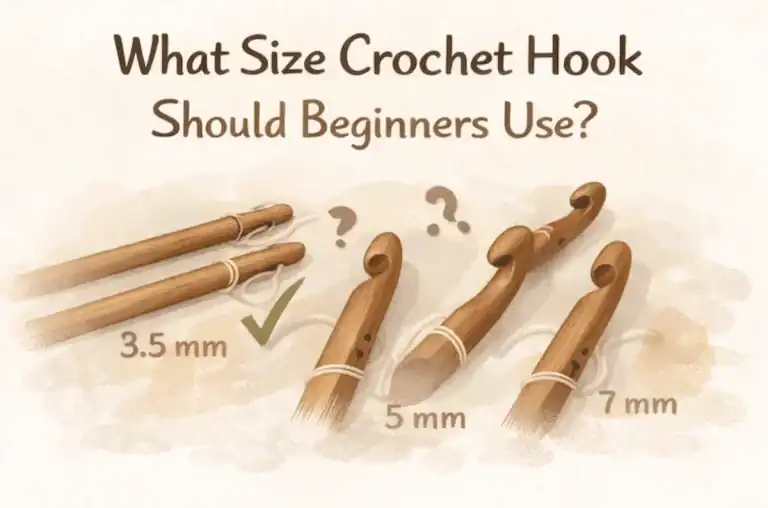
If your hook is too large for your yarn, you get “gappy” stitches with too much negative space. If it’s too small, the fabric becomes a stiff, distorted mass. Both extremes prevent the stitches from sitting “squarely” in their rows.
4. Silhouette Failure (Missing the Edges)
Messy edges make a project look unfinished. If you are accidentally adding or skipping stitches at the ends of rows, the silhouette of your project will “wander,” making the entire piece feel structurally unsound.
See: Why My Crochet Keeps Getting Wider for why crochet gets wider.
5. Fiber Choice (The “Halo” Distraction)
Some yarns (like low-quality acrylic or mohair) have a natural “halo” of fuzz. For a beginner still working on Crochet Learning Stages Explained fundamentals, this fuzz hides the “V” shapes, making it impossible to see where the hook should go. This leads to “blind” crocheting, which is always messy.
How to Fix Your Visual Noise
To start cleaning up your work today, implement this Why Crochet Looks Messy (Common Causes & Fixes) Audit:
- The “V” Check: Look at your last row. Can you clearly see each “V” on top? If not, your stitches are likely too tight or your yarn is too fuzzy.
- The “Shadow” Test: Lay your work flat under a single lamp. If you see deep “valleys” and high “peaks,” your tension is irregular.
- The Frogging Rule: If you see a split yarn strand three rows back, don’t ignore it. That one “whisker” will catch the eye of every person who looks at your work. Rip it back and fix it.
What To Expect Next
Once you identify your primary “Messy Culprit,” your work will undergo a massive transformation. You’ll move from “hoping it looks okay” to “knowing it looks professional.” You will know you’ve mastered the transition when your stitches look like a series of perfectly stacked bricks—clear, defined, and intentional.
Return Path
Identifying why does my crochet look messy is the starting point for your aesthetic evolution. To dive deep into the specific mechanical fixes for these 5 reasons, return to our master diagnostic map: Why crochet looks messy.
Or, explore the next specific deep-dives in this cluster: