
Why Crochet Feels Harder at Night: Lighting and Eye Fatigue Hacks
Quick Recognition
It’s 8:00 PM in the spring of 2026. You’ve finished dinner, the house is quiet, and you finally have time to work on that sweater. But ten minutes in, you’re squinting. You can’t tell the difference between a “stitch” and a “gap.” You accidentally insert your hook into the wrong place three times in a row. You think, “I was doing fine this morning! Am I suddenly bad at this?” At Dailyhandmade, we want to stop that thought right there. You aren’t losing your skill; you are fighting the physics of light and the biology of your eyes. Understanding why crochet feels harder at night is the first step to reclaiming your evening “me-time.”
Direct Answer
Why crochet feels harder at night is primarily due to directional shadows, color absorption, and ocular muscle fatigue. Artificial indoor lighting—unlike diffused natural sunlight—creates harsh, tiny shadows inside your stitches, making it difficult to identify the “V” shapes. Furthermore, after a full day of “screen time” or work, your eyes lose the ability to focus quickly on micro-details. In the framework, this is a “Environmental Troubleshooting” issue that can be solved with high-CRI (Color Rendering Index) lighting and a change in your yarn choice.
The Nighttime Lighting Audit
In the technical world of Why Crochet Feels Hard Some Days, the source of your light dictates the ease of your stitch. Use this table to audit your evening setup:
| Light Source | Quality of View | The Shadow Problem | The Dailyhandmade Verdict |
| Natural Sunlight | Perfect | None (Diffused). | Best for dark yarn and complex stitches. |
| Standard Warm Lamp | Poor (Yellowish) | Harsh, long shadows. | Causes “stitch confusion” and eye strain. |
| LED Neck Light | Excellent | Shadows are minimized. | The Pro Choice for nighttime making. |
| Ceiling Light | Average | Stitches look “flat.” | High risk of missing the final stitch. |
3 “Evening Shift” Rescue Hacks
If you’ve realized that why crochet feels harder at night is ruining your flow, try these three strategy drills:
1. The “Light Yarn” Rule
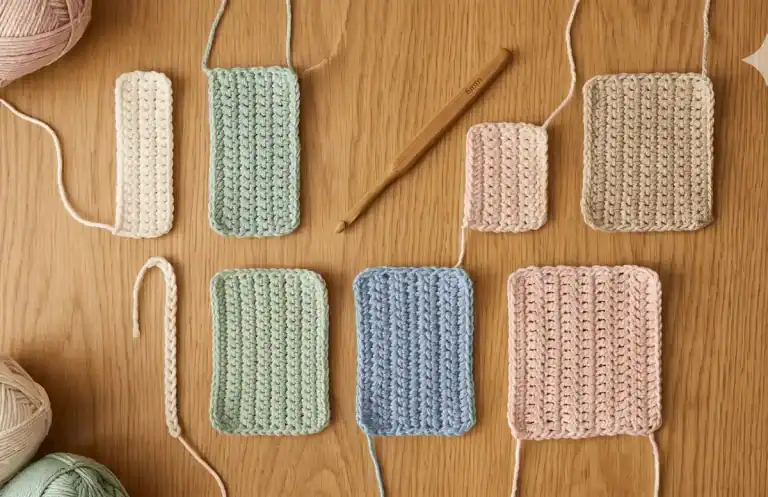
Never start a project with navy, black, or dark charcoal yarn at night. Dark fibers absorb light rather than reflecting it, making the “holey” parts of the stitch invisible in artificial light.
- The Hack: Save your dark colors for weekend mornings. In the evening, stick to creams, pinks, or light sages.
2. The “White Lap” Contrast
If you must work with dark yarn at night, place a white towel or a light-colored pillow on your lap.
- The Hack: The light surface underneath your work will “backlight” the gaps in your stitches, making the holes stand out against the dark yarn.
3. The 20-20-20 Eye Reset
Eye fatigue is real. Your ocular muscles can cramp just like your hands.
- The Hack: Every 20 minutes, look at something 20 feet away for 20 seconds. This allows your eyes to “reset” their focus and reduces the brain fog that makes crochet feel difficult.
Dailyhandmade Expert Rescue Signal
The Lighting Secret: Look for bulbs labeled “Daylight” (5000K-6000K color temperature). These mimic the spectrum of the sun and help your eyes distinguish between individual plies of yarn. If your room is dim, your brain has to “fill in the blanks” for what it can’t see, which is why you feel mentally exhausted after just one row.
What To Expect Next
Lighting is only half the battle. What if you have the perfect lamp, but your hands just won’t cooperate? One day your tension is smooth, and the next, it’s a tight, lumpy mess. In our next chapter of Why Crochet Feels Hard Some Days, we investigate the “Consistency Mystery”: Why My Crochet Tension is Worse Some Days.
Return Path
Understanding why crochet feels harder at night is the first step in mastering the maker’s mindset in Why Crochet Feels Hard Some Days. To keep your journey on track, explore these related guides:
- Why my tension is worse some days
- Crochet mistakes when tired: The science of brain fog
- Signs crochet tension is too tight
- Master Guide: Crochet FAQ & Troubleshooting
I have a relevant follow-up question for you: Do you find that you mostly struggle with dark-colored yarns at night, or does even a light-colored project start to feel “heavy” and confusing after the sun goes down?