
Crochet Charts vs. Written Patterns: When Should You Switch?
Quick Recognition
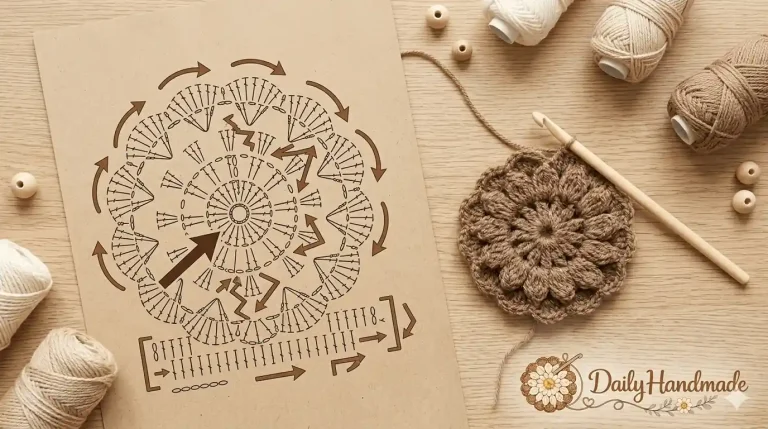
Once you move past the basics, you will inevitably encounter a “Chart”—a grid of mysterious symbols, circles, and T-shapes that looks more like an electrical schematic than a craft instruction. Many beginners feel an immediate spike in anxiety, wondering if they are “missing out” by sticking to text. If you find symbols overwhelming, it is not because you lack visual intelligence; it is because you haven’t yet built the Symbol Literacy required to translate a 2D map into a 3D fabric.
Direct Answer
In the debate of crochet charts vs written patterns, you should only start learning charts after you can follow a written pattern with 100% stitch count accuracy. Charts are “Visual Maps” that assume you already recognize stitch anatomy by sight. Attempting to learn charts while still struggling with basic stitch placement creates a Dual Cognitive Load that often leads to total learner burnout. The ideal time to switch is during Stage 3 of your learning journey.
Why This Happens (Operational Logic)
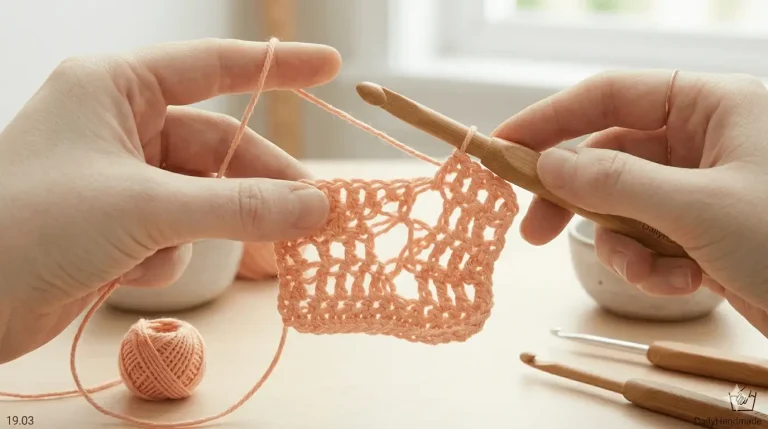
Written patterns provide a “Linear Narrative” (step-by-step), which is easier for the beginner brain to process. Crochet charts, however, require Spatial Recognition. A chart shows you where a stitch goes in relation to the stitches around it, rather than just telling you “sc in next st.” If you haven’t yet mastered Stitch placement and edges, a chart will feel like a maze without a compass.
How to Fix It (The Strategic Transition)
To bridge the gap between text and symbols without frustration, follow this DH248 transition protocol:
- Verify Your Literacy: Ensure you can read common abbreviations (sc, dc, rep) without constantly checking a glossary. See: How to read crochet patterns.
- Start with “Dual Format” Patterns: Choose a simple project (like a granny square) that provides both the written text and the symbol chart. Use the text to crochet and the chart to “verify” the visual structure.
- Learn the “Big Three” Symbols: Don’t try to memorize a full library. Start only with the symbols for Chain, Single Crochet, and Double Crochet. These account for 80% of beginner charts.
- Implement “Mapping Markers”: When reading a chart, place a stitch marker on your work at every “corner” or “repeat” shown on the diagram. This connects the paper map to your physical yarn. Tool guide: Essential stitch markers.
- Audit Your Count: Even with a chart, your final count must match. If the chart shows 12 petals, you must have 12. Counting guide: How to count stitches.
What To Expect Next
At first, your “reading speed” will drop significantly. You will spend more time looking at the chart than actually crocheting. This is the Calibration Phase. You will know you have successfully mastered charts when you can look at a symbol and your hand automatically performs the movement without your brain needing to “translate” it into a word first.
Return Path
Deciding between crochet charts vs written patterns is about choosing the best tool for your current skill level. To see how visual learning fits into your complete 12-month development, return to the roadmap: Crochet learning stages explained
If you are currently struggling with the “logic” of patterns, resolve those issues first: