When is Blocking Crochet Necessary? When You Can Safely Skip It
Quick Recognition
It is a breezy afternoon in April 2026, and you’ve just finished a beautiful set of coasters. You’ve read the best blocking method for crochet beginners, but you’re tired. Your hands ache, and the idea of getting out the pins and mats feels like a mountain you don’t want to climb. You think, “They look fine as they are… right? When is blocking crochet necessary, anyway?” At Dailyhandmade, we believe in “Efficient Crafting.” While blocking is a transformative process in Pillar: Crochet Care & Maintenance Guide, not every project requires a molecular reset. Knowing when to save your energy is just as important as knowing how to pin a lace shawl.
Direct Answer
Determining when is blocking crochet necessary depends on the Functional Outcome. You must block if the project requires precise sizing (garments), pattern opening (lace), or edge alignment (joining granny squares). You can safely skip blocking for 3D items like amigurumi, thick accessories like beanies where head-stretch provides the “block,” or small projects where “organic” texture is the goal. In the framework, we use the Visual Clarity Factor ($V_c$) to decide if the labor is worth the result.
The Necessity Audit: $V_c$ and Fabric Behavior
In the technical world of Pillar: Crochet Care & Maintenance Guide, we evaluate the Visual Clarity Factor ($V_c$). If the stitches are “muddled” or the edges are curling, $V_c$ is low, and blocking becomes mandatory.
$$V_c = \frac{\text{Openness of Pattern}}{\text{Yarn Memory}}$$
| Project Type | Blocking Status | Reason for Decision |
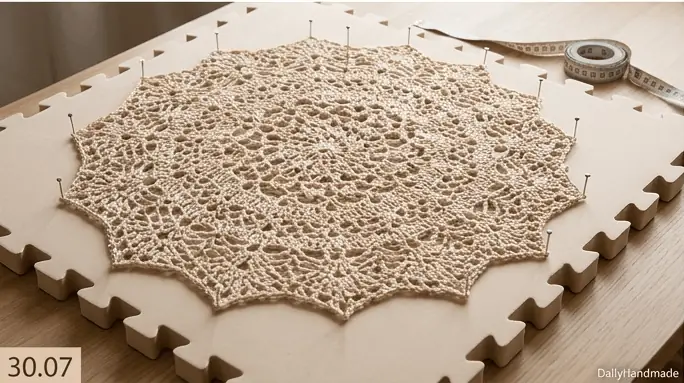
| Lace Shawls | MANDATORY | To open the “holes” and show the pattern. |
| Garments | MANDATORY | To ensure fit and prevent permanent stretching. |
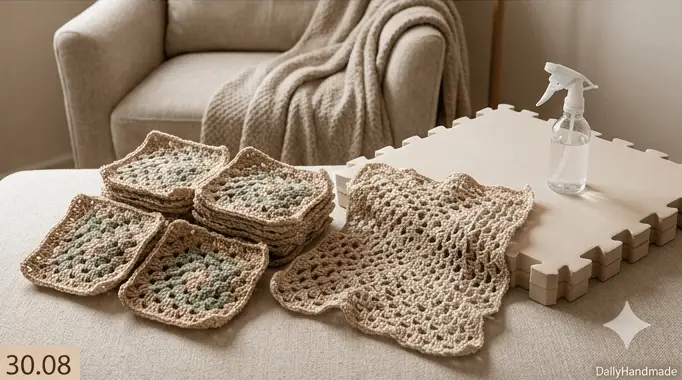
| Granny Squares | HIGHLY RECOMMENDED | For clean joins. |
| Amigurumi | SKIPPABLE | Stuffing provides the structure; water may ruin it. |
| Hats/Beanies | OPTIONAL | Your head acts as a natural blocking form. |
| Scarves | RECOMMENDED | To fix the persistent curling edge. |
3 Strategy Drills for the “Necessity” Audit
If you are questioning when is blocking crochet necessary in Pillar: Crochet Care & Maintenance Guide, put your project through these three professional drills:
1. The “Drape” Flip
Hold your project up by one edge.
- The Drill: Does it fall gracefully, or does it stand up stiffly like cardboard? If it’s stiff and you want a flowy garment, you need to steam block acrylic safely or wet block natural fibers. If the stiffness is intentional (like a basket), skip it.
2. The “Measurement” Match
This is the ultimate audit for assembly.
- The Drill: If you have multiple pieces, lay them side-by-side. Are they the exact same size? If piece A is $10cm$ and piece B is $10.5cm$, blocking is necessary to standardize them. This prevents uneven crochet joins later.
3. The “Stitch Definition” Zoom
Look closely at your decorative stitches (like cables or lace).
- The Drill: Are the stitches “squashed” together? If the beauty of the design is hidden in the bunching of the yarn, blocking is the only way to reveal the work. If you are using a simple Single Crochet where texture doesn’t matter, you can likely skip it.
Dailyhandmade Expert Rescue Signal
The “Wash and Wear” Rule: In How to Block Crochet Projects (Wet vs. Steam vs. Spray), we always remind makers: Blocking is not permanent for natural fibers! If you block a sweater but then throw it in the washing machine and dryer, you’ve undone all your work. Blocking is only “necessary” if you are willing to reblock after washing. If you want a “no-maintenance” project, stick to patterns that look good unblocked!
What To Expect Next
You’ve decided that your motifs do need blocking to look their best. But should you do it now, while they are individual squares, or wait until the blanket is finished? In our next chapter of How to Block Crochet Projects (Wet vs. Steam vs. Spray), we look at the timeline: Should I Block Crochet Motifs Before Joining? The Assembly Logic.
Return Path
Determining when is blocking crochet necessary is a vital “Strategic” decision in Pillar: Crochet Care & Maintenance Guide. To refine your finishing process, explore these related guides:
- Best blocking method for crochet beginners
- How to steam block acrylic crochet safely
- Blocking granny squares without a blocking board
- Does blocking stretch crochet permanently
- Master Guide: Pillar: Crochet Care & Maintenance Guide
I have a relevant follow-up question for you: Are you currently working on a project with lace/openwork that looks a bit “clumped” together, or is it a solid fabric project?