Crochet Stitches Too Tight Even With the Right Hook Size?
Quick Recognition
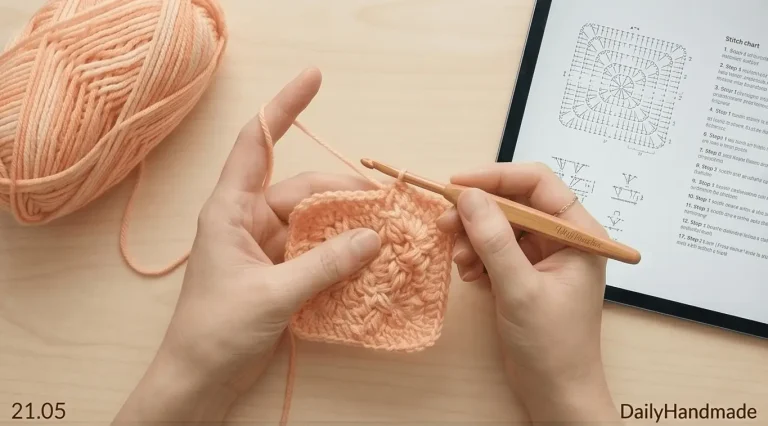
You did your homework. You read the yarn label, you bought the recommended 5.0mm (H) hook, and you even upgraded to an ergonomic handle. But three rows in, you’re sweating. The loops are so small you have to physically “pry” them open to get the hook through. You look at your work, and instead of a soft scarf, you have a rigid strip of fabric that could double as a piece of plywood. You’re doing everything “right,” yet your crochet stitches are too tight even with the right hook size. What gives?
Direct Answer
The most common reason for this is “Working on the Tip.” If you only use the very end of your crochet hook to pull your loops through, you are creating stitches based on the diameter of the hook’s point, not its shaft. In Pillar #5, we emphasize that the shaft determines the stitch size. If the yarn never slides past the “throat” and onto the “shoulder” of the hook, your 5mm hook is effectively behaving like a 2mm hook.
The Technical “Why”: Diagnosing the Stiff Fabric
At Dailyhandmade, we’ve audited thousands of beginner movements. Here are the three hidden reasons your tension is sabotaging your Longtail #12 progress:
1. The “Taper Trap”
Most crochet hooks are tapered. The diameter at the tip is much smaller than the diameter of the shaft. If you pull the yarn through and immediately start the next stitch without sliding that loop back onto the full-width shaft, the loop “remembers” the small size of the tip.
2. The “Golden Loop” Error
The height of your stitch is determined by the “Golden Loop”—the very first loop you pull up through a stitch. If you pull this loop tight against the hook’s throat, you are “strangling” the stitch. It doesn’t matter if your hook is a 10mm; if you pull that loop tight, the stitch will be microscopic.
3. The “Death Grip” (Psychological Tension)
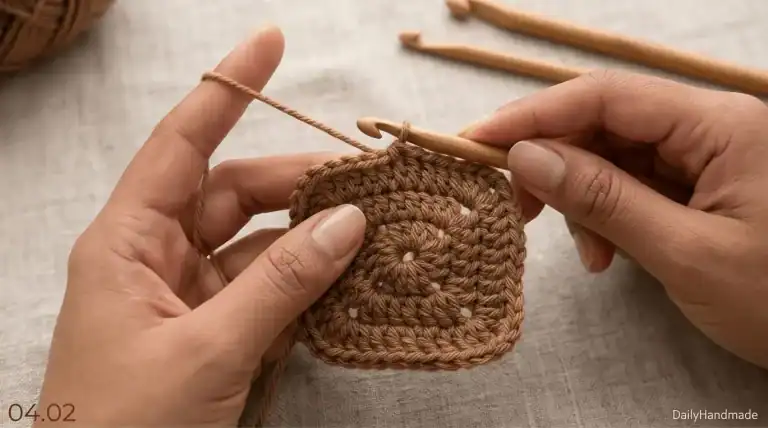
As a beginner, you are concentrating hard. This leads to an instinctive tightening of the muscles in your hand and forearm. This physical stress translates directly into the yarn. Even with the best hook size for beginner crochet tension, a stressed hand will always produce a tighter fabric.
Troubleshooting Table: The Fix
| If your work is… | The Likely Culprit | The Dailyhandmade Fix |
| Hard to insert hook | Working on the Tip. | The “Slide” Rule: Always slide the loop to the thickest part of the shaft. |
| Rows look “short” | Tight Golden Loop. | Lift the Hook: Pull the first loop up slightly higher before finishing. |
| Hand/Wrist aches | The Death Grip. | The Shake-Off: Stop every 2 rows and shake your hands out. |
| Yarn is splitting | Sharp hook point + tight tension. | Switch to a Rounded Head hook (like Clover Amour). |
The 3-Step “Relaxation” Drill
To master What Size Crochet Hook Should Beginners Use, you need to retrain your hands to trust the hook. Try this Dailyhandmade Protocol:
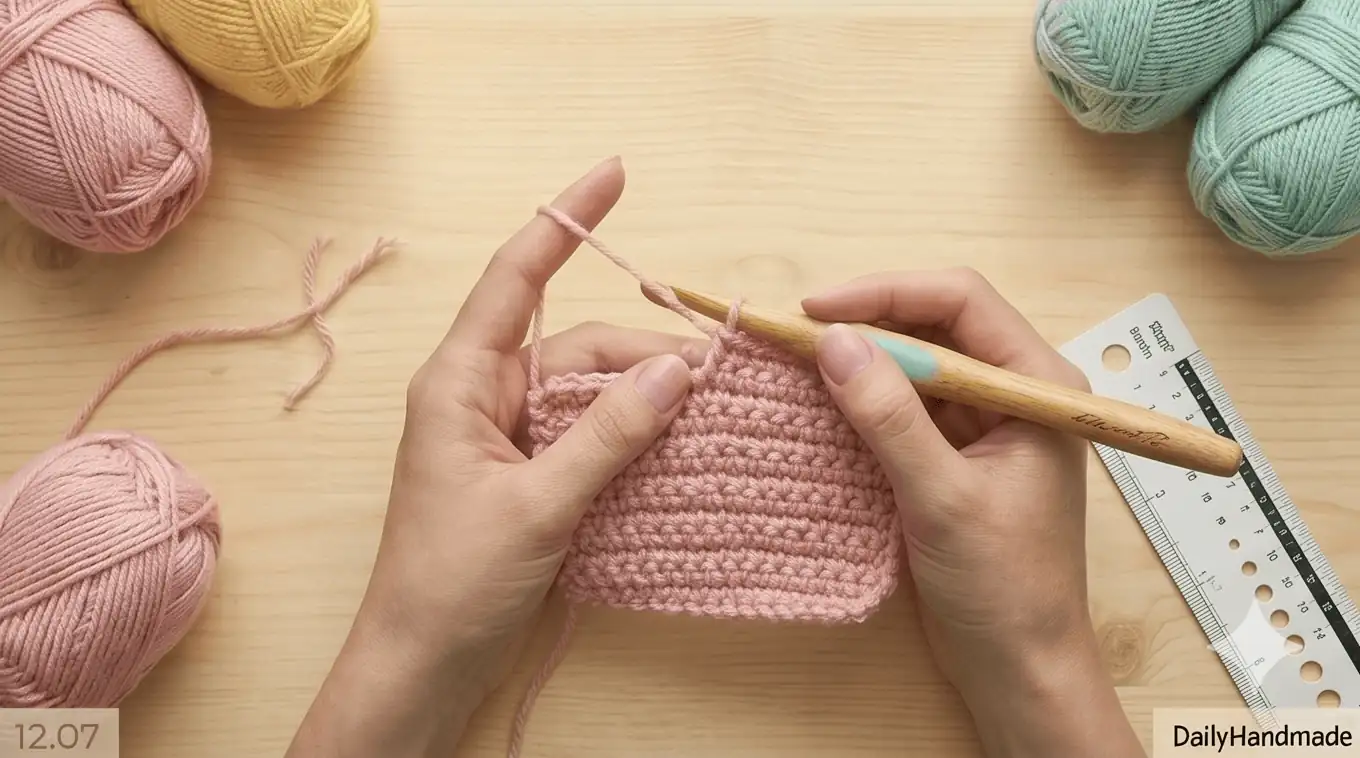
- Slide to the Shaft: Every time you yarn over and pull through, consciously push the new loop all the way back onto the shaft of the hook (the part above the handle). This ensures the loop is exactly 5mm (or whatever size you’re using).
- The “Yarn Over” Lift: When you wrap the yarn over the hook, do it loosely. If the yarn “squeaks” against the hook, you are pulling too hard.
- Check Your Elbows: Believe it or not, tight tension often starts in the shoulders. Drop your shoulders, unglue your elbows from your ribs, and take a breath. Relaxed body = Relaxed stitches.
Expert Signal: If you’ve tried everything and your work is still too tight, it’s time to move the goalposts. Simply increase your hook size by 1.0mm. If the label says 5mm and you’re struggling, use a 6mm. There are no “Crochet Police”—use the tool that makes the fabric feel right!
What To Expect Next
Solving the “Tight Stitch Mystery” is the final hurdle in your technical toolkit. With your hook size calibrated, your material chosen, and your technique relaxed, you are no longer a “beginner”—you are a maker. You’ve successfully navigated the core concepts of Master Guide: Crochet Hooks & Tools.
Return Path
You have completed all 7 Micro-topics for What Size Crochet Hook Should Beginners Use. You are now fully equipped to pair any yarn with the perfect hook.
To review your journey through Pillar #05, revisit our essential troubleshooting guides:
- What Size Crochet Hook Should Beginners Use
- Crochet hook too small what happens
- Crochet hook size vs yarn label explained
- Aluminum vs ergonomic crochet hooks
Series Complete! You have the tools, the yarn, and the stitches. Would you like to explore a new Longtail in Pillar #05, or shall we move on to Pillar #06: Reading Patterns & Diagrams?
I have a relevant follow-up question for you: Since you’ve mastered the hook and yarn pairing, are you feeling more confident about tackling your first big project, or is there another tool in the crochet bag (like stitch markers or blocking boards) you’re still curious about?