Loose Tension Causes Holes in Crochet: How to Steady Your Feed
Quick Recognition
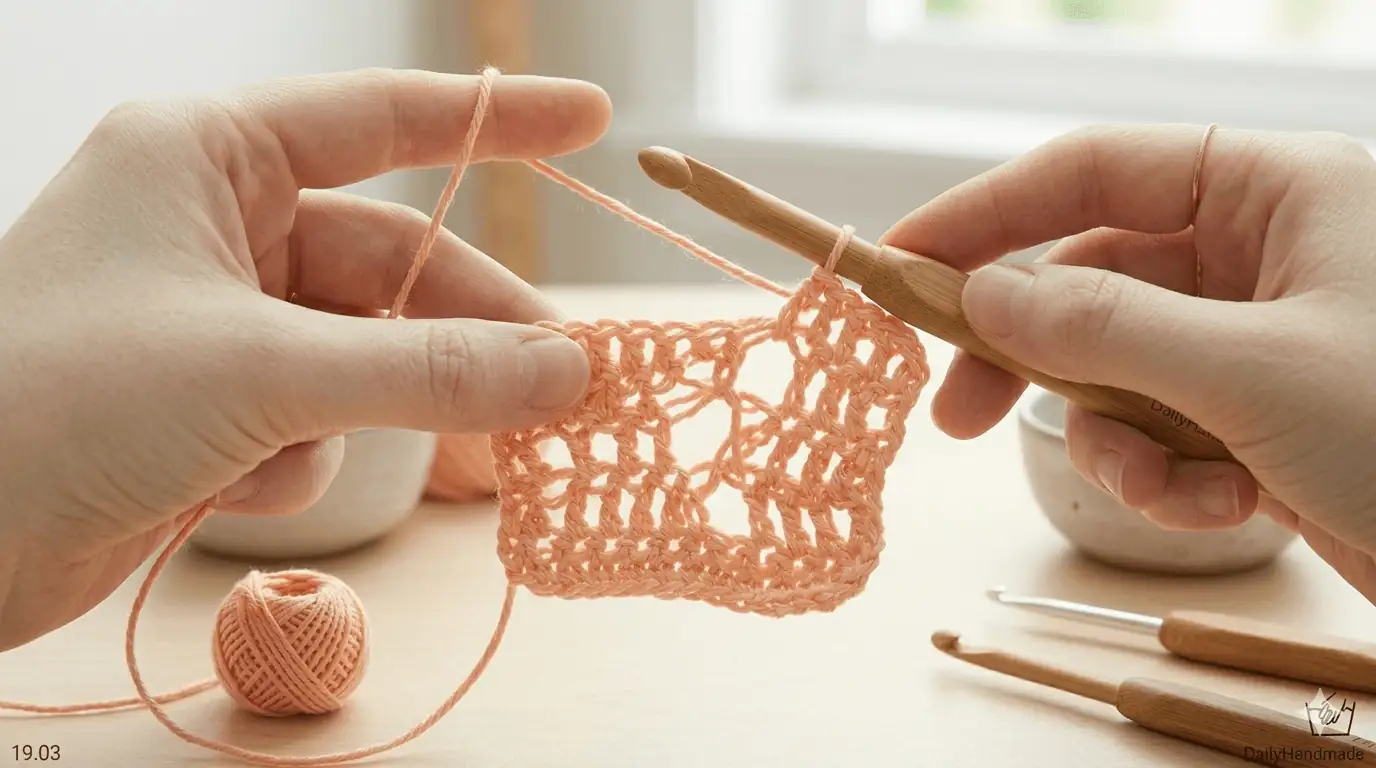
You’ve checked your hook size from Crochet Hook Too Big Causes Holes? Finding Your Perfect Match, and it matches the label perfectly. You’re using the right yarn. Yet, your stitches look like they’re social distancing—they’re far apart, floppy, and full of unwanted gaps. You try to pull the yarn harder, but then your hands cramp up. At Dailyhandmade, we know that tension is the “invisible rhythm” of crochet. If your rhythm is off, your fabric pays the price. Understanding how loose tension causes holes in crochet is about mastering “The Feed”—the way yarn travels from your ball, through your fingers, and onto your hook.
Direct Answer
Loose tension causes holes in crochet because the working yarn is not being held firmly enough to pull the loops tight against the shaft of the hook. This creates oversized, “lazy” stitches that fail to sit flush against their neighbors, resulting in visible daylight between the posts. In the framework, we identify this as a “Support Hand” error. To fix it, you don’t need a “Death Grip”; you simply need a consistent tensioning method—like a specific finger wrap—to act as a natural brake for the yarn.
The Tension Diagnostic: Tight vs. Loose vs. Dailyhandmade
In the technical world of Why My Crochet Fabric Has Holes, we audit your stitches by how they behave on the hook. Use this table to see where you stand:
| Tension Style | The Visual Sign | The Fabric Feel | Gap Risk |
| Too Loose | Loops “flop” off the hook easily. | Like a wet noodle; no structure. | High. Visible holes everywhere. |
| Too Tight | Hook is a struggle to insert. | Stiff as a board; “crunchy” sound. | Zero (but the project will be too small). |
| “Dailyhandmade” | Loops slide but stay snug to the hook. | Flexible but opaque (solid). | None. Professional finish. |
3 “Finger-Feed” Tricks to Close the Gaps
If you’ve realized that loose tension causes holes in crochet, don’t just pull harder with your hook hand. Instead, adjust your “Yarn Hand” with these strategy drills:
1. The “Pinky Wrap” (The Brake)
Most beginners just drape the yarn over their index finger. This offers zero resistance. Try wrapping the yarn once around your pinky finger before bringing it up over your index finger. This creates a “tension brake” that automatically tightens the yarn as you pull.
2. The “Index Height” Check
Your index finger acts as the “crane” for your yarn. If your index finger is too far away from your hook, the yarn has too much slack, leading to loose loops. Keep your index finger about 1–2 inches away from your work to maintain a “short, snappy” feed.
3. The “Golden Loop” Audit
When you pull up a loop, pay attention to how high you pull it. If you lift your hook high into the air, you are creating a “Tall/Loose” loop. Keep your hook level and let the yarn hug the shaft (the thickest part) of the hook. In Common Crochet Mistakes (and Fixes), we say: “The shaft sets the size, the fingers set the tension.”
Dailyhandmade Expert Rescue Signal
The “Squish” Test: Lay your work flat and try to squish it from the sides. If the holes open up like a window, your tension is too loose. If the fabric stays solid and “bounces” back, you’ve found your rhythm. If you’re struggling with a specific stitch like the double crochet, remember it’s naturally looser—check Double Crochet Big Gaps? 3 Ways to Close the Stitches for stitch-specific tightening tips!
What To Expect Next
Your hands are steady, and your tension is tightening up. But wait—is your yarn itself the problem? If your yarn is “splitting” or “shredding” as you work, it creates ghost-holes that even perfect tension can’t fix. In our next chapter, we look at Yarn Splitting Crochet Holes.
Return Path
Fixing the “Loose Tension” error is the psychological turning point in Why My Crochet Fabric Has Holes. To keep your rescue mission moving, explore these related guides:
- Yarn splitting crochet holes: How to fix it
- Double crochet big gaps: The stitch fix
- Why my crochet has holes: General diagnostic
- Master Guide: Common Crochet Mistakes (and Fixes)
I have a relevant follow-up question for you: When you hold your yarn, does it feel like it’s sliding through your fingers too fast, or do you find yourself constantly having to stop and “reset” your grip?