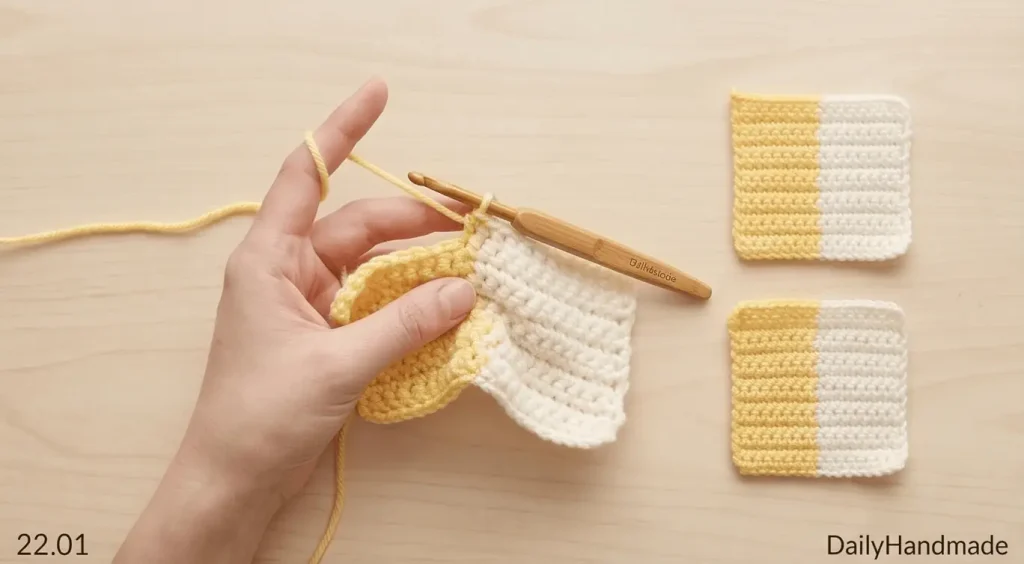
How to Tell If You Crochet Too Tight: The Stitch Definition Test
Quick Recognition
It is a quiet evening in 2026, and you are working on a new pattern. You feel like you’re doing everything right, but your hands are starting to throb, and your project looks… well, a bit angry. The fabric is stiff, the stitches look like tiny, squeezed knots, and you’re practically wrestling your hook into every loop. You think, “Is it supposed to be this much of a workout?” At Dailyhandmade, we’ve all been there. You’ve likely fallen into the “Death Grip” trap. Learning how to tell if you crochet too tight is the first step toward reclaiming your crochet “flow” and saving your wrists from unnecessary strain.
Direct Answer
You can how to tell if you crochet too tight by performing the Stitch Definition Test: look for “hidden” stitches where the “V” at the top is crushed, check if your fabric stands up like cardboard, and try to slide your hook back into a finished stitch. If the hook snags or requires force, your tension is too tight. In the framework, tight tension occurs when the working loop is smaller than the diameter of your crochet hook’s shaft, causing the yarn to “choke” the tool.
The 3-Step “Stitch Definition” Test
If you suspect you’re a “Tight Crocheter,” run your current work through this diagnostic drill:
1. The “V” Visibility Check
Look at the top of your row. You should see a sequence of clear, relaxed “V” shapes.
- The Sign: If those “V”s look like flat, horizontal lines or are so small they’ve disappeared into the body of the stitch, you are pulling too hard on your working yarn.
2. The Hook Slide Test
Take your hook and try to insert it into a stitch from the previous row (not the one you are currently working on).
- The Sign: The hook should glide in with zero resistance. If you have to “wiggle,” “pry,” or use your fingernail to open the gap, your tension is way too tight.
3. The Fabric “Drape” Audit
Lay your work flat on a table and try to fold it over your hand.
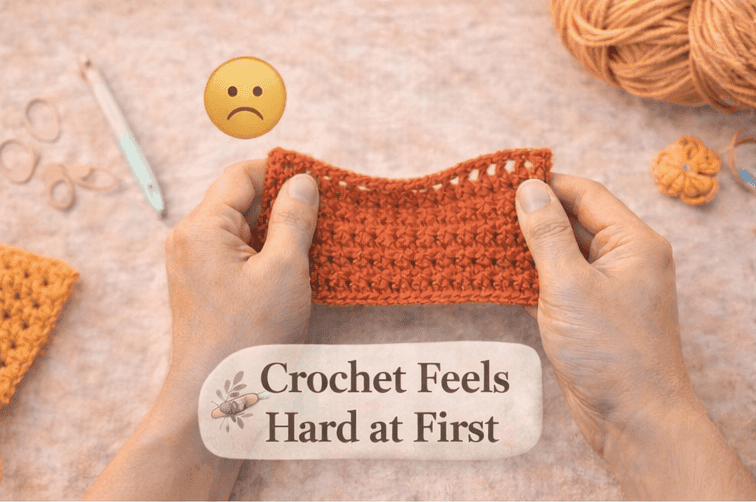
- The Sign: Correct tension results in soft, flexible fabric. If your work stays rigid or “boomerangs” back into a flat shape, the stitches are too dense to allow for natural movement.
The Tension Audit: Tight vs. Just Right
In the technical world of CROCHET FAQ AND TROUBLESHOOTING, we use these visual markers to differentiate between “Sturdy” and “Too Tight.”
| Feature | Too Tight (The Death Grip) | Correct Tension |
| Row Height | Rows look “squat” and short. | Rows match the pattern gauge. |
| Hook Entry | Requires force and “shoving.” | Glides in like a hot knife through butter. |
| Stitch Holes | Non-existent; fabric is air-tight. | Small, uniform gaps are visible. |
| Yarn Texture | Looks “shredded” or flat. | Looks round, plump, and bouncy. |
Dailyhandmade Expert Rescue Signal
The “Squeak” Warning: Listen to your work. If your yarn makes a high-pitched “squeaking” sound as it passes over the hook, it is a physical cry for help. The yarn is being stretched to its limit. In How to Tell If You’re Crocheting Too Tight or Too Loose, we recommend immediately relaxing your shoulders and letting the yarn sit on the widest part (the shaft) of the hook, not the “throat.”
What To Expect Next
Now that you know how to spot the “Death Grip,” what about the opposite? What if your work looks like a fishing net? In our next chapter, we look at the other side of the coin: How to Tell If You Crochet Too Loose.
Return Path
Identifying how to tell if you crochet too tight is the foundation of How to Tell If You’re Crocheting Too Tight or Too Loose. To continue your troubleshooting, explore these related guides:
- How to tell if you crochet too loose
- Crochet too tight symptoms: Hand pain and stiff fabric
- Why my crochet is stiff and hard to insert hook
- Master Guide: Crochet FAQ & Troubleshooting
I have a relevant follow-up question for you: When you’re crocheting, do you find that your “V” stitches are hard to see because they’re too small, or is the main problem that you just can’t get the hook through the loops?