
How to Steam Block Acrylic Crochet Safely: Avoiding the “Kill”
Quick Recognition
It is a bright morning in April 2026, and you’re holding a finished acrylic sweater that feels a bit more like a cardboard box than a wearable garment. You’ve read the best blocking method for crochet beginners and realized that since acrylic is essentially plastic, a simple water soak won’t do much. You reach for your steamer, but your heart races—you’ve heard horror stories of people “killing” their yarn. You think, “How do I soften this without losing the stitch definition entirely?” At Dailyhandmade, we consider steam blocking the “Secret Weapon” of acrylic enthusiasts. Done right, it adds incredible drape; done wrong, it’s an irreversible disaster.
Direct Answer
To how to steam block acrylic crochet safely, you must master the “No-Touch Hover.” Unlike natural fibers, acrylic is a synthetic polymer that reacts to heat by reaching its Glass Transition Temperature ($T_g$). When you apply steam without touching the iron or steamer to the fabric, the heat allows the plastic fibers to relax and “set” into a new, softer shape. If you touch the fiber directly, you “kill” it—meaning you melt the plastic until it loses all elasticity and becomes limp and shiny. In the framework, we use steam to achieve a Permanent Set, making it a one-time maintenance task.
The Science of the “Kill”: $T_g$ and Polymer Relaxation
In the technical world of Pillar: Crochet Care & Maintenance Guide, we monitor the heat transfer. Acrylic doesn’t have a “memory” like wool; it has a “melting point.”
$$T_{applied} < T_{melting}$$
| State | Technique | Fiber Result | Elasticity |
| Normal | Off the hook. | Stiff, bouncy, “toothy.” | High. |
| Blocked | Hovering Steam (1-2cm). | Soft, relaxed, defined. | Maintained. |
| Killed | Direct Heat / Iron touch. | Flat, limp, shiny, thin. | Zero (Permanent). |
3 Strategy Drills for Safe Steam Blocking
If you are learning how to steam block acrylic crochet safely in Pillar: Crochet Care & Maintenance Guide, follow these three high-stakes drills:
1. The “Safety Gap” Measurement
Distance is your only insurance policy against a meltdown.
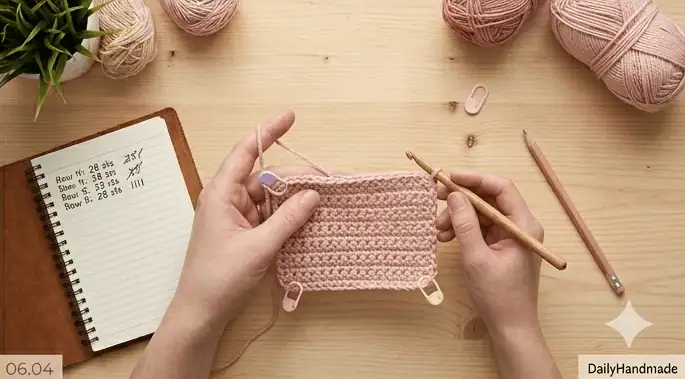
- The Drill: Pin your work to your diy blocking mats for crochet. Hold your steamer exactly 2cm to 3cm away from the surface. Never, under any circumstances, let the metal plate touch the yarn. Move the steamer in a slow, steady “painting” motion until the yarn feels slightly damp and warm to the touch.
2. The “Finger-Comb” Drape Test
How do you know when you’ve steamed enough?
- The Drill: After steaming a section, let it sit for 10 seconds. Gently run your fingers over the stitches. If they still feel “crunchy” or stiff, apply one more pass of steam. If they feel soft and move easily when you wiggle the mat, stop immediately. You have reached the permanent stretch limit.
3. The “Cold-Set” Lock
Steam makes the plastic move; the cooling makes it stay.
- The Drill: Once you have finished steaming, do not unpin the project. The fibers are currently in a “rubbery” state. They must cool down completely to “lock” into their new, soft shape. Removing them while warm is why many people find their crochet still curling after blocking.
Dailyhandmade Expert Rescue Signal
The “Kill” on Purpose: In How to Block Crochet Projects (Wet vs. Steam vs. Spray), we occasionally “kill” acrylic intentionally for projects like lace shawls where we want extreme, limp drape. If you want that look, you can press the iron lightly through a wet cloth. But for sweaters and blankets, keep that steamer hovering! Once you kill a fiber, it can never be “un-killed.”
What To Expect Next
You’ve mastered the heat, but what if you don’t own an expensive steamer or professional mats? Do you have to wait until you can afford a “blocking kit” to finish your blanket? In our next chapter of How to Block Crochet Projects (Wet vs. Steam vs. Spray), we look at the budget-friendly workarounds: Blocking Granny Squares Without a Blocking Board: The Flat-Edge Hack.
Return Path
Learning how to steam block acrylic crochet safely is a high-level “Maintenance” skill in Pillar: Crochet Care & Maintenance Guide. To protect your projects from heat damage, explore these related guides:
- Best blocking method for crochet beginners
- Blocking granny squares without a blocking board
- Diy blocking mats for crochet
- Why is my crochet still curling after blocking
- Master Guide: Crochet Care & Maintenance
I have a relevant follow-up question for you: Are you looking to just “relax” the stitches slightly for a better fit, or do you want to transform a very stiff yarn into something that feels like silk?