
How to Read Crochet Patterns for Beginners (Simple Step-by-Step Guide)
Quick Recognition
After mastering your tension (Stage 1) and stabilizing your edges (Stage 2), you reach the “Translation Phase.” You open a pattern, expecting a clear guide, but instead, you find a wall of cryptic shorthand like “Ch 20, sc in 2nd ch from hook, rep (sc 1, inc) x 6.” If this looks like a foreign language, do not be discouraged. Most beginners feel a sudden drop in confidence here because they expect a pattern to be a tutorial. In reality, a pattern is a compressed technical blueprint, and you simply need the “decoding key” to follow it.
Direct Answer
To follow a crochet pattern for beginners effectively, you must treat it as a two-step process: first, translate the shorthand abbreviations (like sc, dc, ch) into physical movements, and second, count every stitch to verify the pattern’s mathematical logic. Mastery of Stage 3 occurs when you stop seeing individual letters and start seeing the visual structure the instructions are building before you even pick up your hook.
Why This Happens (Operational Logic)
Crochet patterns are written for efficiency, not necessarily for teaching. They assume Operational Context—meaning they expect you to already know exactly where the “2nd chain from hook” is located and how to recognize a “V” stitch. When you lack this context, the “compressed” nature of the text creates a Cognitive Gap. You aren’t struggling because you can’t crochet; you are struggling because your brain is trying to learn “What to do” at the same time it is learning “How to read the instruction.”
How to Fix It (The Beginner Pattern System)
To transition from “confused” to “capable,” follow this Stage 3 operational sequence:
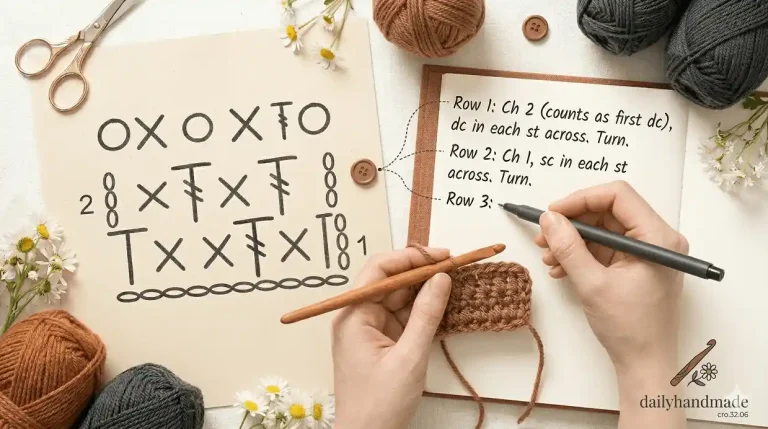
- Decompress the Shorthand First: Before you pick up your yarn, read the “Abbreviations” section of the pattern. Write them out in full words on a sticky note if necessary (e.g., sc = single crochet). System details: Reading Crochet Symbol Charts for Beginners: A Visual Guide.
- Highlight the “Repeats”: Patterns use parentheses or asterisks to show repetition (e.g.,
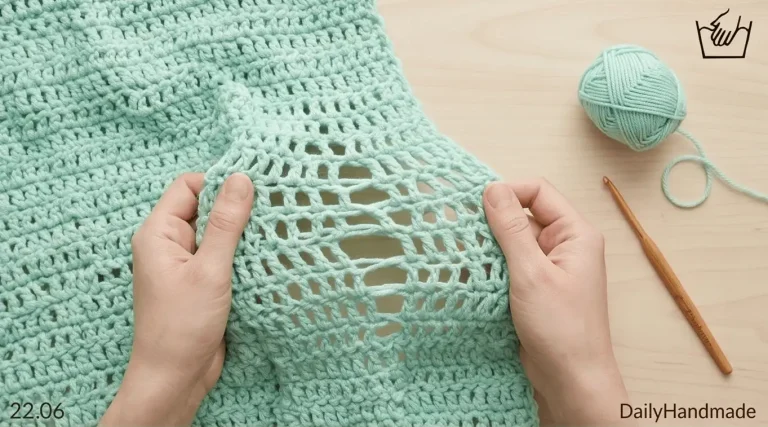
*sc 2, inc; rep from *). Use a highlighter to mark these sections so you don’t lose your place mid-row. See: Why My Crochet Stretched After Washing: The Science of Fiber Sag. - Audit the Stitch Count: Every pattern line ends with a number in parentheses, like
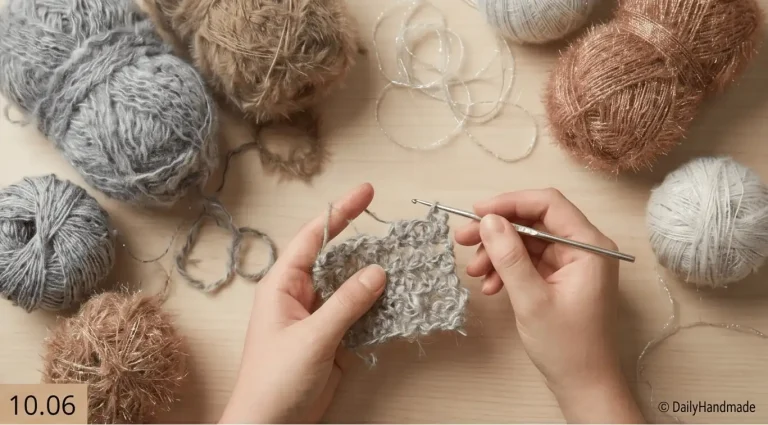
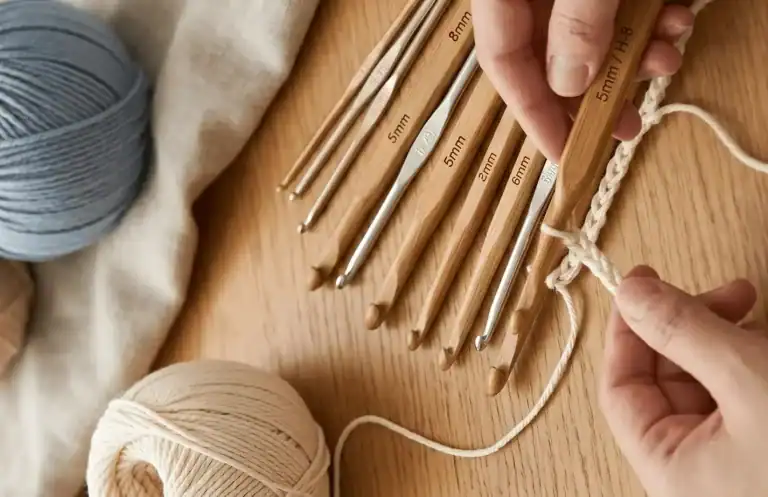
(24). This is your “Quality Control” check. If your row has 23 or 25, you must fix it before moving to the next line. Counting guide: Counting Stitches in Crochet: The Secret to Straight Edges. - Use High-Definition Tools: Follow your first pattern using a 5.0mm hook and smooth, light-colored #4 acrylic yarn. Avoid dark or fuzzy yarns that make it impossible to verify if you followed the pattern’s placement correctly. Tool guide: What yarn should beginners use to learn crochet & What hook size should beginners start with.
- Choose “Zero-Shaping” Projects: Your first pattern should be a flat rectangle, like a dishcloth or scarf, which has no increasing or decreasing. Project guide: What is the easiest first crochet project.
What To Expect Next
At first, following a pattern will feel 10x slower than free-handing a practice square. This is normal. You are building a new literacy. You will know you have successfully mastered Stage 3 when you can read a line of text and immediately “see” the resulting fabric in your mind. At that point, you can move from simple rectangles to complex shapes and garments.
Return Path
Learning how to follow a pattern is the final bridge to becoming a truly independent crocheter. To see how this skill fits into your total 12-month development roadmap, return here: Crochet learning stages explained
If you are following a pattern but your project is still turning out the wrong shape, troubleshoot with these specific guides: