Does Cotton or Acrylic Yarn Curl More? (Ending the Edge Roll)
Quick Recognition
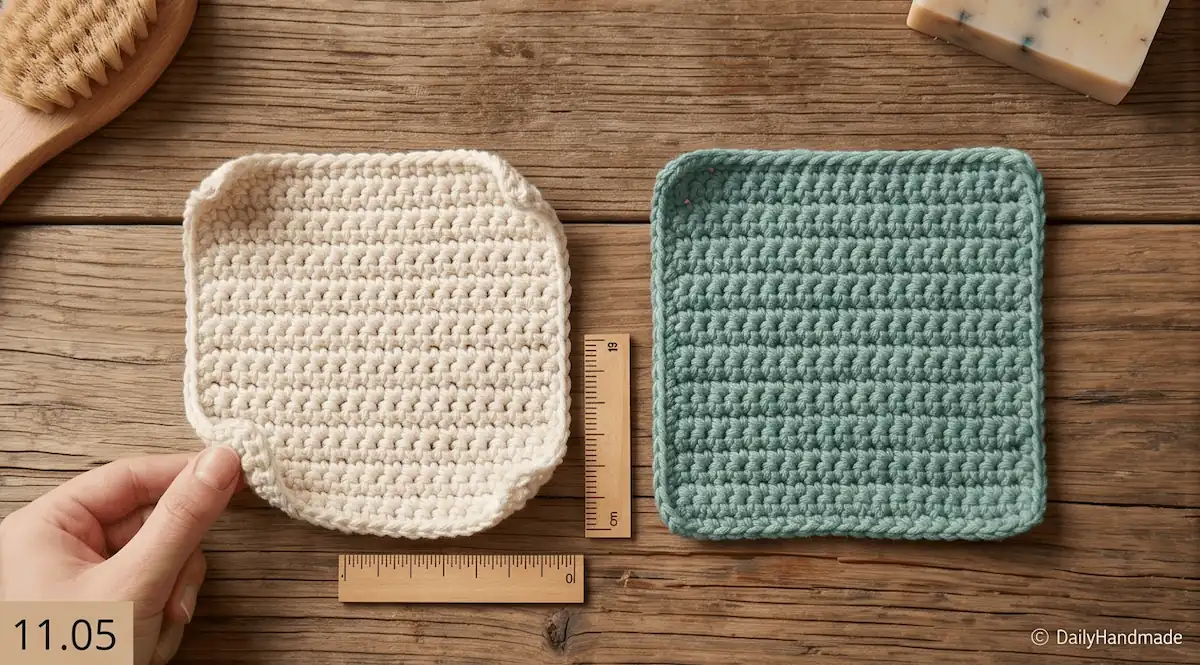
You’ve just finished a beautiful coaster or a scarf. You set it down on the table and—thwoop—the edges start rolling inward like a sushi roll. You try to press it flat with your hands, but seconds later, it springs back. This is “The Edge Roll,” one of the most frustrating aesthetic glitches in crochet. You might wonder if your tension is too tight, or if the yarn itself is just stubborn. In the journey of Cotton vs Acrylic Yarn for Crochet asking does cotton or acrylic yarn curl more is a vital test of your material knowledge.
Direct Answer
In the battle against the “roll,” Acrylic yarn tends to curl significantly more than Cotton. This is due to Acrylic’s “Fiber Memory” and high elasticity; the stitches constantly want to “shrink” back to the yarn’s original twisted state. Cotton, on the other hand, is heavier and lacks elasticity, which gives it a natural “weight” that helps it lie flat. However, if you crochet cotton with extremely tight tension, it won’t “curl” (roll); it will “flip” or warp—another unique headache in Best Yarn for Crochet Projects.
Technical Deep Dive: Why Does Fiber Want to Roll?
At the Dailyhandmade community labs, we’ve tested both fibers to find the root cause of the curl:
1. Elastic Recovery
- Acrylic: As a synthetic fiber, it is heat-treated to stay bouncy. When you crochet, you are stretching these microscopic plastic strands. When you let go, they want to contract, creating internal pressure that pulls the edges of the fabric inward.
- Cotton: It has no “snap-back.” Once a cotton stitch is placed, it stays there. This is why intricate lace doilies and tablecloths are almost always made of cotton—they stay perfectly flat.
2. Specific Gravity (Weight)
- Acrylic: It’s very light. It doesn’t have enough physical weight to fight the tension of the stitches.
- Cotton: It is noticeably heavier. This weight acts as a natural “anchor,” keeping the edges of your project pressed against the surface.
Diagnostic Table: Cotton vs. Acrylic Curling
| Fiber Type | Curling Level | Primary Cause | The Best Fix |
| Acrylic | High | Elastic memory of plastic fibers. | Steam Blocking (to “relax” the plastic). |
| Cotton | Low | High density and low elasticity. | Wet Blocking (to set the shape). |
The Dailyhandmade Fix: 3 Ways to End the Roll
To ensure your Cotton vs Acrylic Yarn for Crochet projects look professional and flat, try these expert “cheats”:
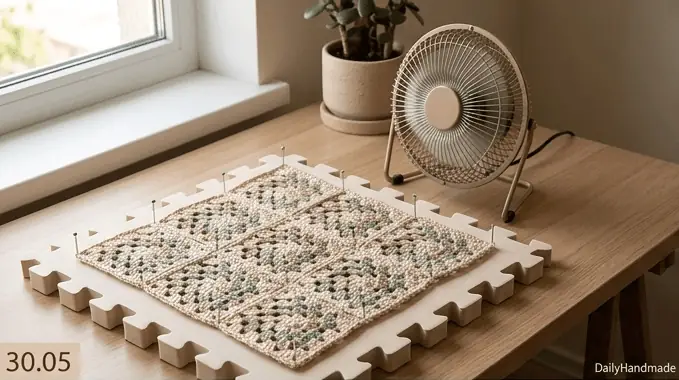
- “Killing” the Acrylic: For stubborn acrylic edges, use a steam iron. Hold it 2-3cm above the fabric (never touch it!) and blast it with steam. The heat “relaxes” the synthetic fibers, permanently killing the elastic memory and making it lie flat.Warning: Touching the iron to the acrylic will melt the yarn instantly!
- The Border Defense: If your cotton project is flipping at the edges, add a round of Single Crochet or Crab Stitch (Reverse Single Crochet) around the perimeter. This creates a sturdy “frame” that prevents the core fabric from warping.
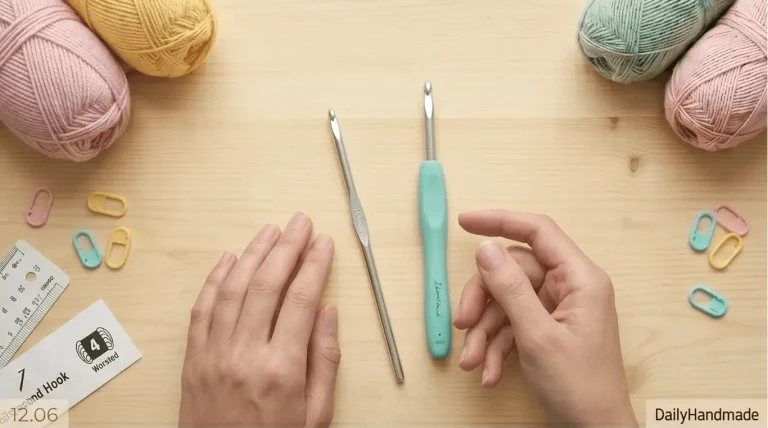
- Hook Calibration: If a specific yarn keeps curling, increase your hook size by 0.5mm. Looser stitches reduce the internal “tug-of-war” within the fiber, allowing the project to relax.
What To Expect Next
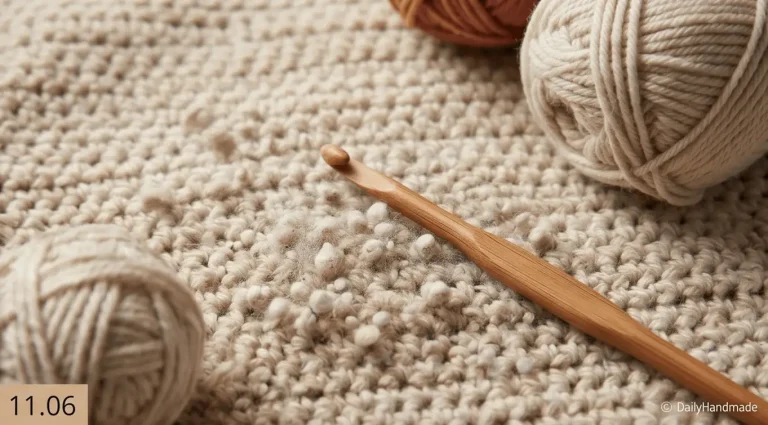
Once you understand does cotton or acrylic yarn curl more, you’ll no longer fear projects that need to stay flat, like blankets or garments. But beyond “shape,” there is a “durability” issue: Why does your favorite acrylic sweater grow fuzzy balls (pilling) after one wear, while cotton stays smooth?
Return Path
Mastering the “edge roll” is a pro-level skill in Pillar #04. Keep refining your expertise with these deep dives into fiber durability: