
Does Acrylic Yarn Curl in Crochet? (Understanding Fiber Memory)
Quick Recognition
You are using a standard acrylic yarn—perhaps a soft “premium” variety—but your project is exhibiting a “springy” or “bouncy” roll at the edges. Unlike the heavy, stiff curl of cotton, acrylic curling often feels light but persistent, springing back into a tube the moment you let go. If your stitches look relatively even but the fabric refuses to lie flat, you are dealing with acrylic yarn curling in crochet, a result of the synthetic fiber’s “memory” and its reaction to heat and tension.
Direct Answer
Acrylic yarn curling in crochet happens because acrylic is a synthetic plastic fiber (polyacrylonitrile) that has been extruded and set into a specific shape. This is known as “Fiber Memory.” When you crochet tightly, you are adding mechanical stress to these plastic strands. Because acrylic lacks the natural weight of plant fibers to pull itself down, the “spring-back” nature of the plastic causes the fabric to roll to relieve the tension trapped within the loops.
Why This Happens (Operational Logic)
Mechanically, acrylic is non-porous and elastic. During the crochet process, if your tension is high, you are essentially stretching a plastic string. Once the stitch is completed, the plastic tries to return to its original, shorter state. Since the stitches are interlocked, they cannot shrink individually, so the entire fabric surface contracts. Because the “back” of a crochet stitch has more yarn bulk than the “front,” this contraction is asymmetrical, forcing the fabric to curl toward the denser side.
How to Fix It (The Synthetic Reset)
To stabilize acrylic fibers and ensure your project remains flat and drapey, follow these expert corrective steps:
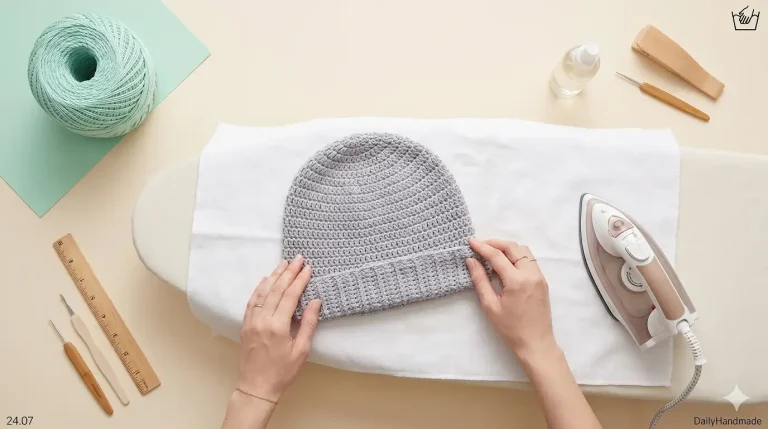
- The “Steam Relax” Method (Expert Signal): Acrylic is a thermoplastic. Use a garment steamer to lightly hover over the fabric (never touching the yarn). The heat “relaxes” the plastic’s memory, allowing it to set in a flat position. Be careful not to “kill” the yarn by over-heating it, which can cause it to lose all structure.
- Upsize to a 5.5mm Ergonomic Hook: To prevent over-stretching the plastic fibers during construction, use a slightly larger hook than recommended. A 5.5mm ergonomic hook provides a comfortable grip that encourages a looser “swing,” reducing the energy trapped in each stitch.
- Use a “Center-Pull” Feed: Ensure your yarn is feeding freely from the center of the skein. If the yarn is “tugging” or rolling across the floor, you are adding “pre-tension” to the acrylic before it even reaches your hook, which guarantees curling.
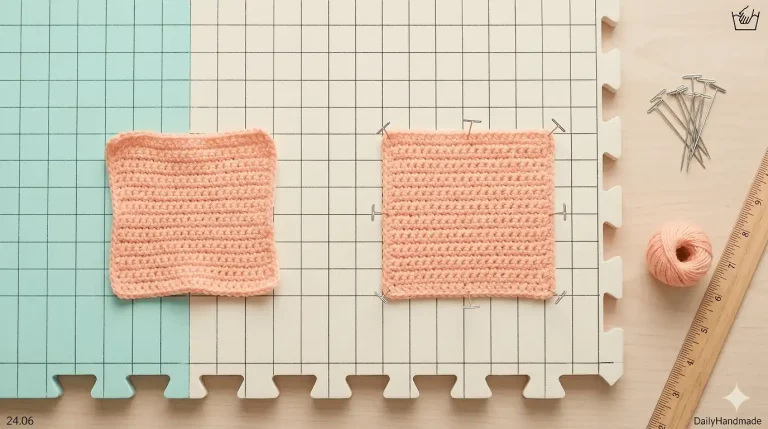
- The “Weight-Set” Technique: For acrylic blankets or scarves, lay the project flat and place heavy books on the edges for 24 hours. While not as permanent as steaming, this helps counteract the initial fiber memory.
- Identify High-Quality Blends: If curling is a recurring issue, try an acrylic-wool blend. The wool provides natural weight that helps hold the acrylic’s elasticity in check.
What To Expect Next
After applying light steam or increasing your hook size, the “springy” tension of the acrylic will dissipate. You will notice the fabric feels significantly softer and has a better “drape.” You will know the issue is resolved when you can shake the project and it falls into a flat shape on its own. Acrylic is highly durable and easy to care for, making it worth these minor technical adjustments.
Return Path
Mastering synthetic fibers is essential for making durable garments and blankets. To see how acrylic compares to natural fibers in terms of curling, view our comparison here: Crochet curling with cotton yarn
If you are still experiencing curling due to other factors, explore these specific diagnostics:
Which crochet stitches curl the most