How to Tell If You Crochet Too Tight or Too Loose (Beginner Signs + Easy Fixes)
(Beginner Diagnosis Guide)
If you’re new to crochet, one problem appears again and again:
Your project doesn’t feel right, but you don’t know why.
Maybe your stitches feel hard and stiff.
Maybe the hook barely fits into the stitches.
Or maybe the opposite happens — your fabric looks loose, holey, and uneven.
Most beginners immediately assume:
“I must just need more practice.”
But in many cases, the real issue is crochet tension.
When tension is too tight or too loose, everything in crochet becomes harder.
You may start noticing:
- messy-looking stitches
- uneven edges
- fabric curling
- projects growing wider or shrinking
- holes between stitches
- hand or wrist pain
These problems may look unrelated, but they often come from the same root cause: incorrect tension control.
Learning how to diagnose tight vs loose crochet tension is one of the most important beginner skills. Once you recognize the signs, fixing the problem becomes much easier.
This guide will help you understand:
- how to tell if your crochet is too tight
- how to tell if your crochet is too loose
- what the fabric should feel like
- why crochet becomes stiff and difficult to work
- simple ways beginners can fix tension problems
This article belongs to the troubleshooting stage of the learning system:
Pillar: Crochet FAQ & Troubleshooting
Learning stage: Beginner diagnosis and correction.
At this stage, you are not learning new stitches.
Instead, you are learning how to recognize problems in your crochet fabric and correct them early.
- Quick Answer (Beginner TL;DR)
- The Simple Beginner Test: Hook Insertion
- Why Beginners Struggle With Tension
- Stage Position: Why This Skill Matters Now
- How to Tell If You Crochet Too Tight
- The Hidden Tight Tension Sign: Hook Resistance
- How to Tell If You Crochet Too Loose
- Why Loose Tension Makes Crochet Look Messy
- Why Crochet Becomes Stiff and Hard to Insert the Hook
- Applicability Boundary: When Tight Tension Is Intentional
- The Most Effective Beginner Fixes
- Big Picture Return: Where Tension Diagnosis Fits in the Learning System
- Micro Topics Under This Longtail
- How to Fix Crochet Tension Without “Trying Harder”
- The Beginner Rule: Adjust the Hook Before the Hands
- How to Build Consistent Crochet Tension Over Time
- Predictive Insight: The Next Problem Beginners Often Encounter
- Visual Confirmation: How Correct Crochet Tension Should Look
- Learning Continuity: What Comes After Tension Diagnosis
- Related Beginner Questions
- FAQ
- Next Learning Step
Quick Answer (Beginner TL;DR)
If your crochet tension is incorrect, the signs usually appear in both the fabric and the crocheting experience.
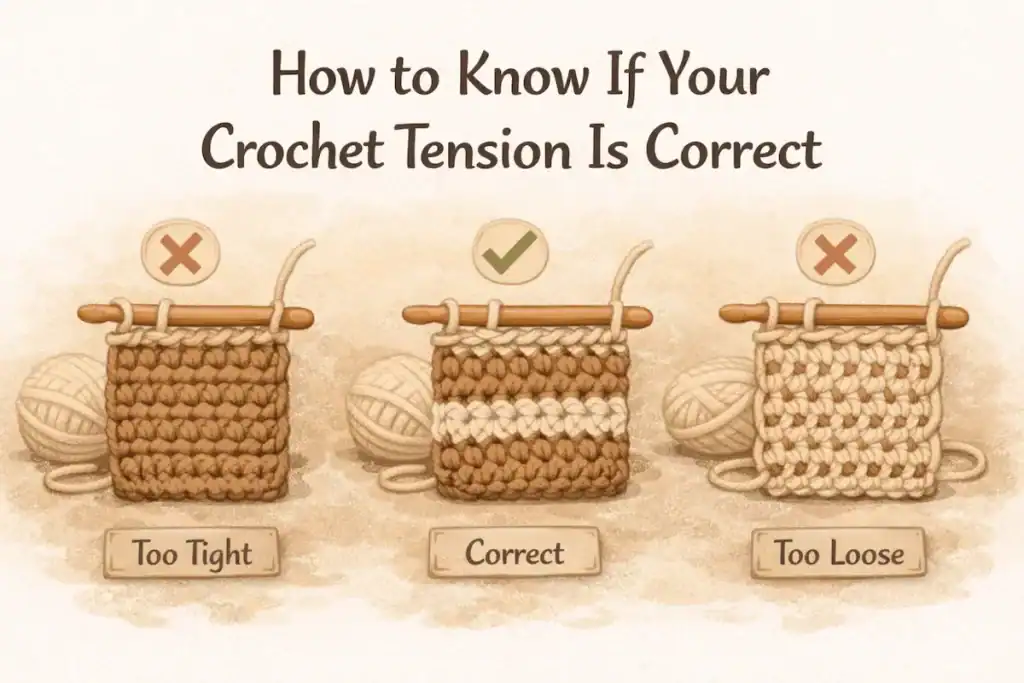
You are likely crocheting too tight if:
- the fabric feels stiff
- the hook is hard to insert into stitches
- stitches look very small and dense
- edges start curling
- your hands feel strained
You are likely crocheting too loose if:
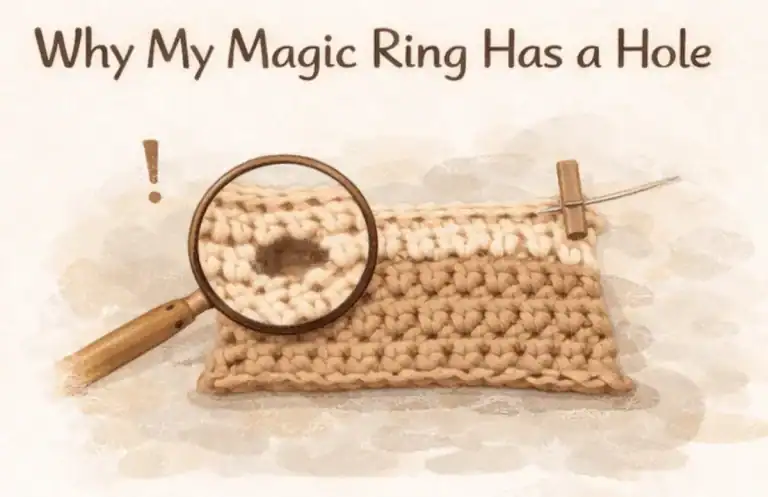
- the fabric has visible holes
- stitches look tall or stretched
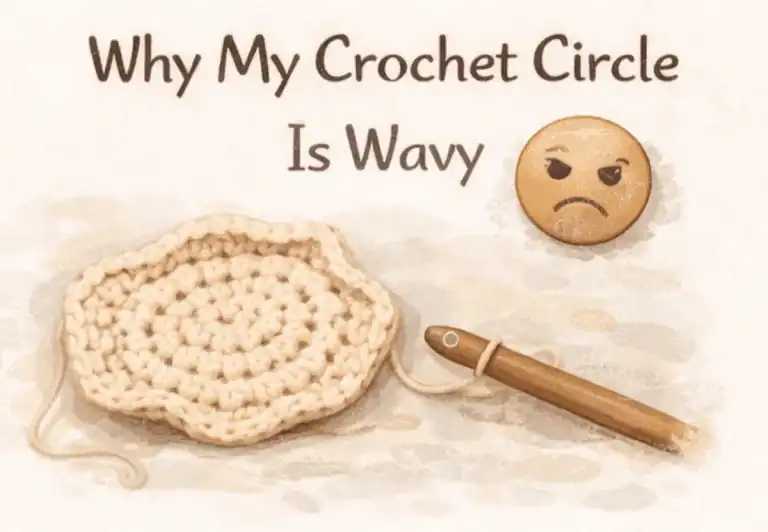
- edges appear wavy
- the fabric feels floppy
- stitch sizes vary a lot
For beginners, the easiest fix usually follows this order:
- Adjust hook size first
- Then gradually refine yarn tension control
Changing hook size often solves tension problems much faster than trying to “force” better tension with your hands.
The Simple Beginner Test: Hook Insertion
Before analyzing stitches deeply, try a quick diagnostic test.
Crochet a small sample:
- make a chain
- work about 10 single crochet stitches
Now try inserting your hook into the next stitch.
Pay attention to the resistance.
If inserting the hook feels like forcing a needle through thick leather, your stitches are almost certainly too tight.
If the hook slides in very easily but the stitches look large, open, or stretched, your tension is probably too loose.
This test works because crochet stitches must leave enough space for the hook to enter smoothly.
When tension is correct, the hook should pass through the stitch with moderate resistance — not force and not total looseness.
Why Beginners Struggle With Tension
Many beginners assume tension is simply about holding yarn tightly or loosely.
In reality, crochet tension is influenced by several factors working together:
- how you hold the yarn
- hook size relative to yarn weight
- stitch type
- speed of crocheting
- how tightly you pull loops
Because these variables interact, beginners often try to fix tension the wrong way.
A very common mistake is trying to “correct” tension by pulling yarn tighter or gripping harder.
This often makes the problem worse.
Tighter gripping usually leads to:
- smaller stitches
- increased hand fatigue
- slower crocheting
- inconsistent loops
Understanding the visible signs of tight vs loose crochet helps you correct the real cause instead of fighting the yarn.
Stage Position: Why This Skill Matters Now
At the beginner stage, most crocheters focus on learning stitches such as:
- chain
- single crochet
- double crochet
But once those stitches are learned, the next important step is fabric control.
This includes recognizing problems like:
- curling edges
- uneven sides
- messy stitch appearance
- inconsistent tension
Tension diagnosis is the bridge between learning stitches and creating stable crochet fabric.
Once you can recognize whether your crochet is too tight or too loose, many other troubleshooting problems become easier to solve.
In the next sections, we will look more closely at the clear visual and physical signs of tight and loose tension — and why they happen.
How to Tell If You Crochet Too Tight
One of the most common beginner tension problems is crocheting too tightly.
At first, tight stitches may actually look neat.
They can appear compact and uniform.
This often leads beginners to believe:
“Tighter stitches mean better stitches.”
But over time, tight tension usually creates several recognizable problems in both the fabric and the crocheting experience.
Signs in the Crochet Fabric
When crochet tension is too tight, the finished fabric often shows several visible characteristics:
• The fabric feels stiff and rigid
• Stitches appear very small and compact
• The fabric may curl at the edges
• The project may become smaller than expected
• Stitch holes become very small or almost invisible
This happens because tight tension compresses the yarn too strongly.
The stitches lose flexibility and the fabric cannot relax into its natural shape.
A common misconception is that dense fabric is always desirable.
In reality, most crochet projects require a balance between structure and flexibility.
Fabric that is too tight often becomes uncomfortable and difficult to shape.
Signs While Crocheting
Tight tension also reveals itself during the crocheting process.
You might notice:
• The hook is difficult to insert into stitches
• Pulling yarn through loops requires force
• Stitches feel slow and resistant
• You must tug hard to complete each stitch
If crocheting feels like a physical struggle rather than a smooth motion, tight tension is very likely the cause.
Physical Symptoms in Your Hands
Another strong indicator of tight crochet tension is physical strain.
Some crocheters experience:
• finger soreness
• wrist stiffness
• forearm tension
• hand cramps
• shoulder tightness
These symptoms occur because tight tension forces your hands to apply extra pressure throughout the entire stitching process.
If crochet frequently causes hand pain, tension is often part of the problem.
However, hand discomfort can also have other causes.
For example, very stiff yarn or poor ergonomics may contribute to fatigue.
The Hidden Tight Tension Sign: Hook Resistance
One of the most reliable indicators of tight tension is hook resistance.
When tension is correct, the crochet hook should slide into the next stitch with moderate effort.
If the hook:
• catches on yarn fibers
• refuses to enter easily
• requires pushing or twisting
then the stitches are usually too tight.
This occurs because tight stitches shrink the space inside the stitch structure, leaving little room for the hook.
Many beginners try to solve this by forcing the hook through.
This usually creates new problems such as:
• splitting yarn fibers
• distorting stitches
• increasing hand strain
Instead of forcing the hook, the better solution is usually adjusting tension or hook size.
How to Tell If You Crochet Too Loose
The opposite tension problem is crocheting too loosely.
Loose tension rarely causes physical discomfort, which is why beginners sometimes overlook it.
However, loose tension often affects the appearance and stability of crochet fabric.
Signs in the Fabric
Loose crochet tension typically produces these visual signs:
• visible gaps between stitches
• fabric that looks see-through
• stitches that appear tall or stretched
• inconsistent stitch sizes
• edges that appear wavy or uneven
Loose stitches create extra space between loops.
This makes the fabric look more open and less structured.
In some crochet styles, such as lace, loose tension is intentional.
But most beginner projects require medium, consistent tension to produce stable fabric.
Signs While Crocheting
Loose tension also appears in the crocheting process itself.
You may notice:
• loops becoming very tall before completing a stitch
• stitches sliding around easily
• difficulty keeping loops the same size
• yarn feeding too freely
Because the yarn moves too easily, the crocheter has less control over the final stitch size.
This is why loose tension often leads to uneven stitches.
Why Loose Tension Makes Crochet Look Messy
Many beginners describe their work as “messy” when tension is loose.
This happens because crochet stitches rely on consistent loop height.
When loops vary too much, stitches begin to look different from each other.
Some stitches become:
• tall
• stretched
• angled
• loosely connected
When many of these inconsistent stitches combine in the fabric, the overall result appears chaotic.
This is why loose tension often overlaps with problems like:
• uneven stitch definition
• irregular edges
• inconsistent rows
These issues are not separate problems.
They are often symptoms of the same tension imbalance.
Why Crochet Becomes Stiff and Hard to Insert the Hook
Another common beginner complaint is:
“My crochet feels stiff and my hook won’t go in.”
This situation almost always involves tight tension, but tension is not the only factor.
Several conditions can contribute to stiff crochet fabric.
Tight Tension
The most common cause is simply pulling stitches too tight.
When loops are tightened excessively, the stitch structure collapses around the yarn.
This removes the space that the hook normally enters.
Hook Size That Is Too Small
Hook size also affects tension dramatically.
A hook that is too small for the yarn compresses stitches more tightly.
This can create fabric that feels dense and difficult to work.
Many beginners unknowingly select hooks that are slightly too small, which increases tension problems.
Yarn Characteristics
Some yarn types naturally feel stiffer than others.
For example:
• tightly spun cotton yarn
• coarse plant fibers
• rough textured yarns
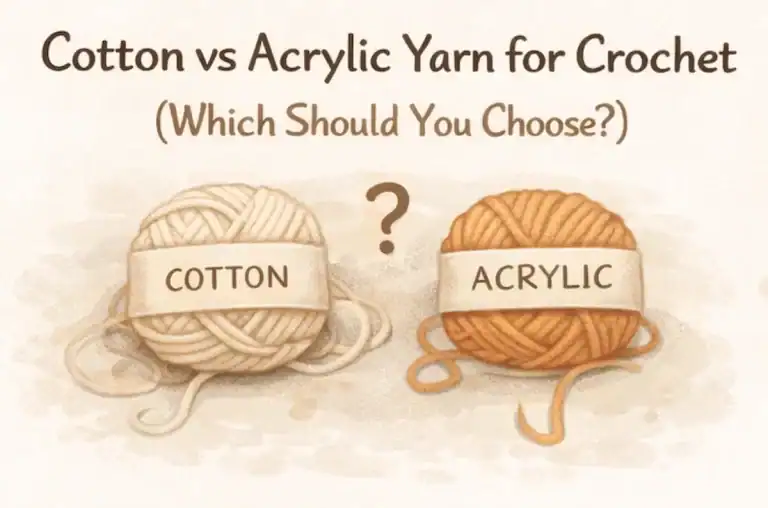
These yarns provide less elasticity than acrylic or wool.
Because the yarn does not stretch easily, stitches may feel firmer even when tension is correct.
Understanding these material differences helps prevent misdiagnosing tension problems.
Applicability Boundary: When Tight Tension Is Intentional
Although tight tension often creates problems for beginners, it is not always incorrect.
Certain projects intentionally require tighter stitches.
Examples include:
• amigurumi toys
• bags or baskets
• projects that must hold shape
In these situations, tighter tension prevents stuffing from showing through or provides additional structure.
However, even when tension is tight, stitches should still allow smooth hook insertion.
If crocheting becomes painful or difficult, the tension is likely tighter than necessary.
The Most Effective Beginner Fixes
Beginners frequently believe tension must be corrected through sheer effort.
They may try to:
• hold yarn tighter
• pull loops harder
• concentrate intensely on each stitch
This approach rarely works well.
Instead, tension problems are usually easier to solve through simple adjustments.
Fixing Tight Crochet
If your crochet tension is too tight, try:
• increasing hook size slightly
• loosening your yarn hold
• relaxing your shoulders and hands
• slowing your crocheting speed
• allowing loops to remain slightly taller
Even a 0.5 mm hook size change can dramatically improve tension.
Fixing Loose Crochet
If tension is too loose, try:
• using a slightly smaller hook
• keeping loop height more consistent
• maintaining steady yarn control
• crocheting a little slower
These small adjustments help stabilize stitch size and improve fabric structure.
Big Picture Return: Where Tension Diagnosis Fits in the Learning System
Crochet tension problems rarely appear alone.
They are closely connected to other beginner troubleshooting issues such as:
• uneven edges
• curling fabric
• messy stitches
• holes between stitches
• inconsistent project size
These problems all relate to how stitches interact with each other.
Learning to diagnose tight versus loose tension allows you to identify the root cause instead of treating each symptom separately.
Within the crochet learning system, tension diagnosis belongs to the troubleshooting stage, where beginners begin understanding how fabric behaves.
This stage connects earlier stitch learning with more advanced project construction.
Micro Topics Under This Longtail
Several specific beginner questions branch from this concept.
These questions require their own focused troubleshooting guides, including:
- How to Tell If You Crochet Too Tight: The Stitch Definition Test
- How to Tell If You Crochet Too Loose: Identifying “Ghost Holes”
- Crochet Too Tight Symptoms: Aching Hands and Squeaking Hooks
- Crochet Too Loose Symptoms: Why Your Fabric Lacks Structure
- Why is My Crochet Stiff and Hard to Insert Hook? (Pillar 9 Rescue)
- Why Your Crochet Fabric is Floppy and Stretchy: The Tension Fix
- Quick Fix If You Crochet Too Tight or Too Loose: No Frogging Needed
Each of these problems represents a specific situation within the broader tension diagnosis concept.
Understanding the overall concept first helps beginners recognize which specific issue they may be facing.
How to Fix Crochet Tension Without “Trying Harder”
One of the most important lessons beginners eventually learn is this:
Crochet tension rarely improves by forcing it.
Many new crocheters believe they must control tension through effort alone. They try to concentrate harder, grip the yarn tighter, or force their stitches to stay the same size.
This approach usually causes new problems.
When you apply too much effort, you may begin to:
- grip the hook too tightly
- pull yarn harder than necessary
- tense your shoulders and wrists
- lose rhythm while crocheting
Instead of improving tension, this often leads to inconsistent stitches and hand fatigue.
A more reliable approach is to adjust tools and technique first, then allow tension to stabilize naturally through repetition.
The Beginner Rule: Adjust the Hook Before the Hands
When tension feels wrong, beginners often try to fix it by changing how tightly they hold yarn.
However, the fastest and most beginner-friendly adjustment is usually changing hook size.
Hook size directly influences the space each stitch occupies.
If stitches are too tight, increasing hook size slightly creates more room inside each stitch.
If stitches are too loose, reducing hook size slightly helps the stitches hold their shape.
Even a small change—often 0.5 mm—can noticeably improve crochet fabric.
This works because crochet stitches are structural loops.
The hook determines the minimum loop size, while your hands refine consistency afterward.
Once the hook size is appropriate, tension often becomes easier to manage without forcing it.
How to Build Consistent Crochet Tension Over Time
Consistency in crochet tension develops gradually.
Rather than focusing on perfection, beginners benefit from practicing repeatable habits.
Helpful habits include:
- maintaining a steady yarn hold
- keeping loops the same height before completing stitches
- crocheting at a comfortable pace
- relaxing the shoulders and wrists
Consistency usually improves after crocheting the same stitch pattern for a while.
Many crocheters notice that tension becomes more stable after completing several rows of the same stitch.
This happens because your hands begin to memorize the motion.
Over time, tension becomes more automatic rather than something you must constantly monitor.
Predictive Insight: The Next Problem Beginners Often Encounter
Once beginners begin recognizing tight and loose tension, a new question often appears:
“My tension changes between rows. Why does that happen?”
This usually occurs because beginners adjust tension unconsciously while focusing on other tasks, such as:
- counting stitches
- turning rows
- learning a new stitch
As attention shifts, loop height and yarn control can change slightly.
This is normal and improves with experience.
Practicing small sample swatches often helps stabilize tension more quickly than jumping directly into large projects.
Visual Confirmation: How Correct Crochet Tension Should Look
A good way to confirm that tension is correct is to observe the fabric rather than focusing only on the stitches.
Balanced crochet fabric usually shows these characteristics:
- stitches appear similar in size
- edges remain relatively straight
- the fabric bends easily without collapsing
- the hook inserts smoothly into stitches
The fabric should feel flexible but structured.
If the fabric behaves this way and crocheting feels comfortable, your tension is likely within a healthy range.
This visual and physical confirmation helps beginners trust their progress.
Learning Continuity: What Comes After Tension Diagnosis
Understanding tension diagnosis is part of the broader crochet troubleshooting stage.
At this point in the learning journey, beginners begin recognizing how stitch mechanics influence the finished fabric.
This stage connects to other important troubleshooting topics, including:
- controlling crochet tension during projects
- identifying why fabric develops holes
- fixing uneven edges
- correcting stitch appearance problems
Each of these issues relates to how stitches interact and how yarn behaves inside the stitch structure.
Learning to diagnose tension correctly helps you approach these problems with more confidence.
Instead of guessing, you begin recognizing patterns in the fabric.
Related Beginner Questions
Beginners often search for closely related questions when learning about crochet tension.
Common questions include:
- Why is my crochet stiff and hard to work into?
- Why do my crochet stitches look messy?
- Why does my crochet fabric have holes?
- Why do my crochet edges become uneven?
- Why does crochet sometimes hurt my hands?
These questions usually stem from tension issues combined with hook size, yarn choice, or stitch technique.
Recognizing tension problems early helps prevent many of these issues from appearing later in projects.
FAQ
How do I know if I crochet too tight?
You are likely crocheting too tight if your fabric feels stiff and inserting the hook into stitches requires force. Tight tension often produces small, dense stitches and may cause hand strain.
How do I know if I crochet too loose?
Loose crochet tension usually produces visible gaps between stitches, tall or stretched loops, and fabric that feels floppy or unstable.
Is it better to crochet tight or loose?
Neither is inherently better. The goal is consistent tension appropriate for the project. Balanced tension creates fabric that is flexible, stable, and comfortable to crochet.
Why does crochet sometimes hurt my hands?
Hand discomfort is often caused by tight tension or gripping the hook too strongly. Relaxing your grip and adjusting hook size can often reduce strain.
Next Learning Step
If you want to improve tension control further, the next step is learning how to stabilize crochet tension during projects.
Continue exploring the troubleshooting path inside the crochet learning system to understand how tension interacts with other common beginner challenges.
As your experience grows, tension control becomes more intuitive and your crochet fabric becomes more consistent.
Understanding this concept brings you one step closer to creating smooth, balanced crochet projects with confidence.