
Top 5 Crochet Stitches That Curl (And How to Flatten Them)
Quick Recognition
You’ve mastered the basic movements, but you notice a strange pattern: some of your projects lie perfectly flat, while others—using the exact same yarn and hook—roll up like a tube. It feels like a mystery of the craft. If you are switching between different stitch types and seeing inconsistent results in your fabric’s “drape,” you are encountering the inherent mechanical bias of certain crochet stitches. Not all stitches are created equal; some are geometrically designed to stay flat, while others are built to curl.
Direct Answer
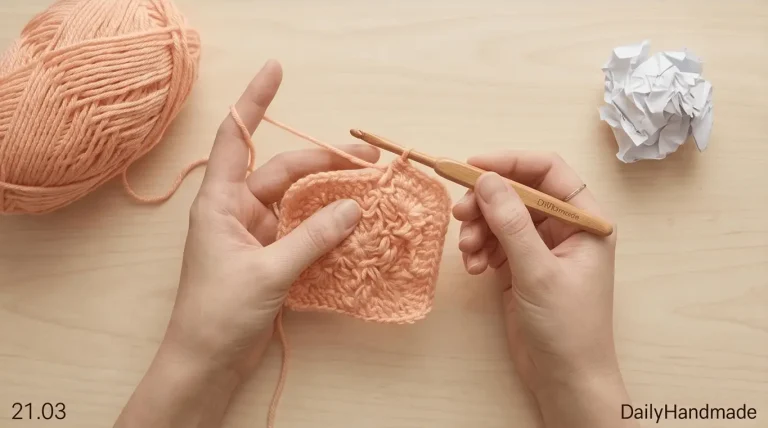
The crochet stitches that curl the most are short, dense stitches like the Slip Stitch (sl st), Single Crochet (sc), and Tunisian Simple Stitch (tss). These stitches have a high “density-to-height” ratio, meaning they pack a large amount of yarn into a very small vertical space. This creates internal structural torque that forces the fabric to roll toward the “wrong side” (the back) to relieve the pressure trapped within the tight loops.
Why This Happens (The Structural Comparison)
In the physics of crochet, height equals flexibility. A Double Crochet (dc) has a long vertical “post” that acts like a hinge, allowing the fabric to bend and hang. In contrast, a Single Crochet or Slip Stitch is a squat, solid knot. Because the top of the stitch (the “V”) has more bulk than the bottom (the entry point), the stitch is naturally asymmetrical. When you stack thousands of these asymmetrical units, the cumulative tension acts like a drawstring, pulling the surface of the fabric into a curve.
The “Curl Hierarchy” (Technical Comparison)
To help you plan your projects, here is how the most common stitches rank for curling:
| Stitch Type | Curl Risk | Reason |
| Slip Stitch | Extreme | Almost zero height; maximum yarn compression. |
| Tunisian Simple Stitch | High | All loops are worked on one side, creating a heavy one-way pull. |
| Single Crochet | Moderate | Short and dense; very little “hinge” for the fabric. |
| Half Double Crochet | Low | Added height and an extra yarn-over provide “breathing room.” |
| Double Crochet | Very Low | Tall posts provide excellent drape and weight to stay flat. |
How to Fix It (The Technical Calibration)
To successfully use crochet stitches that curl without ruining your project’s shape, implement these professional adjustments:
- The “0.5mm Bump” (Expert Signal): When working with the “Extreme” or “High” curl risk stitches, automatically increase your hook size. If you usually use a 5.0mm hook, switch to a 5.5mm or 6.0mm ergonomic hook for these dense patterns.
- The Foundation Chain Buffer: Always use a hook 1.0mm larger for your starting chain when using short stitches. This prevents the “drawstring effect” at the bottom of your work. See: What to learn first: chain or single crochet.
- Use “Counter-Stitch” Borders: If your project uses a curling stitch, add a 3-row border of a flatter stitch (like Double Crochet) or a “Seed Stitch” (alternating sc and dc). This acts as a structural frame that holds the curling center in place.
- Pair with High-Memory Fiber: Use a worsted weight (#4) acrylic-wool blend. The wool provides the weight to pull the curls down, while the acrylic provides the elasticity to prevent snapping. See: Does acrylic yarn curl in crochet.
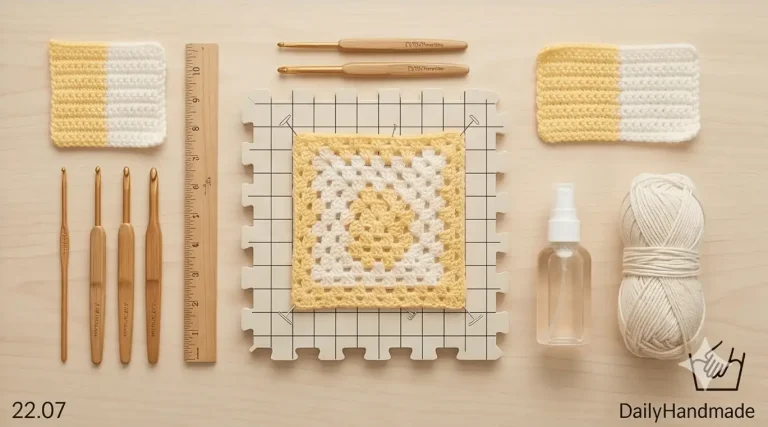
- Aggressive Blocking: For Tunisian or Slip Stitch projects, wet-blocking is mandatory. Pin the piece into a flat shape while damp and let it dry completely to “reset” the stitch memory.
What To Expect Next
After switching to a taller stitch or upsizing your hook, the “fight” between the yarn and the fabric will stop. You will notice that your project stays flat as soon as you put it down. You will know you have mastered the technical comparison when you can look at a pattern and predict whether it will curl—and adjust your hook size before you even begin Row 1.
Return Path
Understanding the hierarchy of stitches is the final step in troubleshooting fabric distortion. To see how these stitches fit into your overall learning roadmap, return to the master guide:
Crochet learning stages explained
If you are still experiencing curling with specific fibers, revisit these deep-dives: