The Crochet Learning Curve: Why Progress Feels So Slow at First
Quick Recognition
When you first start crocheting, you might feel like you are “running in place.” Even after several practice sessions, your stitches may still look irregular, your hands feel slow, and the movements don’t feel any more natural than they did on day one. This leads many beginners to believe they have hit a plateau or that the crochet learning curve is simply too steep for them to master.
Direct Answer
Crochet progress feels slow in the beginning because the learning curve is front-loaded. You are required to master three distinct motor skills simultaneously: hook manipulation, yarn tensioning, and stitch recognition. Because your brain must consciously coordinate all three at once, you experience “cognitive overload,” which makes your actual progress feel invisible until these movements begin to transition into muscle memory.
Why This Happens
The “slowness” you feel is actually your brain building a complex neural map. In the early stages, you are dealing with:
- The Multi-Tasking Barrier: Unlike other hobbies, crochet doesn’t let you learn one thing at a time. You cannot make a stitch without also managing tension and hook angle. This “all-at-once” requirement makes the initial 5–10 hours feel incredibly slow.
- Invisible Muscle Memory: Your hands are currently learning “micro-adjustments”—how much to turn the hook or how much to pull the yarn. You won’t see this progress in your fabric yet, but your nervous system is becoming more efficient with every loop.
- The “Ugly Phase” of Fabric: Beginners often judge progress by the beauty of the final product. However, your brain learns the mechanics long before it learns the aesthetics. Just because your swatch looks messy doesn’t mean your hands haven’t improved.
How to Fix the “Slow” Feeling
To overcome the frustration of the learning curve, change how you measure progress:
- Celebrate “Micro-Wins”: Instead of looking for perfect stitches, notice if you can complete a row without dropping your hook. That is a sign of improved coordination.
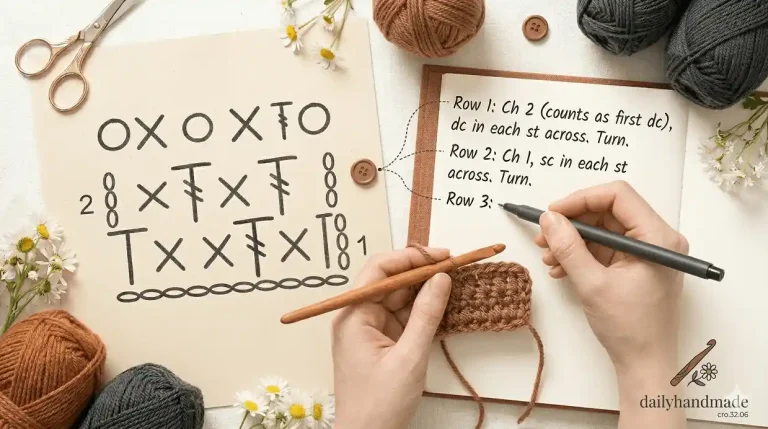
- Use “Reference Swatches”: Keep your very first piece of crochet. Compare it to what you made today. You will likely see progress that you missed in the moment.
- Practice in “Sprints”: Limit practice to 15-minute bursts. This prevents mental fatigue, which is the primary cause of feeling like you aren’t “getting it.”
- Simplify Your Variables: If you are struggling, go back to a larger hook and smooth, light-colored yarn. This reduces the “noise” so you can focus on the curve itself. If you suspect your tools are making the curve steeper than it needs to be, see: Best crochet hooks for beginners (mp2)
What to Expect Next
The “breakthrough” in the crochet learning curve usually happens suddenly. You will know you’ve moved past the steepest part when:
- You stop “muttering” the steps to yourself while you work.
- The “tug-of-war” between your two hands stops, and they begin to work in a rhythmic, circular motion.
- You recognize a mistake as you make it, rather than five rows later.
This feeling of slow progress is often tied to physical and visual frustrations:
- If your progress feels slow because your stitches are still messy, see: Why my crochet stitches look uneven as a beginner
- If the slow progress is due to physical stiffness, see: Why crochet feels awkward in the beginning
- If you find yourself constantly redoing work, see: Is it normal to frog a lot when learning crochet?
Return Path
The feeling of slow progress is a sign that your brain is working hard to wire new skills. To understand the full scope of these learning stages and how to stay motivated, see our main guide: Why Crochet Feels Hard at First
This guide explains the complete beginner roadmap and how to navigate the challenges of the first few weeks.