
Why Crochet Hurts My Hands as a Beginner (And How to Stop It)
Quick Recognition
After just a short session of practicing, you might feel a dull ache in your palm, a cramp in your thumb, or stiffness in your wrists. Your hands feel tired much faster than you expected, and you might find yourself constantly shaking them out to find relief. This discomfort often leads beginners to worry they are “holding it wrong” or that their hands aren’t suited for the craft.
Direct Answer
Crochet hurts your hands in the beginning primarily due to “The Death Grip” and muscle fatigue from unaccustomed repetitive motion. Because you are concentrating so hard, you instinctively squeeze the hook and tension the yarn much tighter than necessary. This creates “static loading” on the small muscles of your hands that haven’t yet adapted to these specific movements. As your coordination improves and your grip relaxes, the pain typically disappears.
Why This Happens
The discomfort you are feeling is a physical reaction to the learning process. It usually stems from three factors:
- Over-Tensioning: Beginners often use excessive force to “control” the hook. This constant squeezing restricts blood flow and causes rapid muscle fatigue.
- New Motor Patterns: You are using tiny stabilizer muscles in your fingers and wrists in ways they have never been used before. Much like starting a new gym routine, these muscles will feel “sore” as they adapt.
- Static Posture: Because you are focused on the “how-to,” you likely hold your hands in a rigid, frozen position for too long. This prevents the joints from moving through their natural range of motion.
How to Fix Hand Pain
To stop the soreness and crochet comfortably for longer periods, implement these simple changes:
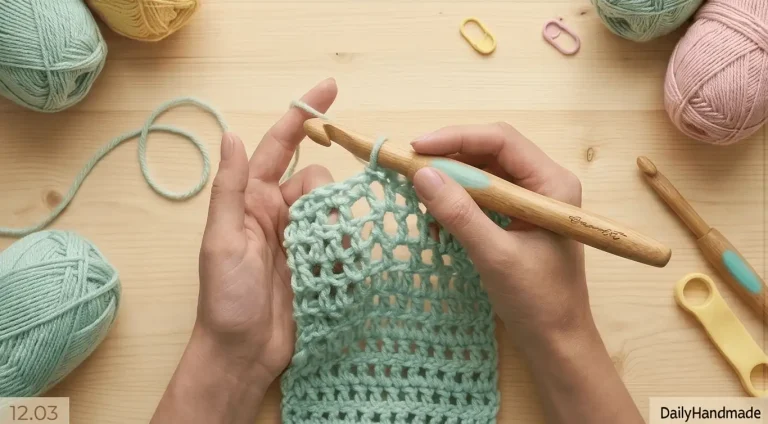
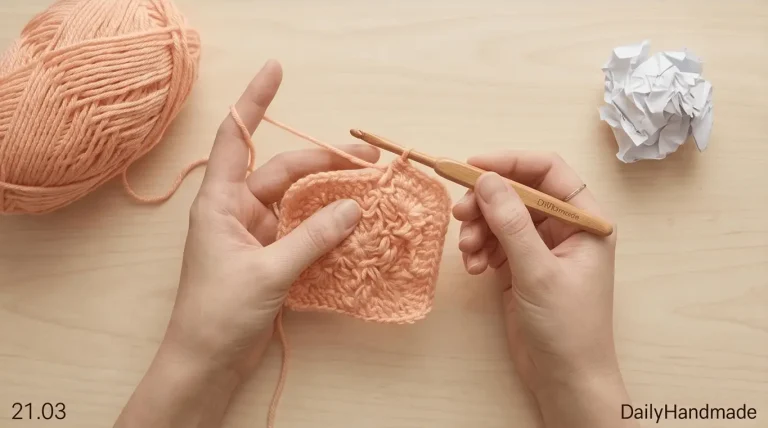
- Perform a “Grip Check”: Every five minutes, consciously stop and see if you can wiggle the hook easily. If your knuckles are white, you are holding it too tight. Relax your hand until the hook is just resting in your fingers.
- The 20-Minute Rule: Set a timer. Every 20 minutes, put the work down for 30 seconds. Stretch your fingers wide and rotate your wrists to flush out tension.
- Optimize Your Tool: Thin, metal hooks require more muscle force to stabilize. Switching to a tool with a larger, cushioned handle can immediately reduce the strain on your palm. If you are looking for tools designed to reduce hand fatigue, see: Best crochet hooks for beginners (mp2).
What to Expect Next
Hand discomfort is a temporary hurdle. You will know your hands are successfully adapting when:
- You notice you are holding the hook lightly, like a pencil or a dinner knife.
- The “burning” sensation in your thumb or palm stops occurring during practice.
- You can finish several rows without needing to “shake out” your hands.
This physical stiffness is often closely related to other beginner struggles:
- If your hand pain is making your movements feel stiff and uncoordinated, see: Why crochet feels awkward in the beginning.
- If you find yourself tightening your grip because your stitches are inconsistent, see: Why my crochet stitches look uneven as a beginner
- If you are making habits like “speeding” that increase hand tension, see: Beginner crochet mistakes that slow progress.
Return Path
Mild hand soreness is a normal sign that your body is learning a new skill. To understand the full scope of the beginner experience and how to navigate these early physical challenges, see our main guide: Why Crochet Feels Hard at First
This guide explains the entire roadmap of the learning stage and helps you manage expectations as you develop your “crochet muscles.”