
Why Crochet Feels Harder Learning New Stitch Styles (and How to Win)
Quick Recognition
You’ve mastered the Single Crochet. You can do Double Crochets in your sleep. But then, you decide to try the Waffle Stitch or the Alpine Stitch, and suddenly your fingers feel like ten useless sausages. You keep losing your place, your edges are wonky, and you find yourself sighing every two minutes. You think, “I thought I was an intermediate crocheter, but maybe I’m just a lucky beginner.” At Dailyhandmade, we want to set the record straight: you haven’t lost your talent. You are simply experiencing Cognitive Friction. Knowing why crochet feels harder learning new stitch styles is the secret weapon to breaking through the plateau in 2026.
Direct Answer
Crochet feels harder learning new stitch patterns because of Proactive Interference—where your existing muscle memory for basic stitches actually competes with the new movements required. When you learn a new texture, your brain cannot rely on “Auto-Pilot,” causing a spike in Cognitive Load. In the framework, we call this the “Stitch Barrier.” To win, you must move from “Muscle Memory” back to “Conscious Observation” by breaking the stitch down into its smallest mechanical components.
The Learning Audit: Auto-Pilot vs. The Barrier
In the technical world of Why Crochet Feels Hard Some Days, we analyze how your brain processes a stitch. Use this table to see why you’re feeling exhausted:
| Feature | The Basic Stitch (Auto-Pilot) | The New Stitch (The Barrier) |
| Brain Region | Cerebellum (Muscle Memory). | Prefrontal Cortex (Problem Solving). |
| Visual Need | Can watch TV or talk. | Needs 100% focus on the hook tip. |
| Hand Speed | Fluid and rhythmic. | Jerky, slow, and hesitant. |
| Fatigue Level | Low (Relaxing). | High (Mentally draining). |
3 Strategies to “Win” the New Stitch Game
If you’ve noticed that crochet feels harder learning new stitch techniques in CROCHET FAQ AND TROUBLESHOOTING, try these three strategy drills to bypass the frustration:
1. The “Verbal Rhythm” Hack
Your hands are confused, so give your brain a “script.”
- The Hack: As you work the new stitch, say the steps out loud. For a Popcorn Stitch, you might say: “Five doubles, drop the loop, insert, pull through.” By using your auditory system, you provide a secondary “track” for your brain to follow, which reduces crochet mistakes when tired.
2. The “Swatch-Only” Zone
Never try to learn a complex new stitch while working on a 200-stitch-wide blanket. The stakes are too high, and the “Return to Start” time is too long.
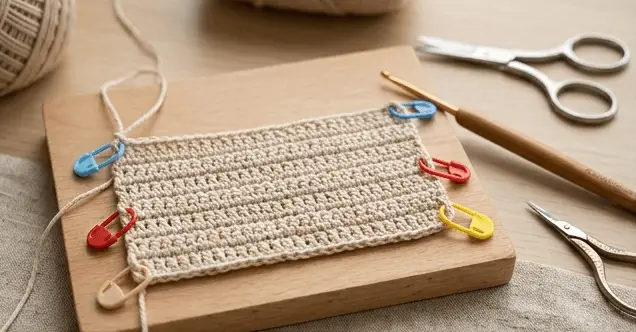
- The Hack: Create a 15-stitch “Practice Swatch.” This allows you to focus purely on the mechanics without worrying about row counts or project deadlines. Once you have the “rhythm” in your fingers, move to the main project.
3. The “Visual Anchor” Identify
Every new stitch has a “sweet spot”—the exact place where the hook needs to go.
- The Hack: Before you pull through any loops, stop and identify the “Visual Anchor.” Is it the back loop? The post below? Use a stitch marker to mark the insert point for the first five stitches. This removes the “guessing game” that causes most of the mental fatigue in Why Crochet Feels Hard Some Days.
Dailyhandmade Expert Rescue Signal
The “Lighting” Correlation: Remember Why crochet feels harder at night. If you are trying to learn a new, complex stitch under dim evening lights, you are setting yourself up for failure. In CROCHET FAQ AND TROUBLESHOOTING, our rule is: Learn on Saturday morning, Repeat on Tuesday night. Give your brain the advantage of natural light and high energy when tackling a new “Stitch Barrier.”
What To Expect Next
You’ve pushed through the barrier and the new stitch is finally clicking. But how do you make sure your practice sessions remain a source of joy rather than a source of stress? In our next chapter of Why Crochet Feels Hard Some Days, we look at the emotional side of making: How to Practice Crochet Without Frustration.
Return Path
Mastering the “Stitch Barrier” is a major milestone in Why Crochet Feels Hard Some Days. To keep your journey moving, explore these related guides:
- Practice crochet without frustration
- How to reset crochet focus
- Why crochet feels harder at night
- Master Guide: Crochet FAQ & Troubleshooting
I have a relevant follow-up question for you: When you’re learning a new stitch, do you prefer to follow a written pattern, or do you find that you absolutely need a video tutorial to see exactly how the hook moves?