
Is Crochet Curling Normal? (A Survival Guide for Beginners)
Quick Recognition
You finish your first few rows of a scarf, lay it on the table, and instead of a neat rectangle, it instantly rolls up like a fruit roll-up or an old telephone cord. Your immediate thought is likely: “I’ve broken the yarn” or “I’m just not built for this.” Rest assured, your crochet hook isn’t haunted. This “curling phenomenon” is perhaps the most common rite of passage for every new maker. It is a physical reaction to tension, not a sign of failure.
Direct Answer
Yes, crochet curling for beginners is 100% normal. It occurs because the mechanical tension applied to the yarn is higher than the fiber’s ability to remain flat. In 9 out of 10 cases, curling is caused by a tight foundation chain, a mismatched hook size, or the inherent density of the stitch you are using. Most projects will naturally relax as you add more rows, but some require a minor technical reset to lie perfectly flat.
Why This Happens (The Tension Logic)
Crochet fabric is essentially a series of interlocking slip knots. When you are a beginner, your hands naturally over-tighten as you seek control (the “Death Grip”). This creates Structural Imbalance: the top of your stitch is wider than the base, or your foundation chain is so tight it acts like a drawstring, pulling the rest of the fabric inward. Until your muscle memory stabilizes, your yarn is essentially “fighting” the shape you are trying to give it.
How to Fix It (The 5-Step Diagnostic)
To stop your work from rolling and start seeing flat results, walk through this diagnostic sequence:
- The “5-Row Rule” (Patience): Before you undo your work, crochet at least 5 to 10 rows. Often, the cumulative weight of the new rows will pull the previous rows flat.
- Audit Your Tension: If your stitches feel stiff and the hook is hard to insert, your tension is the culprit. See: Tight tension causes crochet curling for the “Tight Tension” fix).
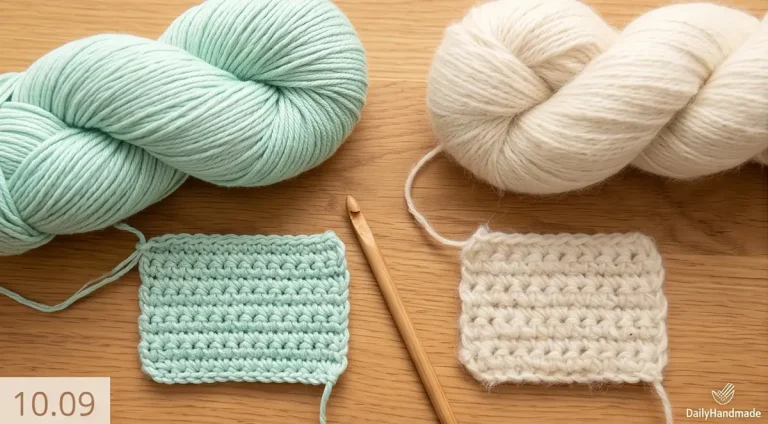
- Check Your Fiber: Cotton and Acrylic behave differently when they curl. Identifying your yarn type is key to fixing the roll. See: Does cotton yarn make crochet curl for Cotton vs. Does acrylic yarn curl in crochet for Acrylic).
- The Hook-to-Yarn Ratio: If your hook is too small for your yarn, curling is inevitable. Try “upsizing” by 0.5mm. See: Wrong hook size causes crochet curling.
- Stitch Anatomy: Some stitches, like the Single Crochet, are naturally prone to curling due to their density. See: Is curling worse in single crochet & Which crochet stitches curl the most.
What To Expect Next
As you move into the next few days of practice, focus on rhythm rather than perfection. You will know you are winning the battle against curling when you can lay your work down and it stays flat without you having to “massage” it into place. Eventually, you will develop a “relaxed feed,” and curling will become a thing of the past.
Return Path
Understanding that curling is normal is your first step toward technical mastery. To see where this troubleshooting fits into your complete 12-month journey, return to our master guide: Crochet learning stages explained
If your project is curling specifically at the edges or changing width, use these secondary diagnostics: