Crochet Chart Arrows Meaning: Which Way Do You Hook?
Quick Recognition
You’ve deciphered the symbols for single and double crochet in The Crochet Symbol for Single and Double Crochet: Decoding Basics, but now you’re staring at the chart like it’s a pirate map. You know what to make, but you have no idea where to put the first stitch. Is that little triangle a mistake, or is it a starting gun? At Dailyhandmade, we’ve seen many beginners crochet an entire row only to realize they’ve been working on the “Wrong Side” because they missed a tiny directional cue. Your hook isn’t a boomerang; it needs a clear path. Understanding the crochet chart arrows meaning is the secret to navigating complex diagrams without ever getting lost.
Direct Answer
The crochet chart arrows meaning is all about orientation and flow. Arrows indicate the exact starting point of the project (the foundation) and the direction in which you should work each subsequent row or round. In the framework, arrows act as your navigation system: a solid arrow usually marks the beginning of Row 1, while side arrows tell you whether to work from Right-to-Left (typical for right-handers) or Left-to-Right (after you turn your work).
The 3 Types of Arrows You Need to Know
In the technical world of Crochet Pattern Symbols Explained, arrows come in three distinct “flavors” that dictate your movement:
1. The “Starting Gate” Arrow
Usually found at the very bottom of a flat chart or in the dead center of a circular chart.
- Visual: A thick, shaded arrow or a small triangle.
- Meaning: This is where you join your yarn or make your first foundation chain. If you don’t start here, the rest of the geometric logic in the chart will be flipped.
2. The “Zig-Zag” Row Arrows (Flat Crochet)
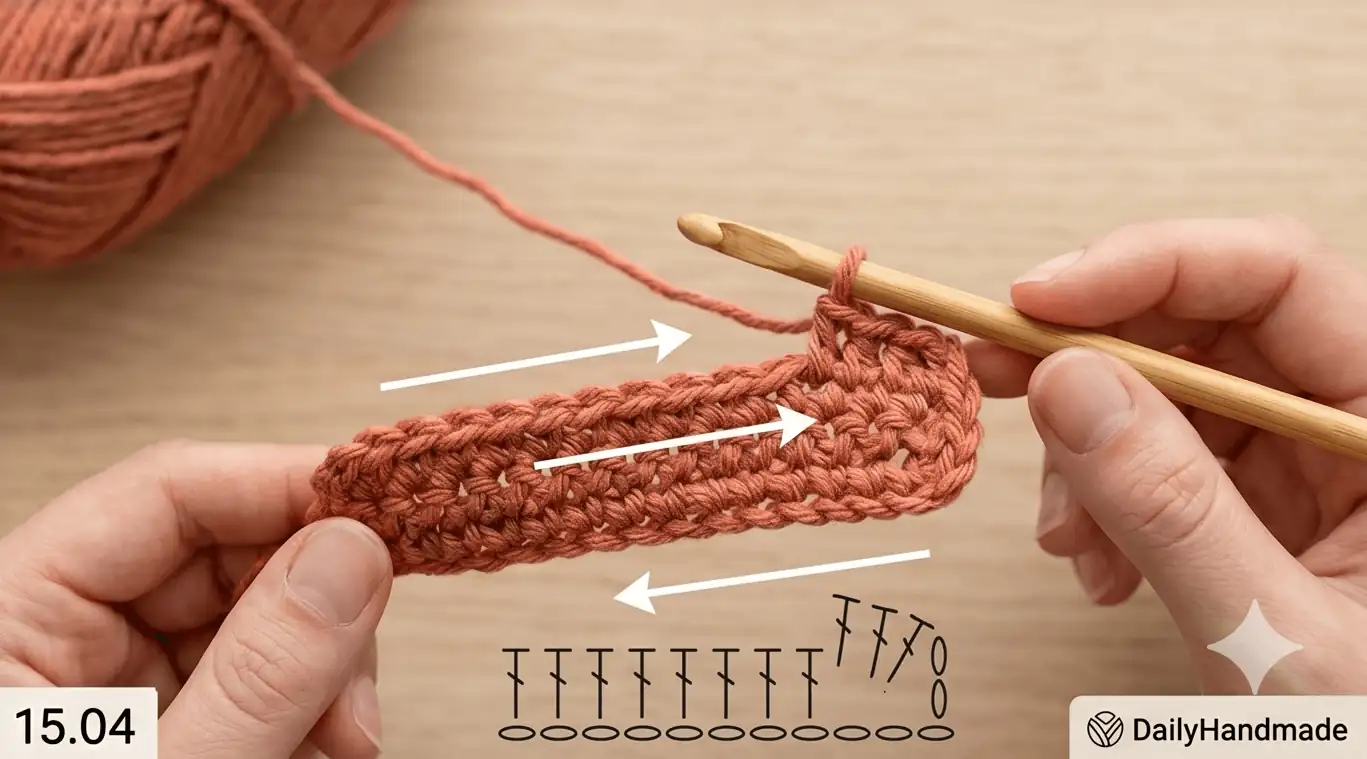
Look at the numbers on the sides of your chart (1, 2, 3…). Often, there is a small arrow next to the number.
- Meaning: Row 1 (odd) will have an arrow pointing Left. This means you work Right-to-Left. Row 2 (even) will have an arrow pointing Right. This means you have turned your work and are now hooking back across the other way.
3. The “Circular Flow” Arrows (Rounds)
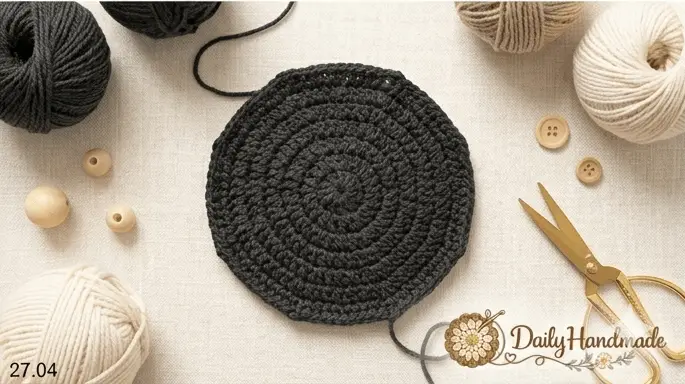
In Crochet Rows vs Rounds Explained: Understanding Pattern Structure, we discussed working in rounds. On a visual chart, this is shown with curved arrows.
- Meaning: Most charts are drawn for right-handed crocheters, meaning the arrows will point Counter-Clockwise. This indicates a continuous flow where you never “turn” the fabric unless specifically instructed.
Navigation Comparison: Rows vs. Rounds
| Feature | Working in Rows | Working in Rounds |
| Arrow Direction | Alternating (Left, then Right). | Consistent (usually Counter-Clockwise). |
| Start Point | Bottom corner (Right for Righties). | Center of the circle. |
| Turning Cue | Arrow flips direction every row. | No flip. You stay on the “Right Side.” |
| The “Numbers” | Numbers alternate sides of the chart. | Numbers spiral outward from the center. |
3 Hacks for Navigating Your Crochet GPS
To master HOW TO READ CROCHET PATTERNS and the crochet chart arrows meaning, try these Dailyhandmade strategy drills:
- The “Pencil Path”: Before you touch your yarn, take a pencil and literally draw a line through the chart following the arrows. If your pencil has to “jump” across the page, you’ve probably missed a turn or a join.
- Left-Handed Mirroring: If you are a left-handed crocheter, remember that most charts are the “mirror” of what you need. You will typically start at the bottom-left and work Left-to-Right. The crochet chart arrows meaning remains the same, but your physical direction is flipped.
- Color-Code the Rounds: If a circular chart (like a mandala) has many layers, highlight the “Start” arrow for each new round in a different color. This prevents you from accidentally spiraling into the wrong row.
Dailyhandmade Expert Advice: If you see a small arrow pointing into a stitch from the side, that is often a “Join” instruction. It’s telling you to slip stitch into that specific spot to close the round. Never ignore the side-pointing arrows!
What To Expect Next
You now know which way to move your hook. But what happens when a section of the chart is blocked off or repeated? How do you know when to stop following the arrow and start the loop over? In our next chapter, we look at identifying the boundaries of a pattern repeat on a visual chart.
Return Path
Understanding the crochet chart arrows meaning is a vital navigational skill in Crochet Pattern Symbols Explained. To keep building your expertise, explore these related guides:
- How to identify crochet chart repeats
- Crochet stitch symbols and meanings
- Universal crochet symbols vs terms
- Master Guide: How to Read Crochet Patterns
I have a relevant follow-up question for you: When you look at a flat chart, do you find it easy to remember to “turn” your logic when the arrow flips to the right, or do you have to remind yourself every time?