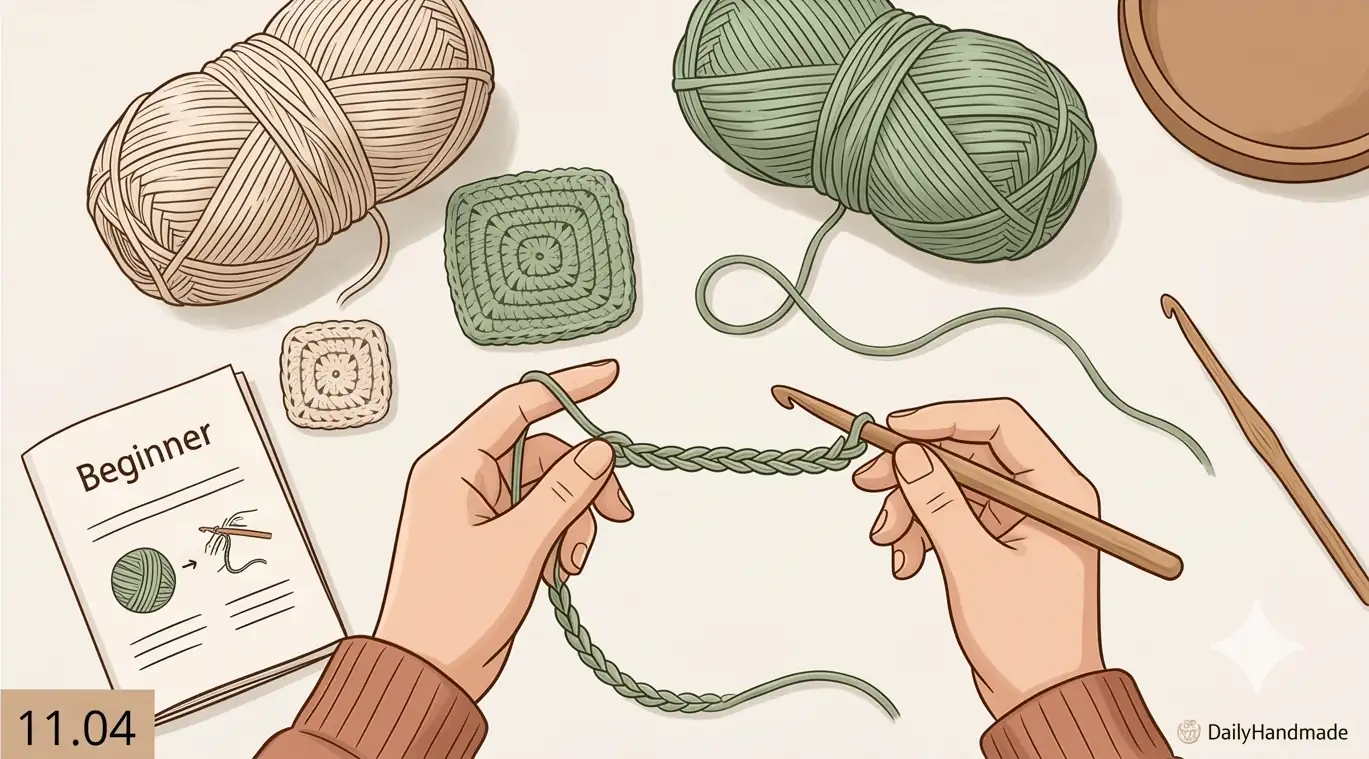
Cotton vs Acrylic for Crochet Beginners: The First Timer’s Verdict
Quick Recognition
You’re standing in the yarn aisle with a brand-new crochet hook in your pocket. On one side is a 100% cotton skein that looks “organic” and high-end; on the other is a soft acrylic with vibrant colors and half the price tag. You’re asking yourself: “Which one will stop me from quitting after 30 minutes?” The truth is, the choice between cotton vs acrylic for crochet beginners isn’t just about money or ethics—it’s about choosing a “partner” that makes your untrained hands feel capable.
Direct Answer
For the vast majority of beginners at Dailyhandmade, Acrylic is the winner for ease of movement, while Cotton is the winner for stitch clarity. However, if we have to give one piece of advice to ensure you finish your first project without hand pain or frustration, we recommend starting with a Premium Acrylic. Its natural elasticity compensates for the uneven tension (the “tight vs. loose” struggle) that every beginner faces.
Technical Deep Dive: Why Material Dictates Learning Speed
In the Best Yarn for Crochet Projects framework, we analyze how a fiber interacts with your hook based on three technical factors:
1. The Friction Factor
- Acrylic: Has a medium glide on metal hooks. It allows for a smooth “pull through” without the yarn slipping away too fast.
- Cotton: This fiber is “grippy.” If you are a beginner who tends to crochet tightly (what we call “The Strangler”), cotton will cling to your hook, making every stitch a physical struggle.
2. Elasticity & “Forgiveness”
- Acrylic: Has a natural “bounce.” If you make one stitch a bit too tight and the next a bit too loose, the elasticity of acrylic will self-adjust to hide the flaw.
- Cotton: Has zero stretch. Every mistake in your tension is permanently recorded in the fabric. This can be discouraging when you’re still trying to find your rhythm.
3. Ply Separation (The Splitting Headache)
- Acrylic: Usually heat-treated to keep the strands together.
- Cotton: Infamous for “splitting.” Beginners often accidentally drive the hook into the yarn strand rather than under the stitch, creating messy, frayed-looking work.
The Beginner’s Audit: Cotton vs. Acrylic
| Feature | Cotton (Natural) | Acrylic (Synthetic) |
| Stitch Definition | Excellent. Very easy to see the “V.” | Good (can be fuzzy if low quality). |
| Hand Feel | Dry, firm, and non-elastic. | Soft, light, and bouncy. |
| Frogging (Ripping Out) | Easy. | Very easy. |
| Hand Fatigue | Can be tiring for new muscles. | Friendly; reduces pressure on fingers. |
| Price Point | Mid-range to high. | Budget-friendly for practice. |
The Dailyhandmade “Grey Zone” Secret
If you’re still torn, follow the secret path of the pros: Choose a Cotton-Acrylic Blend.
Commonly found as a 60/40 or 50/50 mix, these blends are the “Sweet Spot” for Cotton vs Acrylic Yarn for Crochet.
- Why? You get the crisp look of cotton (so you can see where to put your hook) combined with the soft elasticity of acrylic (so your hands don’t ache). It’s the ultimate “training wheels” for your first 10 hours of crochet.
Expert Signal: Regardless of which fiber you choose, avoid dark colors (Black, Navy) and fuzzy yarns for your first lesson. Stick to “High-Visibility” colors like cream, soft yellow, or mint green.
What To Expect Next
Picking a “friendly” yarn is 50% of the battle. But even with the right fiber, you might encounter an annoying aesthetic issue: the “Curling Edge.” Is it your technique, or is the yarn just stubborn?
Return Path
Understanding cotton vs acrylic for crochet beginners is the foundation of your material knowledge in Cotton vs Acrylic Yarn for Crochet. Don’t forget to explore the other troubleshooting guides in this series: