Best Yarn for Crochet Beginners: Easy Guide (No Mistakes)
If Crochet Feels Hard… It Might Be Your Yarn
Many beginners assume crochet is difficult because:
- their stitches look uneven
- they keep missing stitches
- their hook keeps catching strands
- they cannot see where to insert the hook
But in many cases, the real problem is not skill.
It is yarn choice.
- Best Yarn for Crochet Beginners: Easy Guide (No Mistakes)
- If Crochet Feels Hard… It Might Be Your Yarn
- Why Worsted Weight (#4) Is Structurally Easier
- Fiber Behavior: Why Acrylic Is More Forgiving
- Why Fuzzy Yarn Hides Stitch Anatomy
- Twist Mechanics: Why Strand Separation Happens
- Smooth vs Textured Yarn: Surface Interference
- Color and Contrast: The Visibility Factor
- How Yarn Choice Directly Affects Tension Development
- Big Picture Return to Pillar #4
- Micro Topics Introduced (Not Resolved Here)
- How Yarn Choice Supports Skill Development
- Failure Anticipation: What Happens If You Ignore This Advice
- Applicability Boundary: When This Advice Does NOT Apply
- Beginner Yarn Buying Checklist (Practical Integration)
- How This Connects Back to Pillar #4
- Related Beginner Questions (Search Journey Capture)
- FAQ
- Resolution Confirmation
- Final Reinforcement
This longtail belongs to:
Pillar #4 – Best Yarn for Crochet Projects
It sits at the Beginner Yarn Selection stage, where learners are building stitch recognition, tension control, and structural awareness.
At this stage, yarn is not decoration.
It is a learning tool.
If you choose the wrong tool, learning becomes unnecessarily frustrating.
Quick Answer (Extractable Summary)
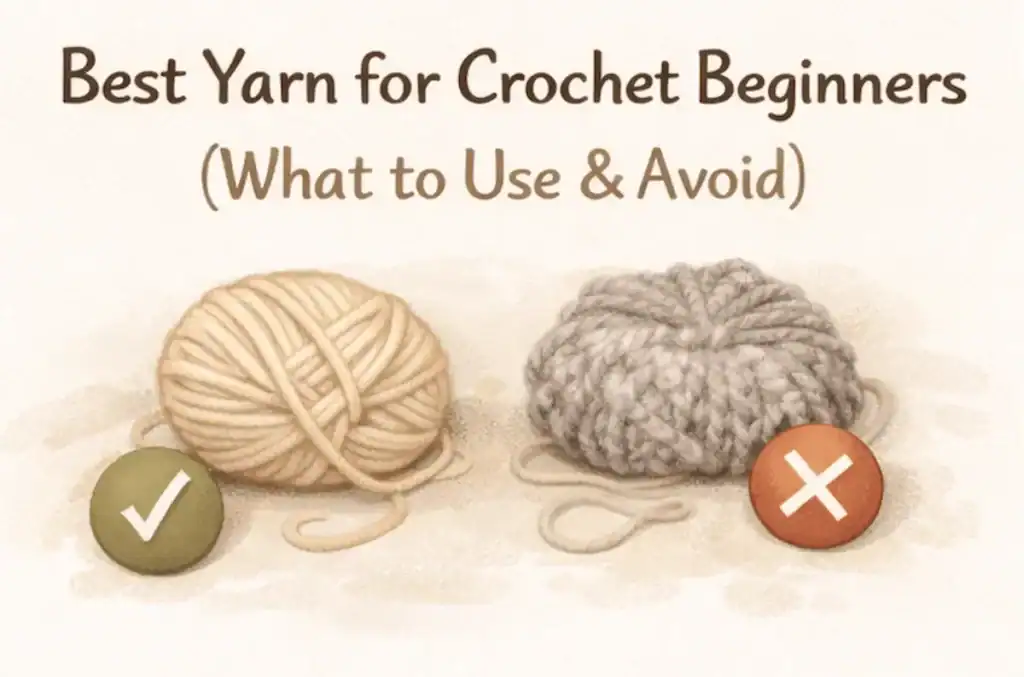
The best yarn for crochet beginners is smooth, light-colored worsted weight (#4) yarn made from acrylic or an acrylic blend. It should not be fuzzy, dark, splitty, textured, or very thin. Beginner-friendly yarn makes stitches easy to see, easy to insert into, and easy to undo.
What Makes Yarn “Beginner-Friendly”?
Beginner-friendly yarn is yarn that:
- shows stitch structure clearly
- allows clean hook insertion
- forgives tension inconsistency
- does not tangle when frogged
- keeps its strands together
At the beginner stage, you are not learning design.
You are learning:
- where a stitch begins
- where it ends
- how loops sit on top of each other
- how tension changes stitch height
If the yarn hides these visual cues, learning slows down.
WHY Yarn Choice Matters More at the Beginning
At advanced stages, crocheters rely on muscle memory.
Beginners do not have that yet.
They rely on visual confirmation.
If stitches are:
- fuzzy
- dark
- too small
- overly textured
the visual feedback disappears.
When visual feedback disappears:
- tension tightens
- mistakes increase
- frustration rises
This is a common misconception:
“Hard yarn builds skill faster.”
No.
Hard yarn builds confusion faster.
Skill develops from clarity, not difficulty.
Stage Positioning Inside Pillar #4
Within Pillar #4 – Best Yarn for Crochet Projects, yarn selection progresses in stages:
- Beginner-friendly structural yarn
- Fiber comparison and behavior understanding
- Project-based yarn selection
- Texture and specialty yarn control
This article focuses strictly on Stage 1: Structural Learning Yarn.
It does NOT define the full fiber system.
It does NOT compare all yarn types.
That remains pillar-level authority.
This longtail explains one concept only:
What yarn supports beginner stitch learning, and why.
The Four Beginner Yarn Requirements
A yarn is beginner-friendly if it meets four structural conditions:
1. Visible Stitch Anatomy
You must clearly see:
- both loops of the V
- the top of the stitch
- the chain spaces
- the edge structure
If you cannot see these, you cannot self-correct.
This is why very dark yarn causes early frustration.
(See micro: Best yarn color for crochet beginners – LT10-M08)
2. Stable Strand Structure
The strands should stay together when the hook enters.
Low-twist or loosely plied yarn splits easily.
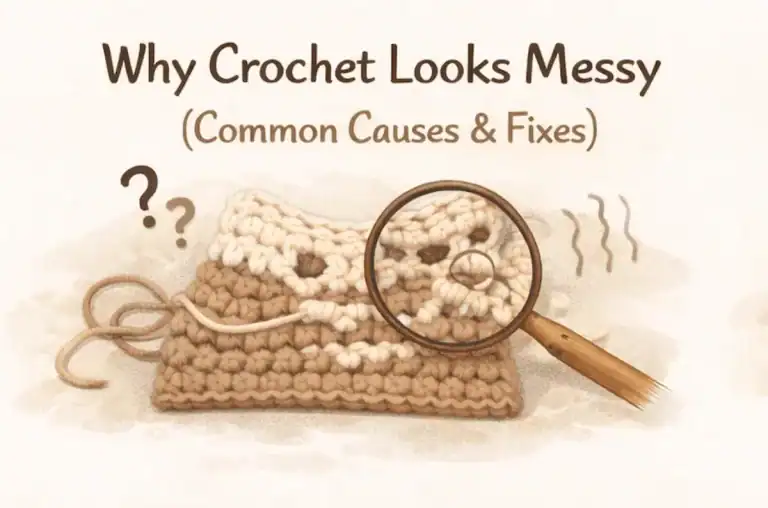
When the hook catches only part of a strand:
- stitches look messy
- tension becomes inconsistent
- beginners assume they are “bad at crochet”
Often, the yarn is the real cause.
(See micro: Does yarn twist affect beginner crochet – LT10-M09)
3. Moderate Thickness
Yarn that is too thin forces precision too early.
Yarn that is too bulky exaggerates mistakes.
Worsted (#4) sits in the middle:
- visible
- manageable
- forgiving
This is why most structured beginner learning uses worsted weight.
(See micro: Best yarn weight for crochet beginners – LT10-M01)
4. Smooth Surface
Texture hides structure.
Fuzz hides structure.
Bouclé hides structure.
Halo yarn hides structure.
When texture increases, clarity decreases.
That is why smooth yarn accelerates learning.
(See micro: Smooth vs textured yarn for learning crochet – LT10-M10)
Misconception Correction: “Soft Means Easy”
Many beginners choose yarn based on softness.
But softness is not the same as structural clarity.
Some very soft yarns:
- have low twist
- produce halo fuzz
- collapse under tension
Soft yarn is wonderful later.
At Stage 1, clarity is more important than comfort.
This boundary matters.
Beginner yarn is a training tool.
Luxury yarn is a design tool.
Those are different learning stages.
Why Beginners Often Quit Because of Yarn
When yarn:
- splits constantly
- hides stitch tops
- resists frogging
- makes edges uneven
beginners interpret the experience as personal failure.
But crochet skill develops through:
- repetition
- visual correction
- clean undoing
If frogging damages yarn (common with fuzzy yarn), beginners avoid fixing mistakes.
Mistakes compound.
Frustration grows.
This is predictable.
And preventable.
The Core Beginner Recommendation
If you want crochet to feel easier:
Choose:
- Worsted weight (#4)
- Acrylic or acrylic blend
- Smooth texture
- Light solid color
- Medium twist
Avoid:
- Fuzzy yarn
- Very dark yarn
- Lace or fingering yarn
- Novelty textured yarn
- Very loose-twist cotton
Each of those belongs to a later skill stage.
Learning Progression Implication
Using the right beginner yarn:
- improves tension awareness
- improves stitch recognition
- improves counting accuracy
- reduces early frustration
- builds confidence
Confidence at Stage 1 determines whether a beginner continues.
That is why yarn selection is not cosmetic.
It is structural.
This longtail will now go deeper into:
- fiber behavior
- splitting mechanics
- fuzz mechanics
- twist physics
- tension interaction
without expanding into full fiber system theory (pillar level).
Now that we’ve defined what beginner-friendly yarn looks like, we need to go deeper:
- Why does worsted weight feel easier?
- Why does acrylic behave differently than cotton?
- Why does fuzz hide stitches?
- Why does twist matter mechanically?
This section explains the mechanics behind beginner yarn behavior — without expanding into full fiber system architecture (that remains under Pillar #4).
Why Worsted Weight (#4) Is Structurally Easier
Worsted weight sits in the middle of the thickness spectrum.
That middle position matters.
What happens with very thin yarn?
Thin yarn (lace or fingering):
- creates very small stitches
- reduces visual clarity
- amplifies tension mistakes
- slows visible progress
When stitches are tiny, beginners struggle to:
- locate the top loops
- count rows
- see increases
The smaller the stitch, the lower the margin for error.
This is not a skill issue.
It is a visibility issue.
Delegated micro: Best yarn weight for crochet beginners
What happens with very bulky yarn?
Super bulky yarn:
- exaggerates tension changes
- makes edges expand quickly
- creates oversized stitch gaps
Bulky yarn can feel “fast,” but it hides structural precision.
Beginners may think:
“Big stitches are easier.”
But large stitches also:
- stretch dramatically
- distort under uneven tension
- hide early mistakes until rows later
Applicability boundary:
Bulky yarn can work for absolute first chains,
but it is not ideal for stitch structure training.
Fiber Behavior: Why Acrylic Is More Forgiving
Not all fibers behave the same way.
At beginner level, fiber stretch and recovery matter.
Acrylic behavior
Acrylic:
- has moderate stretch
- springs back after tension change
- does not grip the hook too tightly
- frogs cleanly
This makes it forgiving when beginners:
- pull too tight
- accidentally split strands
- need to undo rows
Acrylic forgives tension inconsistency better than cotton.
That forgiveness accelerates learning.
Delegated micro: Best yarn fiber for crochet beginners
Cotton behavior
Cotton:
- has very little stretch
- shows tension inconsistencies clearly
- splits more easily if loosely twisted
- feels firmer in the hand
When beginners pull too tight with cotton:
- stitches become stiff
- hook insertion becomes harder
- frustration increases
Misconception correction:
“Natural fibers are better for beginners.”
Not necessarily.
Natural fiber does not equal beginner-friendly.
Fiber elasticity matters more than fiber origin at Stage 1.
Delegated micro: Does cotton yarn split easily
Why Fuzzy Yarn Hides Stitch Anatomy
Fuzzy yarn creates a halo — loose fibers extending beyond the core strand.
This halo:
- blurs stitch tops
- hides loop boundaries
- fills gaps between stitches
Visually, everything merges.
For experienced crocheters:
Muscle memory compensates.
For beginners:
Structure disappears.
Failure anticipation:
If a beginner uses fuzzy yarn early, they often:
- insert the hook into the wrong space
- tighten tension to “control” the fuzz
- avoid frogging because it tangles
This leads to compound errors.
Fuzzy yarn is not “hard.”
It simply requires developed stitch recognition.
That belongs to a later stage.
Delegated micro: Why fuzzy yarn is hard for beginners
Twist Mechanics: Why Strand Separation Happens
Yarn is made of plies twisted together.
Low twist yarn:
- separates easily
- feels soft
- looks fluffy
When hook insertion angle is inconsistent (common for beginners),
the hook catches only part of a ply.
That creates:
- split stitches
- loose fibers
- uneven texture
Higher twist yarn:
- holds its plies together more tightly
- makes hook insertion cleaner
Applicability boundary:
Very high twist yarn can feel stiff,
so moderate twist is ideal for beginners.
Delegated micro: Does yarn twist affect beginner crochet
Smooth vs Textured Yarn: Surface Interference
Texture changes how yarn interacts with light and structure.
Textured yarn:
- bends irregularly
- reflects light unevenly
- distorts stitch outlines
This reduces structural feedback.
Smooth yarn:
Reflects light evenly.
Even reflection:
- outlines stitch tops clearly
- reveals tension differences
- makes counting easier
Learning insight:
Crochet learning is highly visual in early stages.
Anything that reduces visual clarity increases cognitive load.
Delegated micro: Smooth vs textured yarn
Color and Contrast: The Visibility Factor
Dark yarn absorbs light.
Absorbed light reduces stitch contrast.
Reduced contrast makes it harder to distinguish:
- front loop
- back loop
- chain vs stitch top
- row transitions
Predictive difficulty:
Beginners using black yarn often tighten tension
because they cannot see clearly.
Tight tension then:
- strains hands
- makes insertion harder
- increases splitting
This is not coincidence.
It is visual compensation behavior.
Delegated micro: Best yarn color for crochet beginners
How Yarn Choice Directly Affects Tension Development
Tension learning depends on feedback.
You adjust tension based on:
- how the stitch looks
- how the hook moves
- how the yarn slides
If yarn is:
- too slippery → tension becomes loose
- too grippy → tension becomes tight
- too fuzzy → visual feedback disappears
Smooth acrylic worsted provides:
- consistent slide
- visible structure
- manageable elasticity
That makes it ideal for tension training.
Related concept (sibling longtail):
How to Control Crochet Tension
This is where yarn choice connects back into broader skill progression.
Big Picture Return to Pillar #4
Within Pillar #4 – Best Yarn for Crochet Projects, yarn learning progresses from:
- Beginner structural yarn
- Fiber behavior comparison
- Project-based yarn decisions
- Specialty texture mastery
This article covers Stage 1 only:
Beginner structural yarn selection.
It does NOT define:
- full fiber theory
- project suitability systems
- climate-based yarn decisions
Those remain pillar-level ownership.
Here, we are building structural clarity for beginners.
Micro Topics Introduced (Not Resolved Here)
This longtail introduces — but does not fully resolve — the following micro-level intents:
- Best yarn weight for crochet beginners
- Best yarn fiber for crochet beginners
- Why fuzzy yarn is hard for beginners
- Does cotton yarn split easily
- Best acrylic yarn for beginner crochet
- What yarn beginners should avoid
- Best yarn for neat stitches
- Best yarn color for beginners
- Does yarn twist affect beginners
- Smooth vs textured yarn
Each of those solves one precise sub-problem.
This longtail explains the category.
Micros resolve the specific panic questions.
At this point, we have clarified:
- WHAT beginner yarn is
- WHY structure matters
- WHEN certain fibers fail
- HOW yarn affects progression
Next, we integrate this into learning continuity and progression guidance.
At this point, you understand:
- what beginner-friendly yarn is
- why worsted weight works best
- how fiber affects tension
- why fuzz and texture slow learning
- how twist and color influence stitch clarity
Now we integrate this into your learning progression.
How Yarn Choice Supports Skill Development
Beginner crochet has three fragile foundations:
- Stitch recognition
- Tension control
- Edge consistency
The right yarn strengthens all three.
1. Stitch Recognition
When yarn is smooth and light-colored, you can clearly see:
- the V at the top of each stitch
- where rows begin and end
- where increases or decreases happen
This builds visual literacy.
Visual literacy is what later allows you to use textured or dark yarn confidently.
Without this stage, everything feels random.
2. Tension Control
Tension develops through repetition with feedback.
If yarn:
- stretches slightly
- slides consistently
- keeps its strands together
you can feel how much pressure changes stitch size.
If yarn fights you, tension becomes guesswork.
This is why smooth acrylic worsted yarn is ideal during tension training.
Related longtail:
How to Control Crochet Tension
3. Edge Consistency
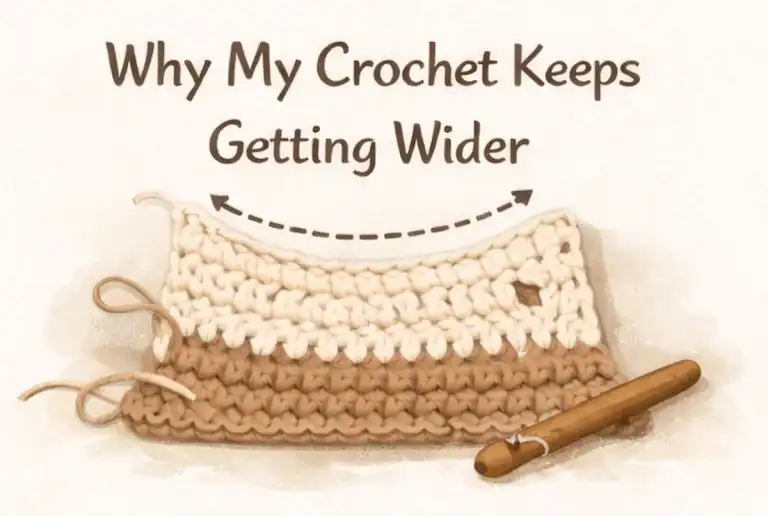
Many beginners struggle with:
- widening edges
- shrinking edges
- missing the last stitch
The wrong yarn hides edge stitches.
Smooth, visible yarn helps you recognize:
- turning chains
- first stitch placement
- last stitch of the row
This reduces accidental increases and decreases.
Failure Anticipation: What Happens If You Ignore This Advice
If a beginner starts with:
- black fuzzy yarn
- loosely twisted cotton
- lace-weight yarn
they often experience:
- uneven rows
- constant splitting
- tight tension
- inability to count stitches
- reluctance to frog mistakes
They may conclude:
“Crochet just isn’t for me.”
But the issue was tool mismatch.
Not ability.
Recognizing this early prevents unnecessary quitting.
Applicability Boundary: When This Advice Does NOT Apply
There are exceptions.
This guidance is specifically for:
- absolute beginners
- stitch practice stage
- tension training stage
If you:
- already control tension consistently
- can identify stitch anatomy without relying heavily on sight
- understand hook insertion angles
you can experiment with:
- cotton
- textured yarn
- darker colors
- specialty fibers
But those belong to later stages within Pillar #4.
This longtail does not restrict creativity.
It sequences it.
Beginner Yarn Buying Checklist (Practical Integration)
If you are standing in a yarn aisle and unsure what to choose, apply this filter:
Choose:
- Worsted weight (#4)
- Acrylic or acrylic blend
- Smooth texture
- Light solid color
- Medium twist
Avoid:
- Mohair, halo, eyelash yarn
- Very dark shades
- Lace or fingering weight
- Highly textured novelty yarn
- Very loosely twisted cotton
If all five “choose” conditions are met, the yarn supports learning.
If multiple “avoid” conditions are present, expect friction.
How This Connects Back to Pillar #4
Pillar #4 governs the full yarn learning system:
- Beginner structural yarn
- Fiber comparison and behavior
- Cotton vs acrylic decision-making
- Project-based yarn selection
- Specialty yarn control
This longtail owns only Stage 1.
Next logical progression inside Pillar #4: 👉 Cotton vs Acrylic Yarn for Crochet
That longtail expands into fiber comparison once structural basics are stable.
Progression logic matters.
Beginner yarn clarity → fiber understanding → project matching.
Related Beginner Questions (Search Journey Capture)
These questions naturally follow this stage:
- Why do my stitches look messy even with good yarn?
- Why does my hook keep catching strands?
- Why does cotton feel harder to use?
- Why are my edges uneven?
- Why does black yarn feel impossible to crochet?
Each of these maps to micro-level articles within this cluster.
Longtail explains the category.
Micros resolve the panic moments.
FAQ
What is the best yarn for crochet beginners?
Smooth, light-colored worsted weight (#4) acrylic yarn is best because it shows stitch structure clearly, maintains strand integrity, and forgives tension inconsistencies.
What yarn should beginners avoid?
Beginners should avoid fuzzy yarn, very dark colors, lace-weight yarn, novelty textured yarn, and loosely twisted cotton because these reduce stitch visibility and increase splitting.
Is cotton yarn bad for beginners?
Not always. Tightly spun cotton blends can work, but 100% cotton has low stretch and may feel less forgiving during tension development.
Does yarn twist really matter?
Yes. Low twist yarn splits more easily when hook angle is inconsistent. Moderate twist yarn holds strands together and improves stitch clarity.
Why does dark yarn feel harder?
Dark yarn reduces visual contrast, making it harder to see stitch anatomy. Beginners compensate by tightening tension, which increases difficulty.
Resolution Confirmation
You know you’ve chosen the right beginner yarn if:
- you can clearly see stitch tops
- your hook enters smoothly without frequent splitting
- frogging does not damage the yarn
- your tension gradually becomes more even
If those conditions are met, your yarn is supporting your learning — not fighting it.
Final Reinforcement
Crochet skill does not begin with complex patterns.
It begins with clear stitch visibility.
The best yarn for crochet beginners is not about fashion.
It is about structure.
Within the DH248 learning system:
- Pillar defines progression
- Longtail explains concept category
- Micro resolves specific confusion
This article clarified the beginner yarn category.
Next progression step inside Pillar #4:
👉 Continue to Cotton vs Acrylic Yarn for Crochet
to understand deeper fiber behavior once structural clarity is stable.
You are not bad at crochet.
You just need yarn that lets you see what you’re doing.
And now you know how to choose it.