
Best Way to Join Crochet Pieces for Beginners: Seams vs. Joins
Quick Recognition
It is a breezy afternoon in April 2026, and your coffee table is covered in finished crochet motifs. You’ve mastered the stitches, but now you face the final boss: Assembly. You have a pile of pieces and a nagging fear that a bad join will make your hard work look messy. You think, “Should I sew them with a needle or crochet them together with my hook? What is the best way to join crochet pieces for beginners?” At Dailyhandmade, we consider this the most critical “Troubleshooting” step in Pillar: Crochet FAQ & Troubleshooting. The way you connect your work determines the drape, the durability, and the professional “vibe” of the finished item.
Direct Answer
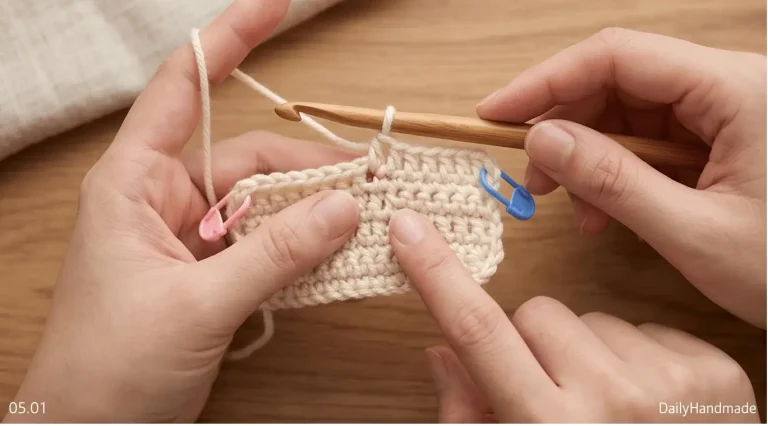
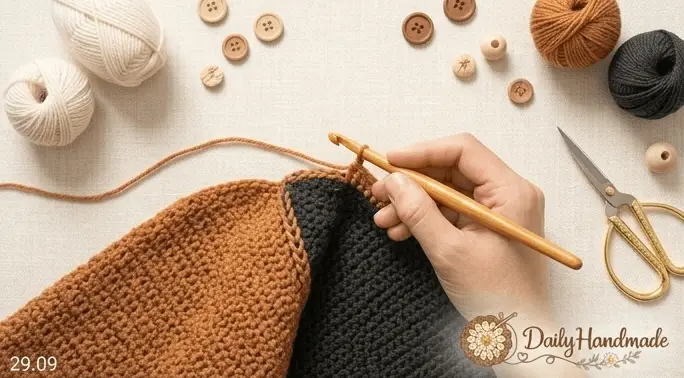
There is no single “perfect” method, but the best way to join crochet pieces for beginners depends on your desired Profile. If you want a join that is invisible and flat, Seaming (using a yarn needle) is your best bet. If you want a join that is fast, sturdy, and adds a decorative texture, Crocheting them together (using your hook) is the winner. In the framework, we categorize these as Needle-Based vs. Hook-Based logic.
The Assembly Audit: Bulk vs. Flexibility
In the technical world of Pillar: Crochet FAQ & Troubleshooting , we evaluate the Bulk Factor ($B$) of a join. A high bulk factor creates a ridge, while a low bulk factor creates a flat plane.
$$B = \frac{\text{Thickness of Join}}{\text{Thickness of Fabric}}$$
| Method Category | Primary Tool | Visual Result | The Dailyhandmade Verdict |
| Seaming (Seams) | Yarn Needle | Invisible / Flat | Best for garments and “clean” blankets. |
| Joining (Joins) | Crochet Hook | Visible / Raised | Best for granny squares and boho styles. |
| Hybrid (JAYGO) | Hook | Seamless | Best for advanced makers (Join-As-You-Go). |
Choosing Your Path: 3 Logical Strategy Drills
If you are trying to determine the best way to join crochet pieces for beginners in Pillar: Crochet FAQ & Troubleshooting , run your project through these three filters:
1. The “Drape” Test
Does your project need to flow (like a sweater) or stay rigid (like a basket)?
- Needle Seams: These are generally thinner. They allow the fabric to move naturally without a “stiff line” at the connection.
- Hook Joins: Because you are adding an entire extra row of stitches to connect pieces, it adds weight. This is great for blankets that need structure, but can be “too much” for a delicate lace shawl.
2. The “Visibility” Goal
Do you want the world to see the connection?
- The Invisible Route: If you want your pieces to look like they grew together, the invisible mattress stitch is the gold standard.
- The Decorative Route: If you want a bold, “handmade” look, a single crochet join creates a beautiful braided ridge that acts as a frame for your squares.
3. The “Stitch Count” Reality Check
Are your pieces perfectly matched?
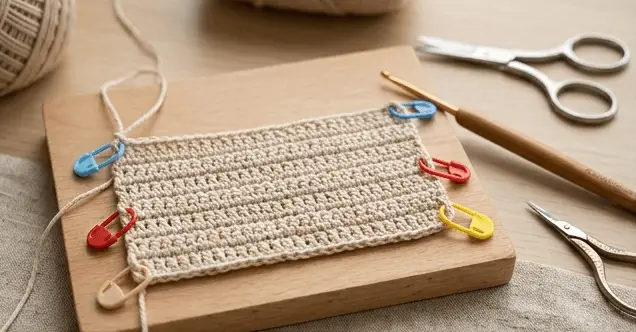
- The Fix: Beginners often struggle with pieces that are slightly different lengths. Seaming with a needle is much more forgiving for uneven stitch counts, as you can “ease” the fabric together. Hook joins require a strict 1-to-1 stitch match to avoid puckering.
Dailyhandmade Expert Rescue Signal
The “Two-Sided” Warning: In Pillar: Crochet FAQ & Troubleshooting, we always remind beginners: Look at the back! A join might look great on the front but have a massive, uncomfortable “bump” on the underside. Before committing to a full blanket join, connect just two squares and do a “Feel Test.” If it’s scratchy or bulky, it’s not the best way to join crochet pieces for beginners for your specific yarn.
What To Expect Next
You’ve chosen your logic. Now it’s time to pick up the tools. If you’ve decided that a secure, traditional sew is the way to go, we start with the absolute classic. In our next chapter of How to Join Crochet Pieces (Best Methods for Beginners), we master the needle: How to Whip Stitch Crochet Pieces Together: The Durable Join.
Return Path
Deciding the best way to join crochet pieces for beginners is the first step in the Pillar: Crochet FAQ & Troubleshooting assembly masterclass. To ensure your finish is flawless, explore these related guides:
- How to whip stitch crochet pieces together
- Invisible mattress stitch crochet tutorial
- Slip stitch vs single crochet join
- Why are my crochet joins uneven
- Master Guide: Crochet FAQ & Troubleshooting
I have a relevant follow-up question for you: Are you currently assembling a garment that needs to fit the body, or a home decor item (like a blanket) where a bit of extra texture wouldn’t be a problem?