
What is the Best Hook Size to Learn Crochet? (The Goldilocks Rule)
Quick Recognition
When you first look at a crochet hook set, the sheer variety of sizes—from tiny 2.0mm steel hooks to chunky 10mm plastic ones—can be overwhelming. Most beginners make the mistake of picking a hook that is either too small (making stitches impossible to see) or too large (making the fabric floppy and hard to manage). If you feel like your stitches are too tight to work into, or you’re struggling to pull the yarn through, the issue is rarely your hands; it’s likely an unoptimized hook size for your current skill level.
Direct Answer
The best hook size to learn crochet is a 5.0mm (US size H-8) or 5.5mm (US size I-9). This size range is considered the “Goldilocks Zone” for beginners because the hook is large enough to create clear, visible stitch anatomy while remaining small enough to be easily controlled by hands that haven’t yet developed muscle memory. Pairing this size with a medium-weight yarn is the fastest way to stabilize your tension and reduce early-stage frustration.
Why This Happens (Operational Logic)
Learning crochet requires a high degree of bilateral coordination between the hook, the yarn, and your fingers. A small hook (under 4.0mm) demands precise micro-movements that beginners haven’t mastered yet, often leading to “split yarn” and cramped hands. Conversely, very large hooks (over 7.0mm) make it difficult to maintain consistent loop size. A 5.0mm hook provides the optimal mechanical leverage, allowing you to clearly see the “V” of the stitch and providing enough space to insert the hook without force.
How to Fix It (The Expert Starter Setup)
To stop fighting your tools and start making progress, follow this operational setup:
- The 5.0mm Standard: Start with a 5.0mm hook. If you find your stitches are consistently too tight to insert the hook into the next row, move up to a 5.5mm. This “0.5mm adjustment” is a professional secret to instantly fixing tension issues.
- Match with #4 Worsted Weight Yarn: This hook size is specifically designed to work with smooth, light-colored acrylic yarn. (See: What yarn should beginners use to learn crochet for yarn details).
- Use an Ergonomic Handle: For your first few weeks, choose an aluminum hook with a soft, rubberized ergonomic grip. This improves your “control surface” and prevents the hand fatigue that causes beginners to grip the hook too tightly. (See: Pencil vs Knife Grip Crochet for Beginners: Which is Best?).
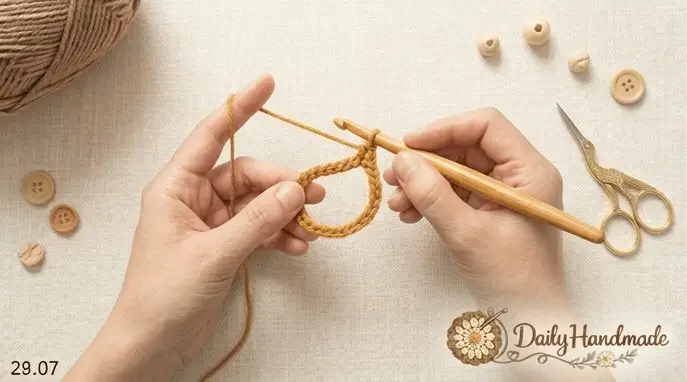
- The Foundation Chain Trick: If your very first row is always too tight, use a 6.0mm hook just for the starting chain, then switch back to your 5.0mm for the rest of the project. See: What to learn first: chain or single crochet.
What To Expect Next
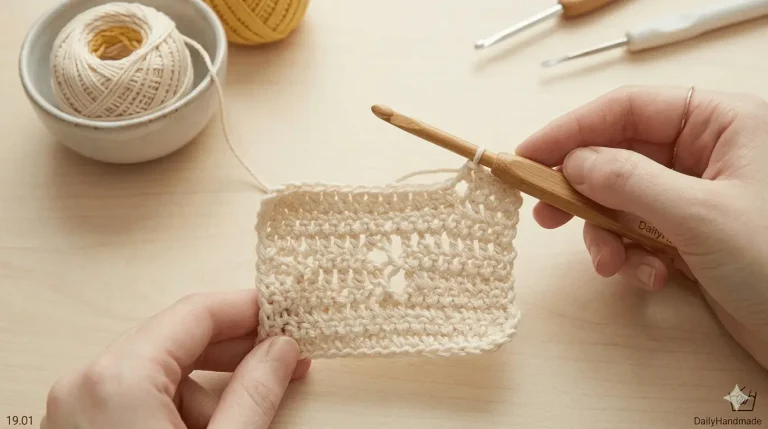
Initially, even with a 5.0mm hook, your work may look a bit wobbly or uneven. This is a sign of your nervous system building coordination, not a tool failure. You will know your hook size is correct when the hook slides easily into the “V” of the previous row and the yarn pulls through without snagging. Once you can produce five rows of consistent single crochet, you will have the foundation needed to experiment with smaller hooks for lace or larger hooks for blankets.
Return Path
Selecting the right hook size is a critical step in your beginner setup. To see how this tool choice fits into your total learning sequence, continue to our roadmap here: Beginner crochet learning order
If you are still experiencing physical difficulty or messy results, explore these diagnostic guides: