Acrylic vs Cotton Crochet Stretch: Why Your Sweaters Sag
Quick Recognition
You’ve just finished a stunning 100% cotton sweater. When you first put it on, the fit is perfection. But after four hours of wear, the hem starts to droop, the sleeves are 5cm longer, and the neckline is suddenly plunging. You wonder if you miscounted your stitches, but the math was right. You aren’t fighting your skills; you’re fighting fiber physics. Understanding the technical difference between acrylic vs cotton crochet stretch is “survival knowledge” for anyone moving into the world of garments in Best Yarn for Crochet Projects.
Direct Answer
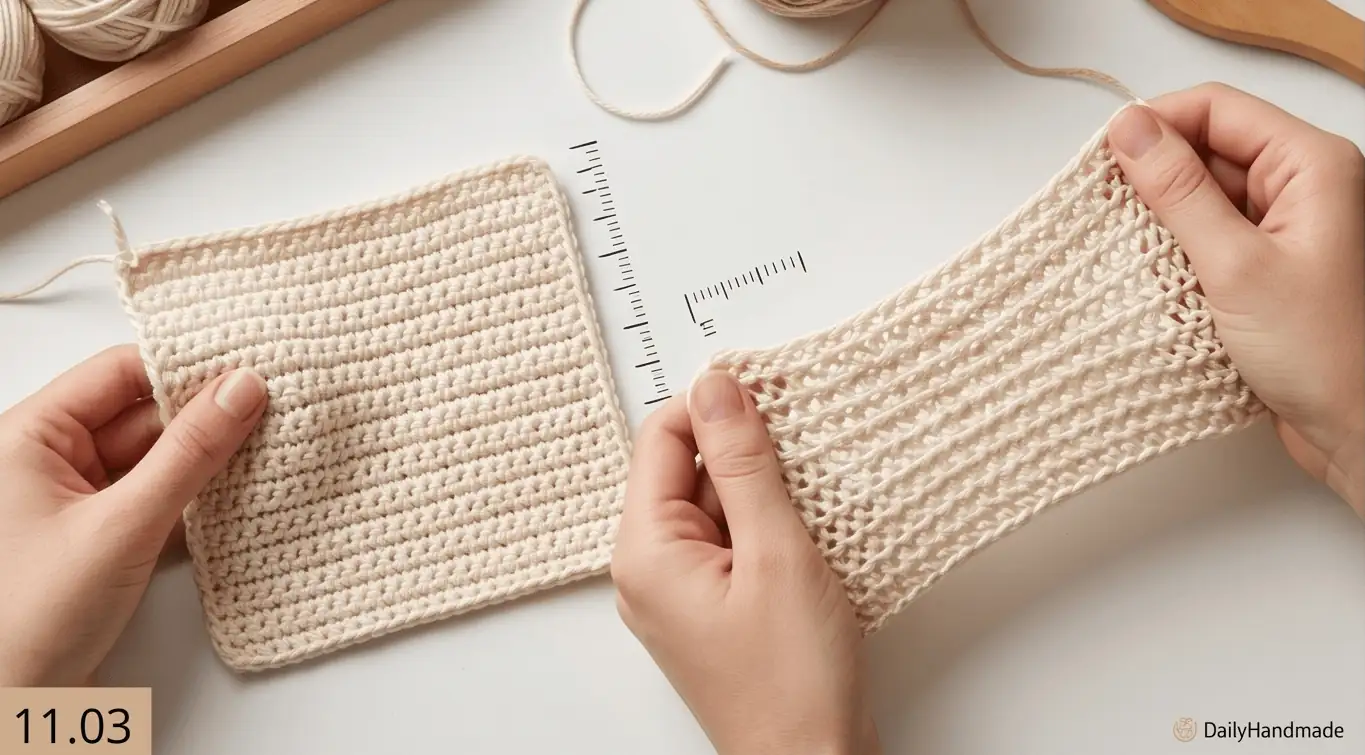
The core difference lies in Elasticity and Fiber Memory. Acrylic is a synthetic polymer designed with a “crimp” (a microscopic wave) that allows it to stretch and then “snap back” to its original shape. Cotton, being a plant-based cellulose fiber, has almost zero elasticity. Once cotton is stretched by gravity or body movement, it stays stretched. It lacks the “memory” to return to its original form until it is washed and dried (which temporarily resets the fibers).
Technical Deep Dive: Elastic Recovery vs. Fiber Plasticity
At the Dailyhandmade studio, we analyze the behavior of Longtail #11 through two technical lenses:
- Elastic Recovery: This is a fiber’s ability to return to its original length after a load is removed. Acrylic has high elastic recovery. Think of it like a spring—it “bounces” back.
- Fiber Plasticity: Cotton has high plasticity but low elasticity. It is more like a very fine rope; it is incredibly strong, but it doesn’t “rebound.” The weight of the garment itself (especially since cotton is much heavier than acrylic) creates a constant downward pull that permanently distorts the stitches.
Technical Comparison: Acrylic vs. Cotton
| Feature | Acrylic (Synthetic) | Cotton (Natural) |
| Stretch Style | High (temporary, springy). | Low (but prone to permanent sag). |
| Fiber Memory | Excellent. Retains garment shape well. | Poor. Bags out at elbows and hips. |
| Drape | Light, bouncy, and airy. | Heavy, fluid, and follows body curves. |
| Best For… | Cardigans, winter coats, structured hats. | Summer tank tops, beach cover-ups, market bags. |
Why Cotton Sweaters Sag Faster Than Acrylic
In the master guide for Cotton vs Acrylic Yarn for Crochet, we must remember that crochet stitches are naturally more “gappy” than knit stitches. When combined with heavy cotton:
- The Gravity Load: Cotton is roughly 20-30% heavier than acrylic. A size Large cotton sweater can weigh up to 800g. This weight constantly pulls on the shoulder seams and armholes.
- Moisture Absorption: Cotton absorbs sweat and atmospheric humidity. This added water weight increases the gravitational pull, making the “sag” even more dramatic as the day goes on.
The Dailyhandmade Pro Tips: Taming the Stretch
To ensure your Pillar #04 wearable doesn’t become a disaster, apply these three expert fixes:
- The “Down-Sizing” Rule: If you are crocheting a dress or skirt in 100% cotton, choose a pattern size slightly smaller than your actual measurements. Within a few hours of wear, it will stretch to a perfect fit.
- The Hanging Swatch Test: Don’t just measure your gauge swatch while it’s lying flat. Pin it to a wall and hang a small weight from the bottom for 24 hours. This reveals the “True Vertical Stretch” you can expect in the final garment.
- The “Tight Tension” Strategy: When using cotton, use a hook 0.5mm smaller than recommended. Tighter stitches leave less room for the fibers to slide and shift, providing a more stable “skeleton” for your garment.
Expert Advice: For the absolute best results in garment making, look for a Cotton-Acrylic Blend. A 50/50 ratio is the technical “sweet spot”—you get the breathability and “cool” feel of cotton with the elastic memory of acrylic to keep your sweater from bagging out.
What To Expect Next
Understanding stretch helps you avoid heartbreaking fit issues. But between these two fibers, which one is actually more “friendly” to the hands of an absolute beginner?
Return Path
Mastering acrylic vs cotton crochet stretch is your ticket to professional-level wearables. Keep building your material expertise with these related guides in Cotton vs Acrylic Yarn for Crochet: