Does Blocking Stretch Crochet Permanently? Understanding Fiber Memory
Quick Recognition
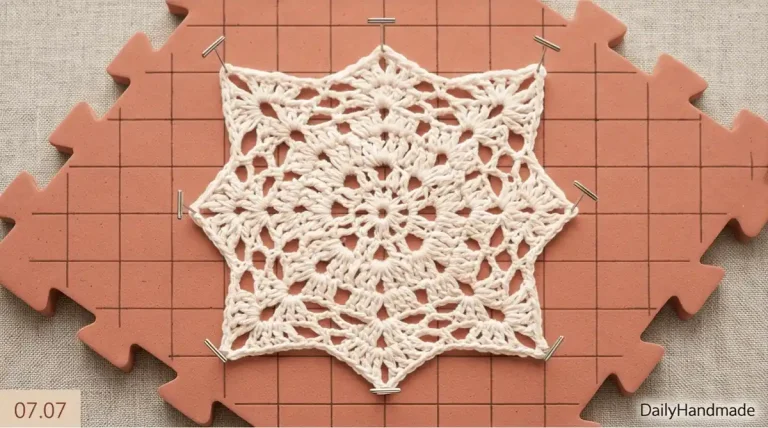
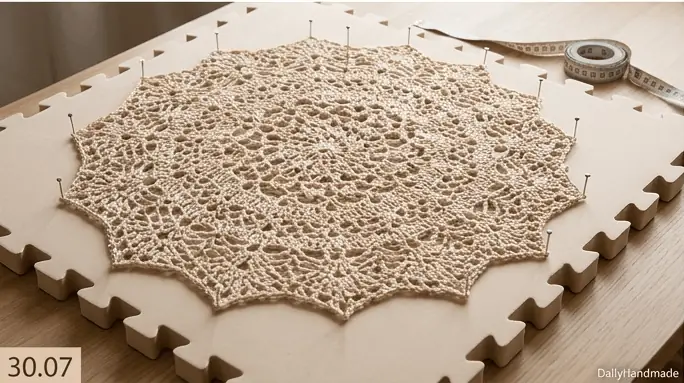
It is a bright morning in April 2026, and you are staring at your newly blocked lace shawl. It looks twice as big as it did on the hook, and the stitch definition is breathtaking. But a worry creeps in: “Will it stay this size? Or will it snap back like a rubber band the moment I wear it?” You might even worry about the opposite—that you’ve accidentally ruined the fit of a garment by over-stretching it. You think, “Does blocking stretch crochet permanently?” At Dailyhandmade, we look at the molecular level. Blocking isn’t just “stretching”; it is the process of breaking and reforming hydrogen bonds within the fibers to create a new “set.”
Direct Answer
Whether blocking stretches crochet permanently depends entirely on the Fiber Type and the Blocking Method used. Natural fibers (animal hair and plant cellulose) have high “Elastic Recovery,” meaning they will eventually try to return to their original state unless “locked” by a full wet block. Synthetic fibers like acrylic are thermoplastic; once they are “set” using steam blocking, the change is largely permanent because you have physically altered the plastic polymer’s shape. In Pillar: Crochet Care & Maintenance Guide, we call this the Permanent Set vs. Elastic Deformation balance.
The Physics of the Set: Elasticity vs. Plasticity
In the technical world of Pillar: Crochet Care & Maintenance Guide, we measure the Recovery Ratio ($R$). If $R = 1$, the fiber returns perfectly to its original length. If $R = 0$, the stretch is $100\%$ permanent.
$$\epsilon_{total} = \epsilon_{elastic} + \epsilon_{plastic}$$
Where $\epsilon_{total}$ is the total stretch, $\epsilon_{elastic}$ is temporary, and $\epsilon_{plastic}$ is the permanent change.
| Fiber Category | Elastic Memory | Permanent Set Potential | Does it Stay? |
| Wool / Animal Hair | Very High | Moderate | Only until the next wash. |
| Cotton / Linen | Low | High | Very likely to stay stretched. |
| Acrylic / Nylon | Moderate | Very High (with Heat) | Yes (if Steamed). |
| Silk | Low | High | Tends to “grow” permanently. |
3 Strategy Drills for Managing Fiber Memory
If you are concerned about does blocking stretch crochet permanently in Pillar: Crochet Care & Maintenance Guide , use these three drills to control your project’s final dimensions:
1. The “Swatch-to-Wash” Drill
Before you block your final piece, you must test the “Memory” of your yarn.
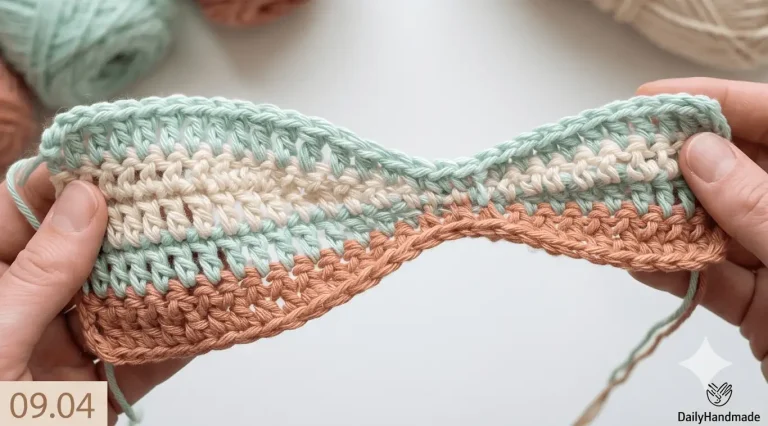
- The Drill: Crochet a $10cm$ square. Block it aggressively to $12cm$. Let it dry, then unpin it and wait 24 hours. Measure it again. If it shrinks back to $11cm$, you have a $50\%$ recovery rate. This tells you exactly how much you need to “over-block” to reach your target size.
2. The “Thermoset” Lock (For Synthetics)
If you are working with acrylic and want the size to be $100\%$ permanent.
- The Drill: Follow the safe steam blocking protocol. By reaching the Glass Transition Temperature, you bypass the elastic phase and enter the plastic phase. This ensures the fibers stay in their new positions even after multiple wears, effectively making the stretch permanent.
3. The “Relaxation” Verification
Is the crochet still curling because of memory or tension?
- The Drill: If you find your project shrinking back too quickly, it means the moisture didn’t penetrate the fiber core. Re-block using a longer soak. For natural fibers, remember that every time you wash the item, the “Set” is reset. You will likely need to reblock after washing to maintain the permanent look.
Dailyhandmade Expert Rescue Signal
The “Gravity” Factor: In How to Block Crochet Projects (Wet vs. Steam vs. Spray), we always warn about the “Hanger Effect.” Even if blocking doesn’t stretch a fiber permanently at first, the weight of the garment combined with gravity will. Heavy fibers like cotton or silk will “grow” over time just by being worn. To prevent this, always store your high-quality crochet flat rather than on a hanger to preserve the “blocked” shape without further accidental stretching.
What To Expect Next
You now understand the physics of the stretch. But is all this work always required? Do you really need to go through this process for every single hat, scarf, and amigurumi? In our next chapter of How to Block Crochet Projects (Wet vs. Steam vs. Spray), we perform a necessity audit: When is Blocking Crochet Necessary? Projects You Can Skip.
Return Path
Mastering the permanence of the set is a vital “Physics” lesson in Pillar: Crochet Care & Maintenance Guide. To ensure your project keeps its shape, explore these related guides:
- Best blocking method for crochet beginners
- How to steam block acrylic crochet safely
- Why is my crochet still curling after blocking
- Can you reblock crochet after washing
- Master Guide: Crochet Care & Maintenance
I have a relevant follow-up question for you: Are you blocking a garment where the exact fit is critical, or a decorative item like a doily where you just want the pattern to open up?