Crochet Symbols vs Abbreviations: Which One Should You Use?
Quick Recognition
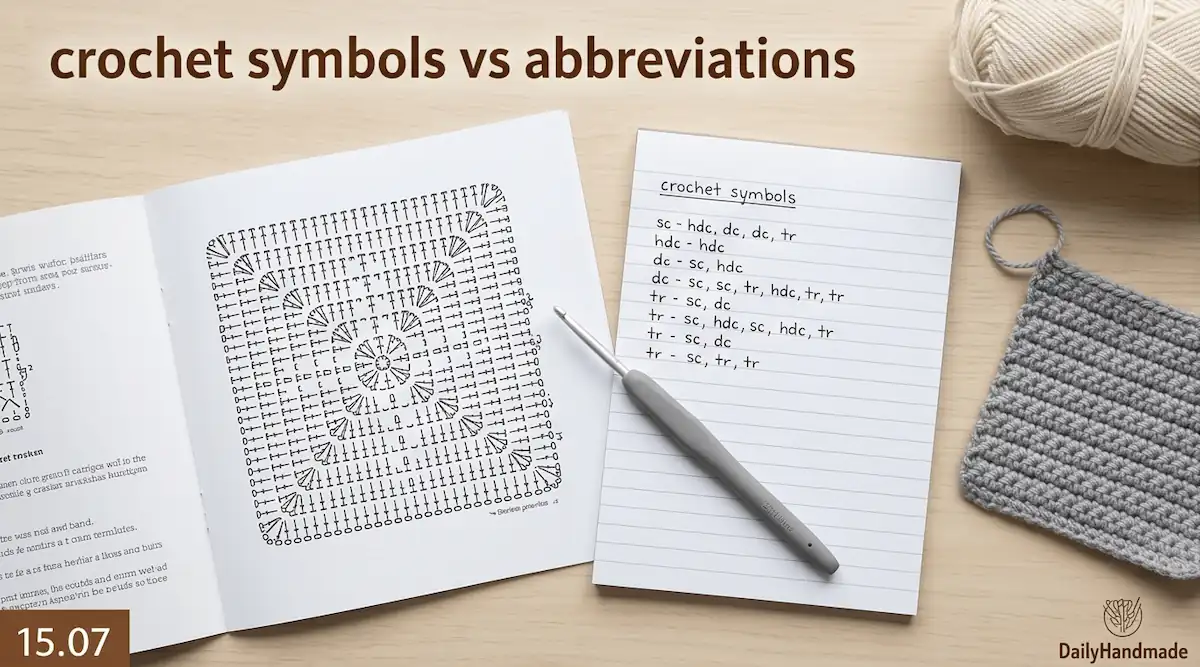
You’ve reached a crossroads in HOW TO READ CROCHET PATTERNS. On one hand, you have the text-heavy instructions we decoded in How to Read Crochet Patterns for Beginners (e.g., ch 1, sc in next 5 sts). On the other hand, you have the geometric charts of Crochet Pattern Symbols Explained filled with crosses and T-bars. At Dailyhandmade, we often see beginners pick one side and stay there forever—either they are “Team Text” or “Team Chart.” But if you want to grow as a maker, you need to know when to use which. Comparing crochet symbols vs abbreviations isn’t about finding a winner; it’s about choosing the right tool for the specific project in your hands.
Direct Answer
Choosing between crochet symbols vs abbreviations depends on the complexity of your project and your personal learning style. Abbreviations are best for simple, repetitive rows where you can “read” a sentence and then crochet without looking at the page for several minutes. Symbols (Charts) are superior for complex lace, mandalas, or garment shaping because they provide a 1:1 visual representation of where each stitch sits. In the global crochet community, symbols are considered the “universal language” because they eliminate the confusion between US and UK terminology.
The Showdown: Symbols vs. Abbreviations
In the technical world of Pillar #06, we audit these two formats based on four key performance factors:
| Feature | Crochet Abbreviations (Text) | Crochet Symbols (Visual Chart) |
| Language Barrier | High (US vs. UK terms confuse beginners). | Zero (Icons are the same worldwide). |
| Error Detection | Hard (You don’t see the mistake until Row 5). | Easy (The drawing shows the exact shape). |
| Convenience | Great for “blind” stitching or audio-reading. | Requires constant visual attention. |
| Complexity | Becomes a “Wall of Text” ([Micro_09]). | Stays clean and geometrically organized. |
| Best For… | Blankets, scarves, and “Netflix” projects. | Lace, doilies, cables, and sweaters. |
When to Choose Abbreviations (The Narrative Path)
Sometimes, words are just easier. Stick with abbreviations when:
- The Pattern is Repetitive: If you are making a giant moss-stitch blanket, you don’t need a map; you just need to know the sequence.
- You Use Screen Readers: If you have visual impairments or prefer “listening” to your pattern, abbreviations are the only way to go.
- You’re Traveling: It is much easier to read a line of text on a small phone screen than to zoom in and out of a complex chart.
When to Choose Symbols (The Map Path)
The chart is your best friend when:
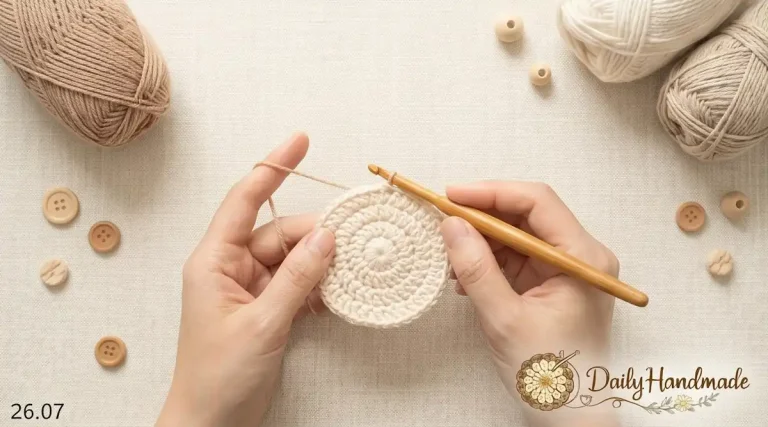
- You’re Working “In the Round”: As discussed in Crochet Chart Arrows Meaning: Which Way Do You Hook?, seeing the circle grow visually prevents you from losing your place.
- Placement is Tricky: If you aren’t sure if a stitch goes into a chain or around it, the symbol will literally be drawn in that position.
- You Bought a Foreign Pattern: If you find a stunning Russian or Japanese design, the crochet symbols vs abbreviations battle is already won—you can follow the symbols even if you can’t read a single letter of the text.
The Dailyhandmade “Hybrid” Strategy
To truly master Crochet Pattern Symbols Explained, the pros don’t choose one or the other. They use the Hybrid Method:
- The Scan: Look at the chart to see the overall “skeleton” of the row.
- The Stitch: Use the abbreviations to clarify any “Special Stitches” that might look weird on the chart.
- The Audit: Every few rows, look at the chart to make sure your physical piece matches the drawing.
Dailyhandmade Expert Advice: If a pattern provides both, use the abbreviations for your “rhythm” and the symbols for your “landmarks.” If the two ever disagree, trust the chart. It is much harder for a designer to misdraw a symbol than to mistype a letter.
What To Expect Next
You now know how to weigh crochet symbols vs abbreviations. But what happens when the symbols look “dusty”? Why do the charts in your grandmother’s 1950s books look different from the ones on Pinterest? In our next chapter, we solve the gap between Vintage and Modern symbols.
Return Path
Comparing crochet symbols vs abbreviations is a critical step in your How to Read Crochet Patterns education. To keep advancing your skills, explore these related guides:
- Vintage vs modern crochet symbols
- Why do crochet symbols vary
- How to simplify crochet pattern instructions
- Master Guide: How to Read Crochet Patterns
I have a relevant follow-up question for you: Do you find yourself naturally leaning toward the written words, or do you find that your brain “clicks” better when you see the visual diagram? (There’s no wrong answer—everyone’s “crochet brain” is wired differently!)