
Why Do Crochet Symbols Vary in Patterns? (And How to Adapt)
Quick Recognition
You’ve just gotten comfortable with the “X” for single crochet from The Crochet Symbol for Single and Double Crochet: Decoding Basics, but then you open a vintage 1970s pattern or a modern indie designer’s chart, and suddenly the single crochet is a bold dot or a vertical bar. You feel like you’ve learned a language only to find everyone in the next town speaks a different dialect. At Dailyhandmade, we call this “Symbol Drift.” It’s frustrating, but it’s not a mistake on your part. Understanding why do crochet symbols vary in patterns is about realizing that crochet history is a patchwork of different traditions. Once you know how to “audit” a chart, you can adapt to any style.
Direct Answer
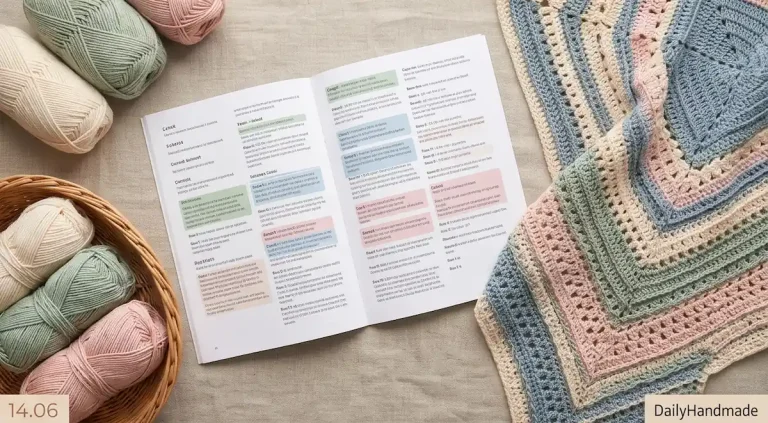
The reason why crochet symbols vary in patterns is that there is no single, mandatory global governing body for crochet drafting. While organizations like the Craft Yarn Council provide “standard” guidelines, many designers, regional publishers (like those in Japan or Russia), and vintage authors use their own unique visual shorthand. In HOW TO READ CROCHET PATTERNS, we teach that the Pattern Key is the ultimate authority—never assume a symbol’s meaning based on a previous project without checking the legend first.
The Three Sources of Symbol Variation
In the technical world of Crochet Pattern Symbols Explained, symbol differences usually stem from one of these three “Visual Dialects”:
1. Regional Traditions (The Global Map)
Crochet is a global craft.
- Japanese Charts: Often incredibly detailed, using specific icons for complex puff stitches that might look different in a US pattern.
- Eastern European Charts: May use thinner, more geometric lines compared to the “bolder” icons found in Western magazines.
2. Vintage vs. Modern (The Timeline)
As we will explore in [Micro_08], older patterns were often hand-drawn.
- Then: A single crochet might have been a simple vertical stroke.
- Now: We almost universally use the “X” or “+”.
3. Indie Designer Personal Style
With the rise of self-publishing, some designers create “custom” symbols for unique texture combinations (like a front-post-double-crochet-cluster) because a standard icon doesn’t exist yet.
Comparison: Standard vs. Common Variations
| Stitch (US Term) | Standard Symbol | Common Variation | Why it Happens |
| Single Crochet | x or + | Vertical Bar (I) | Common in older or European charts. |
| Slip Stitch | Solid Dot | Small horizontal line | Used to save space in crowded lace charts. |
| Double Crochet | T with 1 slash | Tall Bar with a flag | Sometimes seen in hand-drawn diagrams. |
| Magic Ring | Circle with arrow | Spiral icon | Varies based on the software used to draw it. |
How to Adapt: The Dailyhandmade “Symbol Audit”
To master and stay flexible, use this 3-step adaptation protocol:
- Trust the Legend Over Your Memory: Spend 60 seconds reading the “Key” at the start of the chart. If the designer says a “Triangle” is a Picot, then it’s a Picot for this project, even if your last pattern used a “Circle.”
- Look for the “Anatomy” (The Slash Rule): Regardless of the shape, look for the horizontal slashes. As established in Crochet Stitch Symbols and Meanings: The Visual Cheat Sheet, slashes are the universal code for “Yarn Overs.” If you see a weird icon with one slash, it is almost certainly a variation of a Double Crochet.
- Cross-Reference with Written Text: If the chart is confusing, peek at the written instructions in What Should You Learn First in Crochet. If Row 1 says “sc across” and the chart shows a row of dots, you now know that for this pattern, a dot equals a single crochet.
Dailyhandmade Expert Advice: Don’t let a strange symbol stop your flow. If you find a chart without a key (common on Pinterest), look at the shape of the finished rows. If the “mystery symbol” is as tall as a double crochet, treat it as one!
What To Expect Next
You now know why symbols change and how to handle the “dialects.” But why bother with symbols at all if we have written words? In our next chapter, we look at the ultimate showdown: Universal Symbols vs. Written Terms—and why the chart is the better “international traveler.”
Return Path
Understanding why do crochet symbols vary in patterns is a vital troubleshooting skill in Crochet Pattern Symbols Explained. To keep building your fluency, explore these related guides:
- Universal crochet symbols vs terms
- Crochet stitch symbols and meanings
- Vintage vs modern crochet symbols
- Master Guide: How to Read Crochet Patterns
I have a relevant follow-up question for you: Have you ever encountered a symbol that looked like a “typo”—only to realize it was just a different way of drawing a basic stitch? (This usually happens with the slip stitch!)