Crochet Tension Problems Beginners Have (Tight vs Loose + Fixes)
If you’re a beginner and your crochet feels difficult, messy, or inconsistent, tension is almost always the reason.
Crochet tension problems are incredibly common in the first days because your hands are still learning a new movement pattern. Your tension will naturally change as you get comfortable — but you can speed up the process with a few simple adjustments.
This guide will help you:
- understand what crochet tension really is
- recognize tight vs loose tension
- fix tension problems quickly
- avoid the most common beginner tension mistakes
If crochet feels hard overall, start here first: Why Crochet Feels Hard at First
- What Crochet Tension Means (Beginner-Friendly)
- Why Beginners Struggle With Tension
- The Two Main Types of Tension Problems
- Signs Your Crochet Tension Is Too Tight
- Signs Your Crochet Tension Is Too Loose
- Why Tight Tension Happens (Beginner Psychology)
- Quick Fixes for Crochet Tension (Beginner-Proof)
- The Beginner Tension Reset (2-Minute Trick)
- How Tension Affects Crochet Projects
- Common Beginner Tension Mistakes
- FAQ
- Next Step
What Crochet Tension Means (Beginner-Friendly)
Crochet tension is the amount of pressure you keep on the yarn while making stitches.
Tension affects:
- how easy it is to insert your hook
- how even your stitches look
- how soft or stiff the fabric feels
- the final size of your project
Even if you follow a pattern perfectly, tension can make your project look completely different.
Why Beginners Struggle With Tension
Tension is hard at first because beginners are doing 3 things at once:
- learning hook movement
- learning where to insert the hook
- learning how to control yarn flow
Your hands don’t have muscle memory yet, so your tension changes from stitch to stitch.
That’s why beginner swatches often look:
- bumpy
- uneven
- messy at the edges
The Two Main Types of Tension Problems
Most beginners fall into one of these categories:
Tight tension (most common)
Tight tension means you pull yarn too firmly.
Loose tension
Loose tension means the yarn flows too freely and stitches become oversized.
Some beginners also have inconsistent tension, meaning stitches change size constantly.
Signs Your Crochet Tension Is Too Tight
You likely crochet too tight if:
- your hook gets stuck in stitches
- it feels hard to pull yarn through loops
- your hands get tired quickly
- your fabric feels stiff
- your chains are hard to work into
- your edges curl or pull inward
Tight crochet often makes beginners think:
“I can’t do crochet. It’s too hard.”
But the problem is tension — not ability.
Signs Your Crochet Tension Is Too Loose
You likely crochet too loose if:
- stitches look too big
- there are gaps or holes everywhere
- your fabric feels floppy and unstable
- your rows look wavy
- your stitches don’t hold shape
Loose tension is less painful than tight tension, but it makes projects look messy.
Why Tight Tension Happens (Beginner Psychology)
Tight tension is usually caused by:
- fear of dropping stitches
- trying to make stitches neat
- gripping the hook too hard
- pulling yarn after each stitch
- using a small hook
- using yarn that doesn’t slide smoothly
Tension is connected to stress. If you feel nervous, your hands naturally tighten.
Quick Fixes for Crochet Tension (Beginner-Proof)
These fixes work immediately.
Fix #1: Change hook size by 0.5mm
This is the fastest tension hack.
If you crochet tight → go up 0.5mm
If you crochet loose → go down 0.5mm
Small hook size changes make a huge difference.
Fix #2: Stop pulling yarn after each stitch
Many beginners finish a stitch and then pull the yarn tight without noticing.
Instead:
- complete the stitch
- keep the loop relaxed
- move to the next stitch smoothly
Neat crochet comes from consistency, not force.
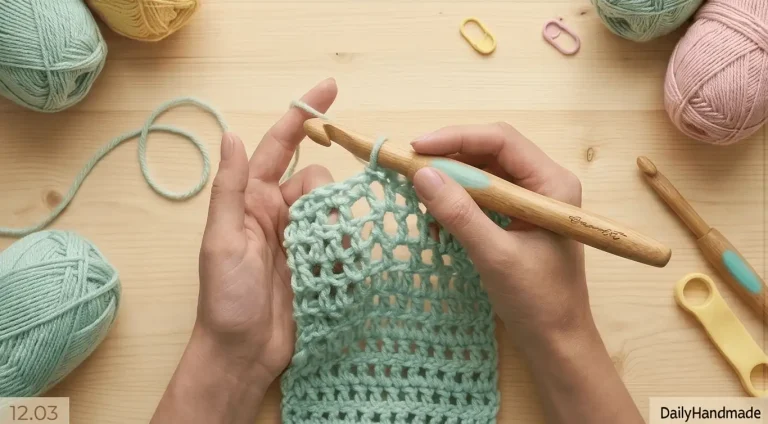
Fix #3: Relax your grip (seriously)
Try holding your hook like you’re holding a pencil you don’t want to snap.
If your fingers hurt or turn white, you’re gripping too hard.
Tension control improves when your grip is softer.
Fix #4: Use smooth yarn
Some yarns make tension harder:
- fuzzy yarn
- yarn that splits
- very slippery yarn
Smooth yarn slides better and keeps tension stable.
Fix #5: Practice the same stitch for 10 minutes
Tension is a skill built by repetition.
The fastest way to stabilize tension is:
- 10 minutes of single crochet
- on smooth yarn
- with relaxed hands
The Beginner Tension Reset (2-Minute Trick)
If your tension is all over the place, do this:
- chain 15 slowly
- crochet 10 single crochets
- stop and look at the stitches
- continue only if they look similar
This resets your hands and helps your brain focus.
How Tension Affects Crochet Projects
Tension isn’t just about neatness.
It affects:
- project size (too big / too small)
- drape (stiff vs soft)
- how edges behave
- whether patterns fit
This is why tension becomes important later when you crochet:
- garments
- hats
- fitted items
But as a beginner, your main goal is not perfect tension — it’s consistent tension.
Common Beginner Tension Mistakes
Mistake #1: Trying to force “perfect stitches”
Perfection makes you tighten up. Tightness makes stitches worse.
Mistake #2: Switching yarn hold constantly
Small changes in finger wrap change tension instantly.
Mistake #3: Crocheting too fast
Speed makes tension inconsistent.
Mistake #4: Practicing with difficult yarn
Beginner yarn is a cheat code.
FAQ
How long does it take to fix crochet tension?
Most beginners see improvement in 3–7 days with daily practice.
Should I restart my project if my tension is bad?
If it’s a practice swatch, don’t restart. Keep going. If it’s a real project and the size is wrong, restarting may be worth it.
Is tight tension always bad?
Not always. Some projects (like amigurumi) need tight tension. But beginners should learn relaxed tension first.
Next Step
If you’re struggling with tension, these posts will help next:
Tools that make tension easier:
Tension is the #1 beginner crochet skill.
Relax your grip, use smooth yarn, and adjust your hook size by 0.5mm. Your stitches will look cleaner fast.